


















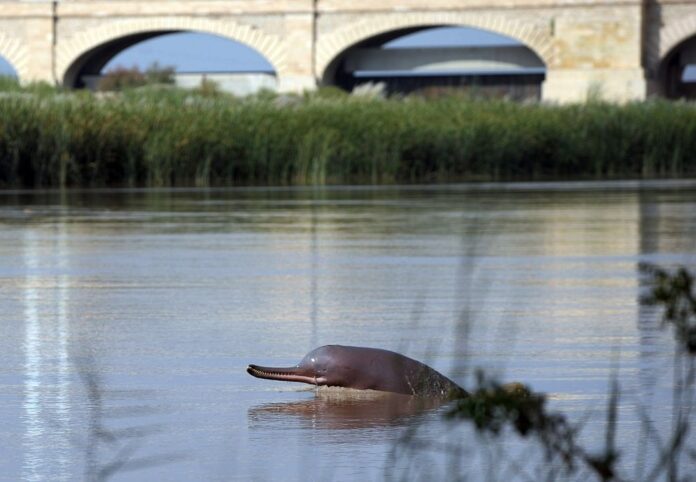
ISLAMABAD: Pakistan has unveiled a five-year national strategy aimed at conserving the endangered Indus river dolphin, officials said, marking a coordinated effort between federal and provincial departments and WWF-Pakistan to safeguard the species and restore its riverine habitat.
The plan, currently under consultation, updates the first Indus Dolphin Conservation Action Plan, which was drawn up in 2011. “Shifts in river ecology and new threats mean the plan needs a comprehensive review and updating,” said Hammad Naqi, director general of WWF-Pakistan.
Consultations have involved stakeholders from wildlife, fisheries, environment, and irrigation departments across Punjab, Sindh, and Khyber Pakhtunkhwa. The focus has been on building consensus over key measures for protection, habitat restoration, and long-term monitoring of dolphin populations.
Experts noted that dolphin numbers are lower in Punjab compared with Sindh, with unsustainable fishing practices, including illegal nets, posing the most immediate threat in the Punjab stretch. Reduced river flows, pollution, and riverbank degradation were also identified as significant risks to the species.
Population surveys show mixed figures. A 2017 survey recorded approximately 1,816 dolphins between Chashma and Sukkur barrages, while WWF-Pakistan officials estimate the current population at around 2,000. Participants stressed the importance of reliable scientific data to monitor trends in population, habitat conditions, water flow, and the impacts of climate change.
“Stepped-up research is essential to design and evaluate conservation interventions effectively,” Naqi said. The new plan will also prioritise restoring river ecosystems and associated wetlands, securing high-risk zones, and improving water-flow management through enforceable measures.
Central to the strategy is coordination between federal and provincial institutions. Proposed measures include focused protection to increase dolphin numbers, rehabilitating habitats, nominating critical sites for international recognition, strengthening law enforcement, and expanding rescue and monitoring units. Community participation, including youth awareness campaigns, will also play a key role.
Earlier conservation measures highlighted the critical stretch between Guddu and Sukkur barrages as core dolphin habitat. Rescue units were previously recommended for dolphins entering irrigation canals, alongside minimum environmental flows and restrictions on harmful fishing practices.
Sheikh Muhammad Zahid, additional chief wildlife ranger for south Punjab, said the Indus dolphin is fully protected under wildlife law and strict enforcement is in place where populations persist. “There are sizeable populations between Chashma and Sukkur barrages, and monitoring and scientific assessments are being strengthened,” he noted.
Officials described the new strategy as a step toward long-term survival for the species and broader protection of Pakistan’s freshwater ecosystems. “This plan will provide a clear direction for conservation actions, ensuring that the Indus river dolphin continues to thrive in its natural habitat,” Naqi added.
The government and conservation agencies emphasised that strong enforcement, community engagement, and scientific research will be vital to the success of the initiative, which also seeks to align with international conservation frameworks and recognitions such as Ramsar or UNESCO Man and Biosphere sites.





çok başarılı ve kaliteli bir makale olmuş güzellik sırlarım olarak teşekkür ederiz.