












- Deputy PM says multilateralism ‘under assault’ amid rising regional tensions, calling for dialogue and cooperation
- Refers to May 4-day Indo-Pak conflict, warns of potential uncontrollable escalation
- Highlights threats from nuclearization, emerging technologies, terrorism, and hybrid warfare
- Calls for peaceful dispute resolution, regional connectivity, and economic interdependence
- Stresses stalled India-Pakistan dialogue, Kashmir dispute, and Indus Waters Treaty concerns
- Urges South Asian nations to overcome zero-sum mindsets, embrace win-win cooperation
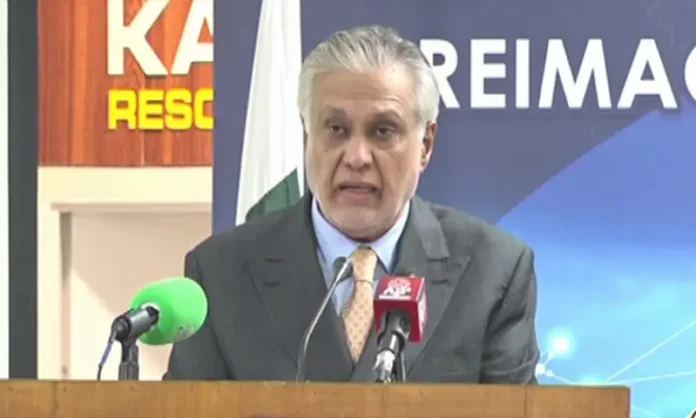
ISLAMABAD: Deputy Prime Minister and Foreign Minister Ishaq Dar on Wednesday warned that “multilateralism is under assault” amid rising threats to stability in South Asia, stressing the urgent need for “regional cooperation, dialogue, and economic interdependence,” state media reported.
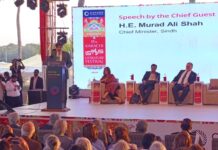
Speaking at a high-profile event in Islamabad, Dar highlighted that “unilateralist impulses, growing militarization” and stalled diplomatic processes have created a fragile and precarious security environment across the region.
“Multilateralism is under assault, and the institutions of global governance are often criticised for the acts of omission and commission of a few states driven by unilateralist impulses,” Dar said. Referring to the four-day conflict with India in May, he added, “In 92 hours, the Indo-Pakistan war had the potential to escalate to far more dangerous levels.”
Dar observed that states increasingly resort to force to settle disputes, often disregarding international law and UN Charter principles, while emerging technologies, transnational terrorism, hybrid warfare, and misinformation campaigns continue to challenge stability. He noted that the region remains in an “uneasy and fragile peace,” adding, “Pakistan demonstrated both resolve and capability to thwart aggression and reinforce deterrence. The concept of a net security provider is buried.”
Highlighting the global context, the deputy premier said, “Major power competition is a defining feature of our times,” with rivalries intensifying in military, technological, trade, tariff, and resource domains. Yet, Pakistan has consistently opposed bloc politics and zero-sum approaches, emphasizing cooperation rather than confrontation, dialogue, diplomacy, and the peaceful settlement of disputes. As an elected member of the United Nations Security Council for 2025-26, Pakistan remains engaged in efforts to promote international peace and security.
Dar warned that extremist ideologies, political populism, democratic backsliding, and Islamophobia are negatively impacting the world, causing upheavals in unprecedented ways. “Pakistan envisions a South Asia where connectivity replaces divisions, economies grow in synergy, disputes are resolved peacefully in accordance with international legitimacy, and peace is maintained with dignity and honour,” he said, reaffirming readiness to work with all willing partners to unlock the region’s potential.
Turning to the regional security environment, Dar said South Asia comprises three geographically contiguous nuclear powers with complex relationships, large armed forces, continuous buildup of conventional and nuclear arms, and the regular induction of destabilizing weapons systems. “Strategic stability is delicate, complicated by dangerously ill-conceived war-fighting notions in a nuclearized environment,” he added.
He highlighted the Indus Waters Treaty dispute, longstanding unresolved conflicts like Jammu and Kashmir, and stalled structured dialogue with India for over 11 years as persistent challenges to regional peace. Factors such as history, trust deficits, impulses of dominance, populism, hypernationalism, and ideological territorial ambitions further complicate stability.
The deputy PM also discussed the economic and human development challenges facing South Asia, including poverty, inequality, illiteracy, malnutrition, energy deficiencies, and poor regional connectivity. He warned that intra-regional trade remains around 5 per cent, and platforms like SAARC have been largely inactive for over a decade.
FM Dar urged South Asian nations to overcome zero-sum mindsets, embrace dialogue, peaceful coexistence, and win-win cooperation, stressing that the cumulative challenges of security, economic fragility, and climate crisis cannot be tackled amid political fragmentation and fractured regional architecture.



Güzel aydınlatıcı makale için teşekkürler daha iyisi samda kayısı umarım faydalı çalışmalarınızın devamı gelir.
1ig0xs