

Afghanistan remains epicentre of terror, rights abuses as US moves to block aid misuse
- Over 20 terror outfits with 13,000 foreign fighters operate from Afghan soil: int’l assessments
- UN flags surge in TTP cross-border attacks, Durand Line tensions rise with terror spillover hits Central Asia, Chinese nationals targeted in Tajikistan
- Taliban accused of sheltering militants, exporting radical ideology via madrassas
- USCIRF urges ‘Country of Particular Concern’ tag over grave rights violations, while US advances ‘No Tax Dollars for Terrorists Act’ to stop Taliban benefiting from aid
ISLAMABAD: Afghanistan continues to function as a major hub for international terrorism, exporting insecurity through cross-border attacks, entrenched terrorist sanctuaries, ideological radicalization, and systemic human rights abuses, even as the United States moves to ensure that its aid does not inadvertently strengthen the Taliban regime, according to different international reports.
Since the Taliban’s return to power in 2021, Afghanistan has hosted more than 20 international and regional terrorist organizations, with an estimated 13,000 foreign fighters operating from its territory. These include sizeable contingents of Tehreek-e-Taliban Pakistan (TTP), ISIL-K, Al-Qaeda, Al-Qaeda in the Indian Subcontinent (AQIS), the Islamic Movement of Uzbekistan (IMU), the East Turkestan Islamic Movement/Turkistan Islamic Party (ETIM/TIP), and Jamaat Ansarullah, Associated Press of Pakistan said in a report based on multiple international assessments.
Pakistan has repeatedly raised concerns at the United Nations Security Council over the presence of nearly 6,000 TTP militants based in Afghanistan, describing the country as a launchpad for sustained terrorist attacks inside Pakistan.
The UN Security Council’s 37th Monitoring Team Report, released last week, characterized the terrorist footprint in Afghanistan as a “serious concern,” noting a sharp rise in TTP-led cross-border violence that has triggered military exchanges along the Durand Line.
The spillover of insecurity has extended into Central Asia as well. In late November 2025 and early 2026, multiple drone and infiltration attacks originating from Afghanistan’s Badakhshan province targeted Chinese nationals and infrastructure sites in Tajikistan. The attacks killed five Chinese workers and injured others, leading to armed clashes and prompting Russia-led Collective Security Treaty Organization (CSTO) commitments to reinforce Tajik border defenses, the report said.
Despite repeated international demands, the Taliban regime has failed to dismantle terrorist infrastructure, instead providing operational space, freedom of movement, and protection to militant groups operating from Afghan soil.
At the same time, the rapid expansion of more than 23,000 madrassas under Taliban patronage has transformed Afghanistan’s education landscape into an ideological pipeline, prioritizing radical indoctrination and exporting extremist narratives beyond the country’s borders.
Coupled with large-scale narcotics production, arms smuggling, and the deliberate export of instability, analysts argue that Afghanistan no longer operates as a rational state actor but as a generator of regional and global security threats.
Compounding these challenges are grave human rights violations. The US Commission on International Religious Freedom (USCIRF) has recommended that Afghanistan be designated a Country of Particular Concern (CPC) due to what it described as “systematic, ongoing and egregious” violations of religious freedom.
Under the Taliban’s newly enforced penal code, a narrow, tribal-influenced interpretation denies legal status to non-conforming Muslims, criminalizes daily life, and subjects Shia, Ahmadiyya, Hindus, Sikhs, Christians, and dissenting Sunnis to repression, forced conversions, public executions, floggings, stonings, and public spectacles of humiliation.
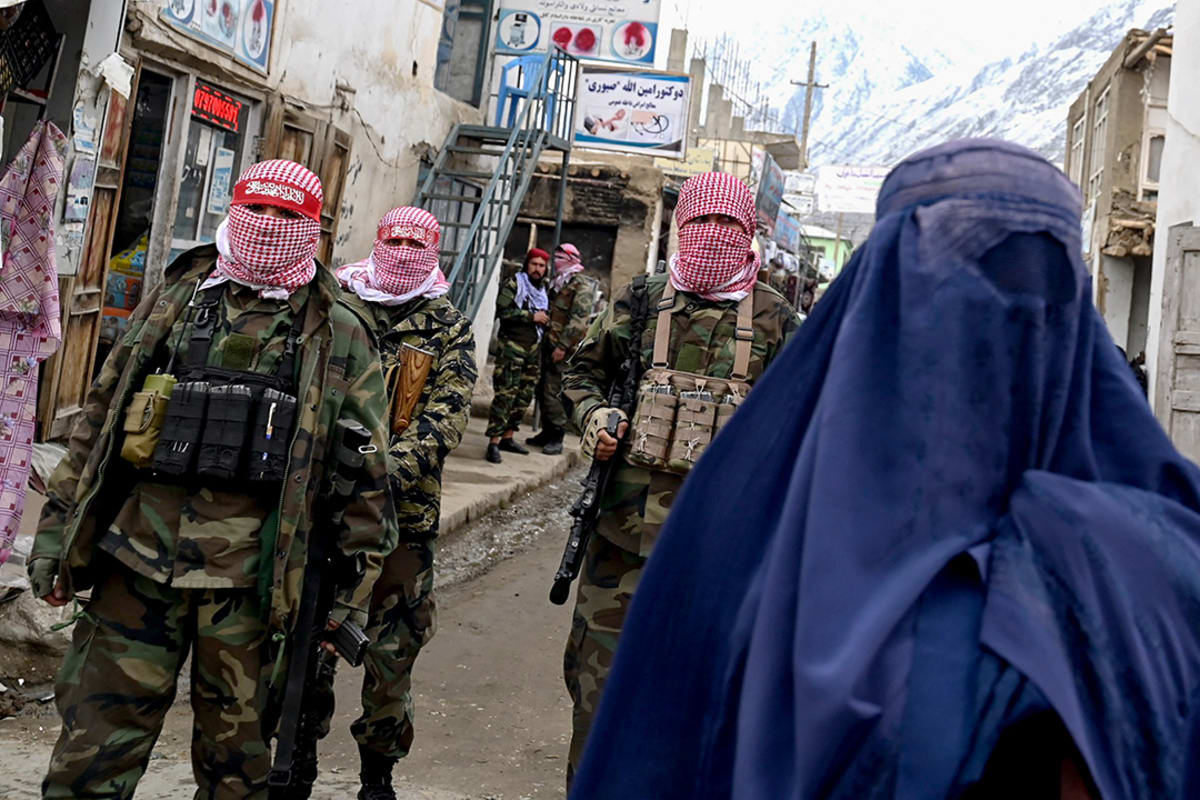
Women and girls face near-total exclusion from public life, including bans on education beyond the primary level, employment, public speech, and unescorted movement—measures widely seen as distorting Islamic principles while deepening poverty, grievance, and recruitment pools for extremist organizations.
Underlying these crises, analysts point to a structural reality: Afghanistan’s modern borders, drawn in the 19th century to serve imperial interests rather than internal cohesion, forcibly united diverse ethnic, linguistic, and geographic communities—Pashtuns, Tajiks, Hazaras, Uzbeks, and others—without a shared national project.
Every centralized government since the mid-20th century has faced resistance from the periphery, elite capture at the center, ethnic dominance, minority exclusion, and zero-sum power struggles, creating conditions in which insurgency has often become a rational response.
Experts argue that Afghanistan’s four-decade cycle of conflict stems not merely from leadership failures but from this fundamental mismatch between its social fabric and imposed political structures. Some advocate initiating discussions on alternatives such as ethnic federalism, confederal arrangements, or negotiated power-sharing mechanisms that localize governance, reduce fears of domination, protect minorities, and shift competition from battlefields to institutions—provided any such process remains consensual, gradual, internationally supervised, and protected by verifiable safeguards.
Against this backdrop of aid diversion, terrorist sanctuaries, religious repression, and structural dysfunction, the US Senate Foreign Relations Committee has recently advanced the bipartisan “No Tax Dollars for Terrorists Act.”
The legislation seeks to prevent any American taxpayer funds from directly or indirectly benefiting terrorist organizations, particularly the Taliban. It mandates the Department of State to develop a strategy discouraging foreign governments, NGOs, and partners from aiding the Taliban, requires detailed congressional reporting on aid flows since August 2021, strengthens oversight of cash assistance programs and hawala networks, and includes protections for Afghan women, girls, and at-risk allies.
Watchdog findings, including the Special Inspector General for Afghanistan Reconstruction’s (SIGAR) December 2025 report, have documented persistent fraud, corruption, and diversion of billions in humanitarian and reconstruction assistance. The report confirmed that at least $10.9 million in US funds were paid directly to Taliban authorities in the form of taxes, fees, and utilities, out of tens of billions lost overall. Afghanistan’s ranking of 169th out of 182 countries on the 2025 Corruption Perceptions Index further underscores systemic graft and reinforces calls for stringent safeguards to ensure aid reaches vulnerable populations.
Analysts stress that any future engagement with the Taliban regime must be conditioned on verifiable benchmarks, including the dismantling of terrorist networks, an end to their support, guarantees of ethnic inclusivity, the reversal of gender-based restrictions, and the protection of fundamental human rights.
Regional stakeholders, including Pakistan, continue to call for coordinated intelligence-sharing, strengthened border management, enhanced financial tracking, and unified diplomatic pressure to counter the multidimensional threats emanating from Afghan territory.
Comments
No comments yet. Be the first to join the discussion!


