

CM Maryam orders province-wide fire safety overhaul after Gulberg tragedy
In response to the tragic Gulberg hotel fire, Punjab CM Maryam Nawaz has ordered a province-wide fire safety overhaul, including mandatory hydrants and safety systems in all commercial buildings.

- Punjab CM gives 30 days for fire hydrants installation in all commercial buildings, plazas and high-rises across province
- Orders freeze on prices of hydrant for 90 days to curb profiteering and artificial shortage
- Declares fire safety systems mandatory for under-construction buildings with ban on boilers in basements
LAHORE: Punjab Chief Minister Maryam Nawaz on Tuesday directed deputy commissioners (DCs) to ensure the installation of fire hydrants in all commercial and high-rise buildings across the province within 30 days, as part of a renewed push to strengthen fire safety and emergency preparedness.
“Make sure that all safety equipment is functional at all commercial and high-rise buildings,” the chief minister emphasised while chairing a meeting of the provincial cabinet in Lahore, according to a statement issued by the Punjab Directorate General of Public Relations (DGPR).
وزیر اعلیٰ پنجاب مریم نواز شریف کی زیر صدارت اعلیٰ سطح کا اجلاس https://t.co/7xcb5ger2U
— PMLN (@pmln_org) January 27, 2026
The chief minister also instructed DCs, who were present in the cabinet meeting, to ensure that fire safety systems were installed in all under-construction buildings before completion of work.
The directives were issued three days after a fire at a hotel in Lahore’s Gulberg area claimed three lives. Seven people sustained burn injuries in the incident, while 275 hotel staff members and guests were safely evacuated.
To prevent profiteering amid rising demand, the chief minister ordered that the prices of fire hydrants be “locked” for the next 90 days.
She further directed that all commercial plazas must be equipped with first-aid facilities, oxygen cylinders, automatic water sprinkling systems and properly ventilated emergency staircases, preferably located outside the building structure.
Maryam Nawaz also ordered a complete ban on boilers and hazardous or smoke-emitting materials in building basements. “Seal every substandard boiler immediately because when it explodes, it causes widespread destruction and claims lives,” she said, stressing that even a single death in a fire incident devastates an entire family.
The chief minister observed that workers in markets dealing in chemicals, plastic and garments often take safety measures lightly despite handling sensitive and hazardous materials. She also pointed out that encroachments, overstocking and congested spaces frequently lead to blockages and suffocation during emergencies.
“When panic spreads in such situations, people get trapped due to unplanned structures,” she said, directing the authorities to remove all encroachments and ensure that all entry and exit points remain clear.
Commending the response to the Gulberg hotel fire, Maryam Nawaz said the government functioned as a unified team during emergencies. She highlighted that Rescue 1122 along with its DG Dr Rizwan reached the site within five minutes, a swift response that helped avert a much larger tragedy.
She also expressed grief over the recent fire at Karachi’s Gul Plaza, saying the Punjab government stood with the affected families and was ready to extend any assistance if required.
Punjab enters ‘new digital era’ as CM Punjab leads AI training
Meanwhile, Punjab Chief Minister Maryam Nawaz ed the province’s first-ever artificial intelligence (AI) training session for provincial ministers, marking what she described as the beginning of a new digital era in Punjab.
The chief minister, along with members of the provincial cabinet, participated in an official workshop titled “Empowering Punjab with AI”, where experts from Google for Education briefed participants on the practical use of AI tools in governance and policymaking.
Punjab is embarking on a new era of digital transformation. Breaking from tradition, the Punjab Cabinet has become the first in Pakistan to receive direct training in artificial intelligence, demonstrating a strong commitment to innovation, modern governance, and informed,… pic.twitter.com/uK0BPOkmxb
— Maryam Nawaz Sharif (@MaryamNSharif) January 27, 2026
During the session, the chief minister declared the use of AI mandatory in Punjab’s schools and approved the establishment of a Google Tech Valley Digital Transformation Advisory Board in the province.
Addressing the workshop, Ms Sharif said digital technology had the potential to transform thinking and working methods, adding that AI support had become indispensable for reforms and effective policymaking. She emphasised the responsible use of AI tools to bring positive and sustainable change.
The training included briefings on the use of AI in governance, policy frameworks, operational policymaking, sectoral reforms, and policy summary analysis. Cabinet members were also introduced to the effective use of Google tools, including Gemini, for official work.
The meeting was informed that under Google for Education’s Tech Valley initiative, a master training programme for 3,000 teachers would be launched in Punjab. It was further shared that more than 300,000 student IDs would be established in the School Education Department, while 200,000 students and 2,000 teachers affiliated with the Punjab Education Foundation would also receive training.
In addition, 1,000 scholarships will be provided to 10 organisations to promote digital journalism in the province.
Members of the Google team, while sharing their impressions, praised Lahore for its unique blend of history and culture and lauded the chief minister’s decision to declare 2026 as the Year of Youth.
CM APPROVES STROKE MANAGEMENT CENTRES IN EVERY DISTRICT
Furthermore, Punjab Chief Minister Maryam Nawaz approved the establishment of stroke management centres in every district of the province, aiming to ensure timely and specialized treatment for stroke patients closer to their homes.
The decision was taken during a meeting of the Health Department chaired by the chief minister. The meeting also approved, in principle, the posting of neurologists and paediatric neurologists at all District Headquarters (DHQ) hospitals.
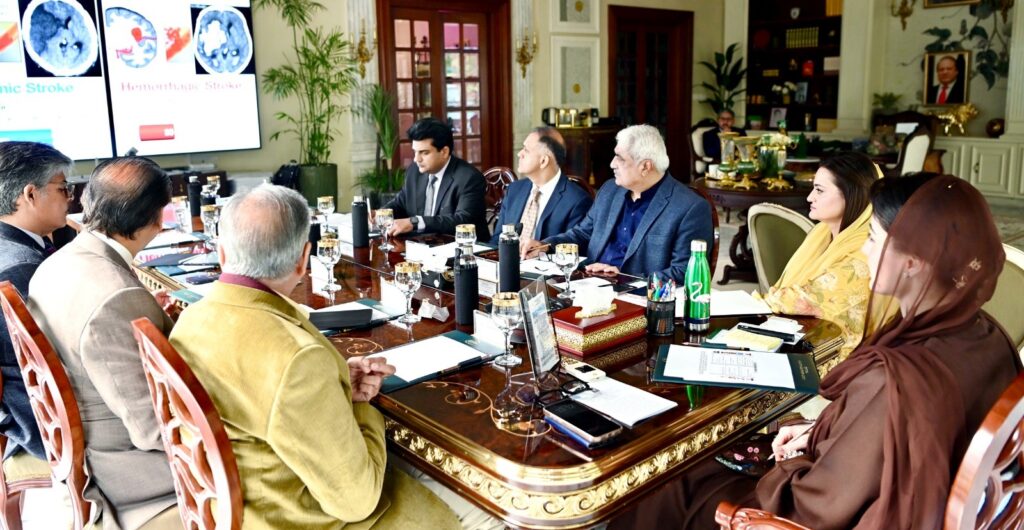
Under the plan, one doctor and one nurse from each district will undergo a three-month specialised training programme in stroke management. The chief minister also directed the immediate launch of a telemedicine project for stroke patients, enabling doctors at district hospitals to consult specialists and consultants through direct telephone and telemedicine links for prompt treatment.
Chief Minister Punjab Maryam Nawaz Sharif instructed the Health Department to initiate a dedicated training programme for nurses at stroke management centres and to take steps for providing stroke management training to rescue workers. She further directed the launch of a public awareness campaign on stroke prevention and early treatment.
Comments
No comments yet. Be the first to join the discussion!


