

PCIW rejects India’s ‘abeyance’ claim on Indus Waters Treaty
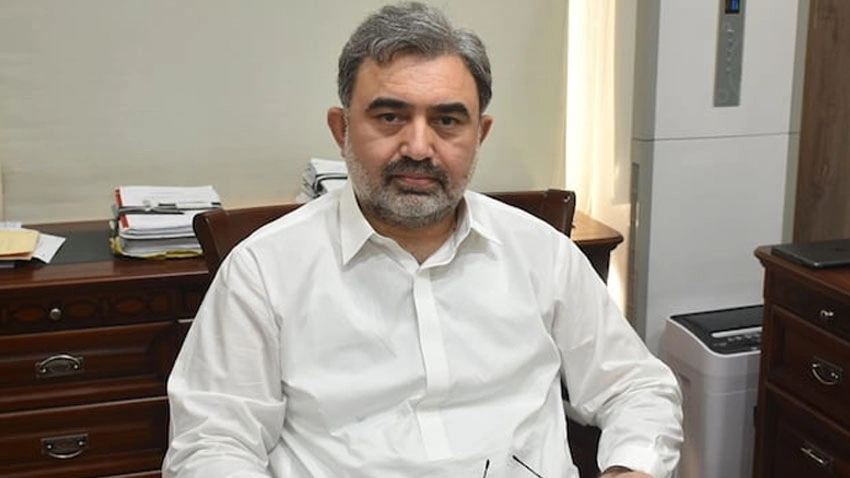
- Commissioner Syed Mehar Ali Shah IWT remains fully in force under international law, warning India of legal and diplomatic response
- Terms New Delhi’s non-cooperation and sidestepping obligations ‘alarming,’ reiterating any attempt to reduce water flows to Pakistan deemed an 'act of war'
ISLAMABAD: Pakistan Commissioner for Indus Waters (PCIW) Syed Muhammad Mehar Ali Shah on Sunday firmly rejected India’s claim of placing the Indus Waters Treaty (IWT) in “abeyance,” stating that the treaty remains fully binding under international law. He cautioned that New Delhi’s repeated non-cooperation and sidestepping of its obligations on self-created grounds is “alarming,” prompting Pakistan to pursue formal legal and diplomatic measures.
Speaking on a television channel, Shah said the word “abeyance” is not recognized under international treaty law and is essentially a coined term, adding that India cannot suspend, breach, or terminate the treaty.
He recalled that in April 2025, India attempted to hold the IWT in abeyance following the Pahalgam incident, which killed 26 tourists and for which New Delhi blamed Islamabad without evidence. Pakistan had called any attempt to suspend its water share an “act of war.” In June, the Permanent Court of Arbitration clarified that India cannot unilaterally suspend the treaty.
Shah stressed that the IWT was carefully negotiated to withstand political tensions, and its dispute-resolution mechanism is designed to prevent unilateral actions. He added that any attempt by India to reduce water flows to Pakistan would also be considered an “act of war.”
“There is no fixed amount of water allocated to Pakistan; the waters should follow the natural pattern of the western rivers,” he said. He noted that Chenab, Jhelum, and Indus have been flowing normally, though India created three episodes since April 24, 2025, altering flows for a few days.
Shah explained that the treaty requires both parties to peacefully resolve disputes or refer them to a neutral forum or the Court of Arbitration. He cited the Baglihar Dam as an example, where Pakistan’s objections were binding but limited to that project, prompting Pakistan to seek general interpretation to prevent India from using the ruling for future projects.
The commissioner also highlighted other Indian projects on the western rivers, including the Ratle Hydroelectric Plant (850 MW) and the Kiru and Kwar hydroelectric projects, noting that Pakistan raised objections bilaterally and through third-party forums.
Regarding Indian Prime Minister Narendra Modi’s threats to stop Pakistan’s water share, Shah emphasized, “There is no room for stopping or partially stopping Pakistan’s water. Such action also violates moral standards.” He recalled that the three eastern rivers — Beas, Ravi, and Sutlej—were always geographically advantageous to India, while the western rivers’ natural flows to Pakistan must not be altered.
Shah reiterated that Pakistan is pursuing its rights under the treaty carefully and formally, warning that India’s continued unilateral actions are unacceptable under international law and the IWT framework.
Comments
No comments yet. Be the first to join the discussion!


