Turkiye delegation’s visit stalled due to Afghan Taliban’s non-cooperation: FO

- FO spokesperson reiterates Kabul must ensure no terrorist, no militant, no infiltrator crosses into Pakistan, warning border to stay shut without firm security guarantees
- Confirms Turkish intel chief, key ministers were part of planned delegation due as a result of Erdogan-PM Shehbaz understanding in Baku
- Stresses Afghan nationals also involved in serious crimes inside Pakistan, clarifying Torkham, Chaman reopened ‘only for humanitarian aid’
- Urges global action to safeguard Muslim heritage in India on anniversary of Babri Masjid demolition
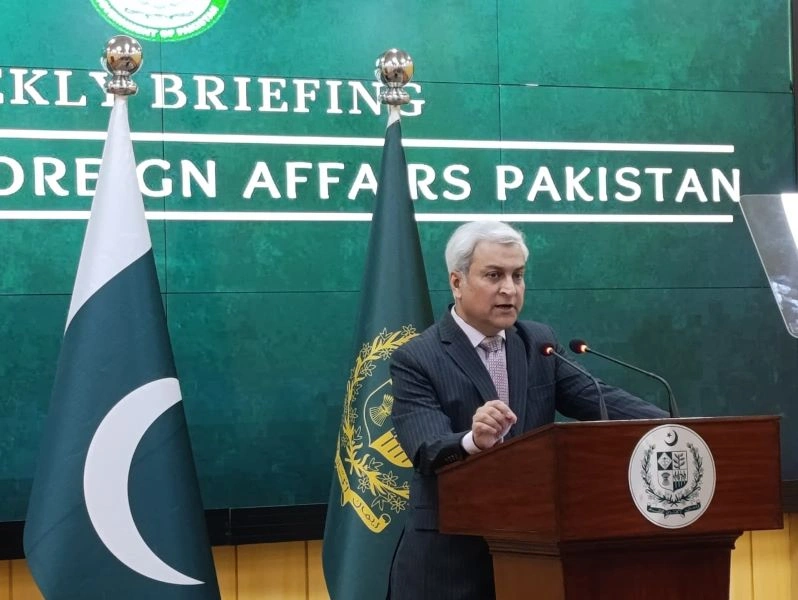
ISLAMABAD: Foreign Office Spokesperson Tahir Hussain Andrabi on Friday suggested that the Taliban regime’s lack of cooperation may be a key factor behind the delay in the much-anticipated visit of a high-level Turkiye delegation, which was scheduled to arrive in Islamabad last month to discuss escalating tensions between Pakistan and the Afghan Taliban regime.
The visit — first publicly revealed earlier this month by Turkish President Recep Tayyip Erdogan during his meeting with Prime Minister Shehbaz Sharif in Baku—was expected to play a crucial mediatory role amid strained bilateral ties.
Turkiye’s Ambassador to Pakistan, Dr. Irfan Neziroglu, who previously facilitated the Istanbul trilateral talks on Afghanistan, had told The News that the delegation would include the Turkish intelligence chief and key ministers. However, the visit has yet to materialise.
During his weekly briefing, Andrabi said the delay “may also be due to scheduling issues,” but underscored that Pakistan would keep its border with Afghanistan closed until Kabul offers firm assurances that terrorists and violent elements would not be allowed to enter Pakistan. He stressed that cross-border terrorism was “not limited to TTP or TTA militants,” noting that Afghan nationals had been involved in serious crimes inside Pakistan.
“The border closure should be understood in this broader security context,” he added.
On Thursday’s limited reopening of the Torkham and Chaman border crossings, the spokesperson clarified that both were opened solely for humanitarian aid.
Pak-Afghan tensions
Pakistan shut the Torkham and Chaman crossings on October 12 after the Afghan Taliban, working alongside affiliated militants, launched multiple attacks on Pakistan Armed Forces posts along the border. The clashes, which began on the night between October 11 and 12, resulted in the killing of over 200 Taliban and affiliated militants, while 23 Pakistani soldiers were martyred.
In response, Pakistan carried out “precision strikes” deep inside Afghanistan, targeting terrorists in Kandahar province and Kabul. A temporary 48-hour ceasefire was later announced on October 15 at Afghanistan’s request, followed by an official ceasefire agreement on October 19 in Qatar, mediated by Doha and Turkiye.
Under the agreement, Kabul committed to ensuring that terrorism from Afghan soil against Pakistan would stop immediately, while both sides agreed to develop mechanisms to consolidate long-term peace and stability.
Subsequent talks were held in Turkiye but collapsed after Pakistan rejected what it described as the Taliban delegation’s “illogical” arguments and refusal to address Islamabad’s concerns regarding cross-border terrorism. Mediators later persuaded Pakistan to allow another round, eventually leading to an agreement to uphold the ceasefire.
Babri Masjid anniversary: Desecration violates religious equality
Responding to a question on the anniversary of the Babri Masjid’s destruction on December 6, Andrabi said that desecration of any place of worship was a direct violation of the principles of religious equality, undermining the collective sense of security and mutual respect that all communities are entitled to.
“Babri Masjid is etched in our collective memory,” he said. “On 6 December 1992, this historic mosque in Ayodhya was destroyed in circumstances that continue to evoke deep sadness and concern.”
He stressed that preservation of religious heritage was a shared responsibility of the international community and called for transparency, accountability, and justice in addressing acts targeting Muslim religious symbols.
Andrabi said the “continued sense of marginalisation” among Indian Muslims remained a serious concern, adding that “Hindu fascist organizations, emboldened by state patronage,” were pushing for the complete ghettoization of Indian Muslims and other minorities.
Reaffirming Pakistan’s commitment to protecting minority rights at home, he urged the international community—including the UN—to safeguard Muslim religious heritage globally.
He added that the anniversary of Babri Masjid’s destruction should serve as a reaffirmation of “universal values of dignity, justice, and respect for sacred heritage.”
Pakistan also called upon India to foster tolerance and inclusivity, ensuring equal citizenship rights and mutual respect among all communities.
Comments
No comments yet. Be the first to join the discussion!