Sindh, KP reject centre’s push to shift HEC, BISP and PSDP costs to provinces

- Islamabad warns coffers have ‘run dry’ with debt servicing consuming all resources with fiscal deficit jumped from 4% to as high as 7% post-7th Award space
- Provinces insist NFC can divide revenue—not federal expenditures with Sindh challenges proposed ToRs, saying Centre can’t question provincial spending
- Rare consensus reached on including merged tribal districts in future NFC shares as KP demands correction of ‘ultra vires’ issues and recognition of anti-terror costs
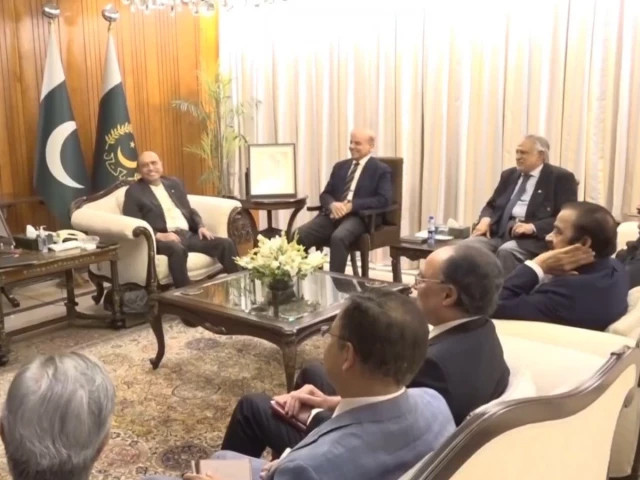
ISLAMABAD: Provinces—led by Sindh and Khyber Pakhtunkhwa (KP) — strongly pushed back on Thursday against the federal government’s bid to shift selected expenditures onto provincial budgets, cautioning the Centre during the maiden sitting of the 11th National Finance Commission (NFC) not to “dictate” responsibilities that fall outside its constitutional purview.
The provinces rejected federal suggestions that they assume financial responsibility for the Higher Education Commission (HEC), Benazir Income Support Programme (BISP) and development projects historically executed under the Public Sector Development Programme (PSDP).
Chaired by Finance Minister Muhammad Aurangzeb, the first NFC session saw Islamabad present a bleak fiscal outlook. Federal officials said national coffers had effectively run dry over the past 15 years, with debt servicing alone consuming the government’s entire resource envelope in the post-Seventh NFC Award period.
A 30-year fiscal review presented by the Centre compared the pre-Seventh NFC era (1995–2010) with the post-award period (2010–2025), showing the annual fiscal deficit swelling from around 4% to between 6.6% and 7%.
Officials argued that although 57.5% of the Federal Divisible Pool (FDP) now goes to provinces, the Centre still incurs an additional 15% on provincial functions—a gap that forces it to borrow heavily and fuels debt accumulation. Islamabad urged provinces to scale up their own revenue efforts to meet rising expenditure needs.
Provincial representatives countered that the NFC’s mandate is limited to deciding the vertical and horizontal revenue distribution formula, not apportioning federal expenditures. They stressed that the Centre cannot scrutinize how provinces utilise funds transferred under the NFC.
Sindh took the firmest line, asserting that the federal government has “no authority” under the constitutional NFC framework to question provincial spending decisions. Sindh also objected to the proposed Terms of Reference (ToRs), prompting the federation to state that any ToR-related dispute would be referred to the president.
Despite sharp disagreements, the meeting produced one notable breakthrough: consensus on formally recognising the merged tribal districts within KP as part of future NFC calculations.
KP Chief Minister Ali Amin Gandapur argued that the Seventh NFC Award had become outdated after the 18th Amendment, noting that key subjects—including population and education—had been devolved, while KP continued to bear the enormous financial burden of terrorism.
KP’s finance adviser added that the province’s development share, as a percentage of GDP, had dipped below its 2005 level. The next NFC session is expected to revisit these contentious issues as federal–provincial tensions over fiscal space persist.
Speaking to reporters outside the Q Block, Sindh Chief Minister Murad Ali Shah described the meeting as “congenial,” noting that the maiden session had earlier been postponed due to floods. He said all stakeholders agreed to issue a joint statement.
KP Finance Adviser Muzammil Aslam told the media the Centre reiterated it was left with “no money” after debt servicing. Punjab assured full cooperation in the renewed NFC process; its finance minister said the province had presented a budget surplus, eliminated all domestic borrowing, and carried only external debt.
Meanwhile, Balochistan’s finance minister argued that despite hosting Reko Diq and supplying natural gas, the province continued to receive an unfairly low share of national resources.
Senior federal officials, including the finance secretary and FBR chairman, briefed the commission. The FBR chairman said both tiers of government were collecting far below their tax potential and emphasised the need for stronger revenue mobilization nationwide. Finance Secretary Imdadullah Bosal said the Centre had been repeatedly forced to borrow in the post-Seventh Award era as expenditures kept rising without corresponding revenue growth, putting Islamabad under severe fiscal stress.
According to the Finance Ministry’s official statement, the 11th NFC’s inaugural meeting was chaired by Finance Minister Senator Muhammad Aurangzeb and attended by all four provinces at the chief minister or finance minister level, along with their designated NFC members. KP’s finance adviser participated on special invitation.
Welcoming the participants, Senator Aurangzeb highlighted the NFC’s constitutional significance and reaffirmed the federal government’s commitment—on the prime minister’s instructions—to convening the session without further delay.
He said the meeting had previously been postponed due to devastating floods in Punjab, KP and Sindh, but its successful convening reflected a shared resolve to shoulder national responsibilities.
The minister called for transparent, sincere dialogue and assured provinces that the Centre was present to listen and collaborate. He praised provincial cooperation in signing the National Fiscal Pact and delivering mandatory fiscal surpluses to meet IMF requirements. Despite external shocks and natural disasters, he said, federal and provincial governments had shown unity and resilience—a spirit he hoped would continue.
Sindh Chief Minister Murad Ali Shah said building consensus on the 11th NFC was essential and reaffirmed Sindh’s commitment to Pakistan’s unity and prosperity. He stressed that consensus must be developed within the NFC forum itself and that the commission must strictly follow its constitutional mandate.
KP’s chief minister thanked the Centre for convening the session, saying a strong federation requires strong provinces. He emphasized KP’s sacrifices in the war on terror and urged that the 11th NFC address what he termed “ultra vires” issues in the Seventh Award since 2018 by incorporating the population and variables of the newly merged districts into KP’s share.
Punjab Finance Minister Mian Mujtaba Shujaur Rehman welcomed the meeting, noting that consensus would require serious effort but was vital for equitable resource distribution and policy continuity. Balochistan Finance Minister Mir Shoaib Nosherwani echoed these sentiments, recalling his province’s longstanding cooperation with the federation and contributions such as Sui gas, Saindak and Reko Diq.
The session included broad strategic discussions on the 11th NFC Award, followed by detailed presentations from all provinces and the Centre on their fiscal positions and priorities, helping build a shared understanding of economic challenges. The commission reviewed the schedule for upcoming sessions and agreed to form technical subgroups to work on specialised areas.
A key decision was the creation of a dedicated subgroup on the merger of former FATA/newly merged districts and their share in the divisible pool, with recommendations expected by mid-January 2026.
The meeting concluded with members reaffirming their commitment to a transparent, collaborative and professional NFC process aimed at delivering an equitable and sustainable award for the people of Pakistan.
Comments
No comments yet. Be the first to join the discussion!