








ISLAMABAD: Amid ongoing tensions between Islamabad and Kabul, Pakistan on Thursday renewed its call for the Afghan Taliban authorities to take concrete action against terrorist groups operating from Afghan soil.
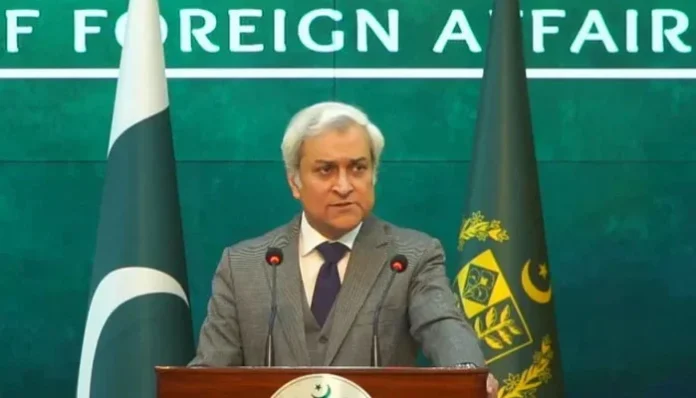
At his weekly press briefing, Foreign Office spokesperson Tahir Andrabi stressed that Pakistan would neither abandon diplomacy nor seek conflict with Afghanistan.
“Diplomacy continues even in wars. Diplomacy continues even during skirmishes,” he said, adding that Pakistan wished peace and prosperity for “our Afghan brothers and sisters.”
Citing a recent United Nations Security Council (UNSC) report, Andrabi said the document reinforced Pakistan’s stance regarding the banned Tehreek-e-Taliban Pakistan (TTP). The report, he noted, highlighted that Afghanistan’s interim government continued to provide a permissive environment for terrorist outfits.
He said the UNSC report also pointed to al-Qaeda acting as a “multiplier and service provider” to armed groups in Afghanistan and observed that the TTP enjoyed greater operational freedom, enabling attacks inside Pakistan.
“The report corroborates Pakistan’s position that TTP resurgence is linked to the post-2021 interim government takeover,” Andrabi said, adding that Islamabad would raise the matter with the UN Secretariat, Security Council members, and other relevant stakeholders.
On diplomatic engagements, the spokesperson confirmed that Prime Minister Shehbaz Sharif would attend the inaugural meeting of the Board of Peace on February 19, accompanied by Deputy Prime Minister and Foreign Minister Ishaq Dar.
“We have joined the Board of Peace in good faith… not in isolation, but as part of a collective voice of eight Islamic Arab countries,” he said, adding that the bloc would continue advocating for the rights and prosperity of the Palestinian people.
Responding to a question about India’s External Affairs Ministry statement following the recent Islamabad blast, Andrabi said it carried “an undertone of justification of terrorism.”
“It goes against India’s stated position that they oppose terrorism in all forms,” he said, adding that such statements suggested India opposed terrorism selectively.
The spokesperson also raised concerns over incidents of mob violence against Muslims in India, claiming that at least 55 Muslims were lynched last year. He alleged that some incidents reflected complicity or inaction by local authorities and called on New Delhi to investigate them. He urged the international community to monitor what he described as a broader climate of hostility fueled by Hindutva-driven narratives.
On US President Donald Trump’s remarks regarding last year’s brief India-Pakistan conflict, Andrabi said Pakistan appreciated Washington’s role in de-escalation and preventing war. He reiterated Pakistan’s claim that several Indian Rafale jets were shot down during the hostilities, stating that evidence had been corroborated by international reports and manufacturers.
Regarding Iran-US talks, Andrabi said Pakistan supported dialogue and diplomacy to resolve outstanding issues, including nuclear negotiations.
On cricket diplomacy, he said Pakistan’s decision to play a T20 match against India reflected “magnanimity” and followed outreach by Sri Lanka and Bangladesh, as well as recognition within international cricket bodies that politicising the sport was unwarranted.
He also noted that foreign ministers of eight Muslim-majority countries had issued joint statements condemning alleged Israeli ceasefire violations in Gaza and settlement activities in the occupied West Bank, while reaffirming support for the establishment of a Palestinian state based on the 1967 borders with Jerusalem as its capital.

r6rp3r