














LAHORE: A petition moved in the Lahore High Court has called for criminal and departmental proceedings against public officials after six people died and 124 others were injured during the Basant festivities earlier this month.
The plea, filed by Judicial Activism Panel chairman Azhar Siddique, relies on figures attributed to the Punjab Home Department to argue that the scale of casualties contradicts assertions that the event was conducted without major incident.
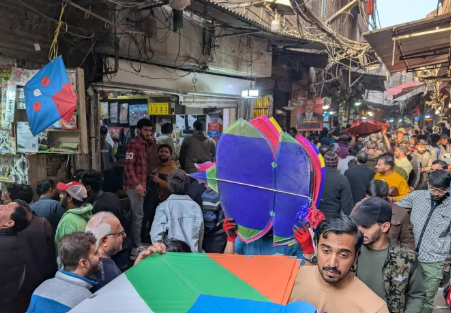
The provincial government had allowed Basant to be observed from February 6 to 8 within Lahore only, placing the festival under layered administrative checks, policing plans and safety instructions intended to avoid a repeat of past tragedies linked to kite flying.
Despite these measures, the petitioner maintained that hospitals across the city received dozens of injured individuals over the three days, including children hurt in rooftop falls and people wounded while attempting to retrieve kites from electric poles and narrow streets.
Central to the petition is the allegation that hazardous kite string remained widely available in markets before and during the festival. The plea argues that the continued circulation of such material reflects regulatory failure by departments responsible for enforcement.
The filing states that previous bans on Basant were imposed precisely because of fatal incidents connected to metal and glass coated strings, road accidents involving motorcyclists and falls from heights, and that permitting the event without eliminating these risks exposed citizens to preventable harm.
The petitioner has asked the court to initiate proceedings against those tasked with ensuring compliance with safety laws, to form a judicial commission to document the losses suffered during the celebrations, and to direct authorities to strictly implement prohibitions on the manufacture, transport and sale of dangerous kite string.
The plea further contends that official oversight should have extended to monitoring rooftops, electricity infrastructure and market supply chains in the days leading up to Basant, arguing that enforcement appeared reactive rather than preventive.
Basant, once a major cultural fixture of Lahore marking the arrival of spring, had remained banned for years due to repeated fatalities. Its limited revival under tight regulation was presented as a controlled experiment, but the petition questions whether adequate safeguards were practically enforced on the ground.
The matter is expected to come up for hearing in the coming days, where the court will examine the petitioner’s request for accountability and review the official record of casualties linked to the festival.