China’s market divergence draws investors seeking shelter from global volatility
Investors are increasingly treating Chinese assets as a diversification play as the country’s bonds, currency and stocks move differently from other major markets. The trend has drawn fresh foreign interest, even as some fund managers remain cautious.

BEIJING: Investors are increasingly reassessing Chinese assets as the country’s markets show a different pattern from many global peers, with bonds, the yuan and mainland equities drawing attention for holding up through recent geopolitical and market turbulence.
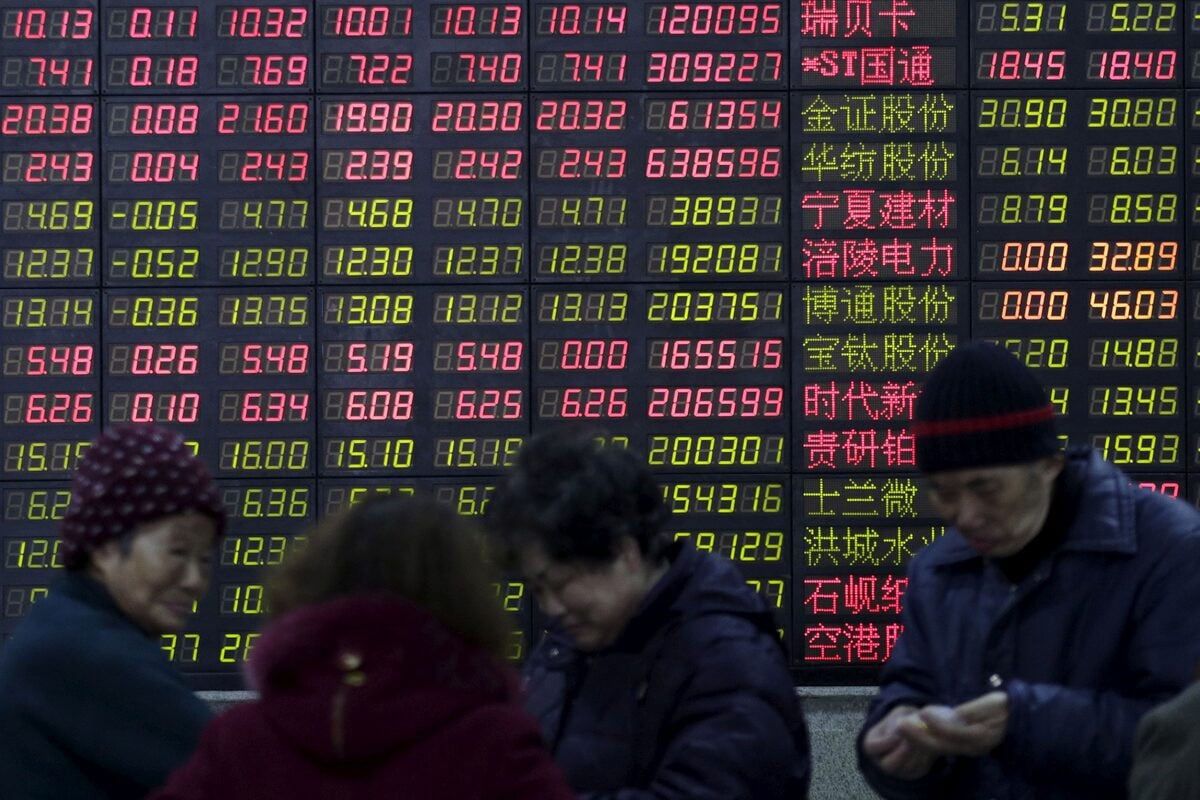
The shift in sentiment has been supported by steady performance during the war involving Iran and a broader global rush into artificial intelligence-linked trades elsewhere. Investors have responded by putting money into Chinese bonds and by looking for stocks whose performance is driven by domestic factors rather than the same forces moving US and other major markets.
Christopher Hamilton, head of client investment solutions for Asia Pacific ex-Japan at Invesco, said China’s place in portfolios was changing beyond the traditional emerging-market growth story.
"The role of China in portfolios is evolving from a simple emerging-market growth allocation toward a more nuanced source of diversification,"
Hamilton added “Diversification is ultimately about combining exposures that respond differently to economic and market conditions, and China is increasingly being assessed through that lens.”
Different drivers from other markets
Since the Middle East conflict began at the end of February, China’s bond market has been the best-performing in the world, while the yuan has been the only major currency to strengthen against the dollar. Helped by the currency’s rise, mainland blue-chip stocks recorded an almost 11 per cent gain in dollar terms in the first half of the year.
That increase was below the roughly 13pc advance in the S&P 500 and far behind South Korea’s KOSPI, which surged 110pc in dollar terms, but China’s gains were achieved without the same dependence on AI enthusiasm or on changing expectations around US interest rates.
Liu Gongrun, executive deputy director at the CEIBS Lujiazui International Institute of Finance in Shanghai, said this had altered how Chinese assets were being evaluated.
"It means that when we allocate to, and assess, Chinese assets, it is no longer determined by short-term valuations, trading sentiment or changes in the Federal Reserve’s interest rates,"
China’s relative separation from global market trends reflects an economy that is out of step with inflation cycles elsewhere, along with a stock market heavily influenced by retail investors whose priorities differ from those of international fund managers. Analysts also said regulators, state banks and state-backed investors had backed stability as a policy objective, helping support the yuan.
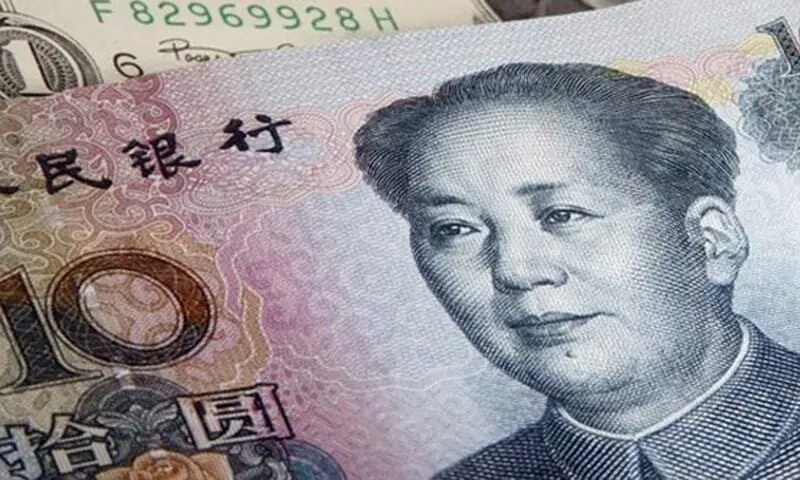
The currency has gained 5.4pc against the dollar over the past 12 months despite broad strength in the US currency and very low yields in China. That performance is linked to robust exports and to official support for a gradual and stable appreciation. Global banks have also raised their forecasts for the yuan, expecting further gains beyond the 6.7522 per dollar level reached in June, its highest in three and a half years.
Kelvin Lam, senior economist at Pantheon Macroeconomics, said the currency’s movement was being shaped less by conventional economic indicators and more by policy choices.
"Yuan strength is sort of detached from traditional bog-standard long-run drivers like how the economy is doing,"
He added “Instead, it is policy driven the intention from the authorities to project currency stability at a time of global chaos.”
Foreign investors return, though doubts remain
Asset managers have also returned to Chinese stocks and bonds after some investors had previously described the market as difficult to invest in. Wee Khoon Chong, Asia-Pacific macro strategist at BNY, said demand for Chinese bonds had revived because of their perceived safety and lower volatility.
"There has been renewed demand for China bonds, which we believe was driven by relative safety and low volatility,"
China’s benchmark 10-year sovereign yield has fallen nearly 10 basis points to 1.73pc since the start of the Iran war, while the 10-year US yield has risen 51 basis points over the same period. China’s bond market posted net foreign inflows in May for the first time in more than a year, which was the latest month for which data was available.
Liu Haoling, vice chairman of the securities regulator, told a forum in late May that foreign holdings of onshore A-shares had risen from 3.67tr yuan, or $541bn, at the end of last year to more than 4tr yuan. China has not published regular equity capital flow data since 2024.
Some investors remain cautious. Matthew Miskin, co-chief investment strategist at Manulife John Hancock Investments, said the firm had stayed neutral to underweight on Chinese equities in some strategies because they did not offer the earnings growth seen in South Korea or Taiwan. Others have been discouraged by weak consumer conditions in China and the long-running property slump.
Tom Graff, chief investment officer at Facet in Phoenix, Maryland, said China was not being viewed by his firm as a classic refuge.
"We aren’t thinking of it as a safe haven,"
He added:
"We certainly want to find assets that are less correlated to US markets, but in doing so we’re primarily thinking about risks around the AI trade and the US dollar,"
“Developed markets and some non-China emerging markets can serve that purpose just fine.”
Still, some investors say China’s distinct market behaviour remains attractive. Phillip Wool, head of portfolio management at Rayliant Investment Research, said the country’s onshore A-shares had long stood out as a diversification tool, and argued that economic decoupling had strengthened that case.
"We’ve long seen China’s market, especially onshore-listed China A-shares, as a rare source of diversification”, he stated.
“Now, in addition, you’ve got an actual economic decoupling that’s happening”, he added.
Comments
No comments yet. Be the first to join the discussion!