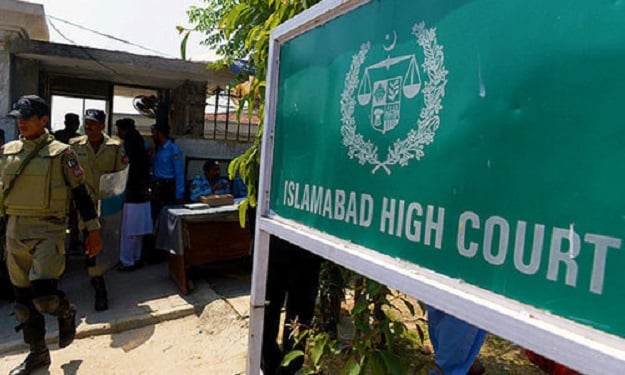
IHC strikes down Zone-III property transfer freeze in Islamabad
The Islamabad High Court has declared unlawful the administrative freeze on property sales, transfers and registration in several Zone-III areas of the capital. The court said the CDA and deputy commissioner lacked legal authority to impose a blanket ban.

ISLAMABAD: The Islamabad High Court has ruled that restrictions placed on the sale, purchase, registration and transfer of property in several Zone-III areas of the capital were without lawful basis, declaring the administrative freeze invalid and directing authorities to handle transactions under the law.
In a detailed written judgement issued by Justice Mohammad Asif, the court allowed a petition filed by Shah Allah Ditta resident Fazal Abbas through lawyer Kahsif Ali Malik. The case concerned Mouzas Shah Allah Ditta, Sangjani, Sara-e-Kharbooza and other similarly placed localities in Zone-III, where property dealings had been blocked following administrative directions.
Court says officials exceeded scope of earlier order
The judgement said the Capital Development Authority and the deputy commissioner had relied on a CDA letter and verbal instructions to halt registration and mutation of properties, but the court found that this step had no legal foundation. It held that officials had improperly widened the effect of an order issued on Nov 30, 2023.
According to the judgement, that earlier order was confined to stopping construction and sale activity connected to illegal housing schemes in Zone-III. It did not permit a complete suspension of all property transactions in the area.
“A careful reading of the operative portion of the said order leaves no room for ambiguity. The judicial direction was purpose-specific and aimed at curbing unauthorised development in Zone-III. It neither directed nor authorised the respondents to impose a complete embargo on registration and mutation of properties,” the judgement stated.
The court said executive authorities must carry out judicial directions as issued and cannot alter or broaden them through administrative action. It pointed to a communication dated Dec 1, 2023, sent by the CDA director general (Building and Housing Control) to the deputy commissioner, asking for registration and mutation to be stopped in various mouzas of Zone-III. The judgement said this led to the suspension of all types of transactions, including family arrangements, inheritance mutations and other bona fide transfers unrelated to illegal housing schemes.
Constitutional rights and legal authority
The court observed that neither the Capital Development Authority Ordinance, 1960, nor the Islamabad Capital Territory (Zoning) Regulations, 1992, gives the deputy commissioner authority to impose a general ban on registration and mutation of immovable property.
“Regulation of land use is fundamentally distinct from extinguishing or suspending proprietary rights through an executive embargo. The power to regulate construction cannot automatically be construed as power to prohibit lawful transfers of ownership,” the judgement stated.
Justice Asif held that the action was inconsistent with Articles 23 and 24 of the Constitution, which protect the right of citizens to acquire, hold and dispose of property in accordance with law and bar deprivation of property except by lawful authority. The judgement added that any executive measure affecting constitutional rights must rest on clear legal authority.
The court also found fault with the broad application of the restriction to all landowners in the affected mouzas rather than action against specific violators.
“Instead of proceeding against actual violators, the respondents have chosen to impose an indiscriminate restriction upon every landowner residing within the affected mouzas. Such generalised restriction bears no reasonable nexus with individual conduct and, therefore, cannot withstand constitutional scrutiny,” the judgement stated.
Petitioner’s case and official response
The judgement noted the petitioner’s personal circumstances, saying Fazal Abbas had been unable to manage financial matters and medical expenses for his mother’s kidney treatment because his property remained subject to the restrictions. The court described the impact as unjust and disproportionate.
The court ordered the authorities to process registration and transfer cases according to the law and settled procedure, and said lawful transactions could not be refused unless due process and express statutory authority existed.
After the judgement, the office of the deputy commissioner/commissioner (revenue) Islamabad issued a notification withdrawing the restrictions with immediate effect. It also instructed the district collector to make the administrative arrangements needed to implement the court’s ruling.
Comments
No comments yet. Be the first to join the discussion!