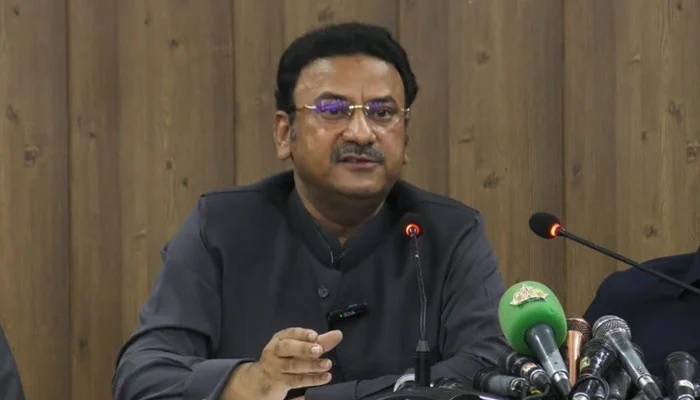
Minority lawmaker’s motion defeated despite louder ‘Ayes’ in voice vote in Sindh Assembly

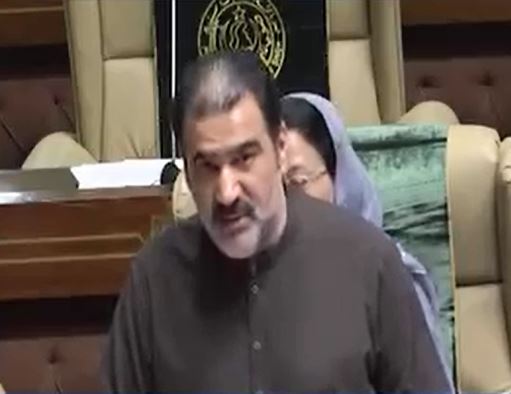
KARACHI: A motion moved by a non-Muslim lawmaker in the Provincial Assembly of Sindh was declared defeated following a voice vote, despite what appeared to be a louder response from members supporting the proposal, prompting renewed discussion over parliamentary procedure and the authority of the Chair.
The motion was introduced during a recent sitting of the House and was taken up for debate before being put to vote. As per standard practice, the Speaker first called on members in favour to respond, followed by those opposed. While the “ayes” seemed more audible inside the chamber, the presiding officer ruled that the “noes” had prevailed, and the motion was declared defeated.
The outcome immediately drew attention within political circles and among observers who questioned how a motion that appeared to receive stronger vocal backing could fail. However, under the Rules of Procedure of the Provincial Assembly of Sindh, 2013, a voice vote is decided not by measured sound or numerical count but by the judgment of the Chair.
In parliamentary practice, the Speaker assesses which side appears to have the greater support based on the collective response. There is no electronic system or headcount during a voice vote. The ruling delivered by the Chair becomes the official decision of the House unless a formal division — a recorded vote — is demanded in accordance with procedural requirements.
A division requires a member to formally challenge the voice vote and seek a counted vote. Such a request must meet the conditions laid down in the rules, including demonstrating sufficient support from other members. If these steps are not taken, or if the demand does not meet procedural thresholds, the Speaker’s ruling stands for that sitting.
There was no indication that a division was successfully invoked after the ruling. In the absence of a recorded vote, the decision remained final despite perceptions about the volume of support.
Parliamentary experts note that voice votes are designed to facilitate efficiency in legislative business, particularly for routine matters. However, when issues are closely contested or politically sensitive, members often resort to a division to ensure a transparent count.
The episode has fueled broader conversation about legislative transparency and the optics of parliamentary decision-making. While critics argue that contentious motions may warrant recorded voting to avoid disputes, supporters of the existing framework maintain that safeguards already exist within the rules — provided members actively use them.
For now, the motion stands defeated, underscoring the procedural reality that in legislative chambers, outcomes are determined not by how loud support sounds, but by how parliamentary rules are applied.
[video width="360" height="360" mp4="https://www.pakistantoday.com.pk/wp-content/uploads/2026/02/AQMGzCTFwaGvTTRZ75amQolUQM0rRUUY9D2Ni06Lziv_gR5K-ERCaLYrdu3zQrpNVM6JPpVQ0AKfXSXpQ-ciT840_Dg6blYdIdWWGdyO_g.mp4"][/video]
Comments
No comments yet. Be the first to join the discussion!