


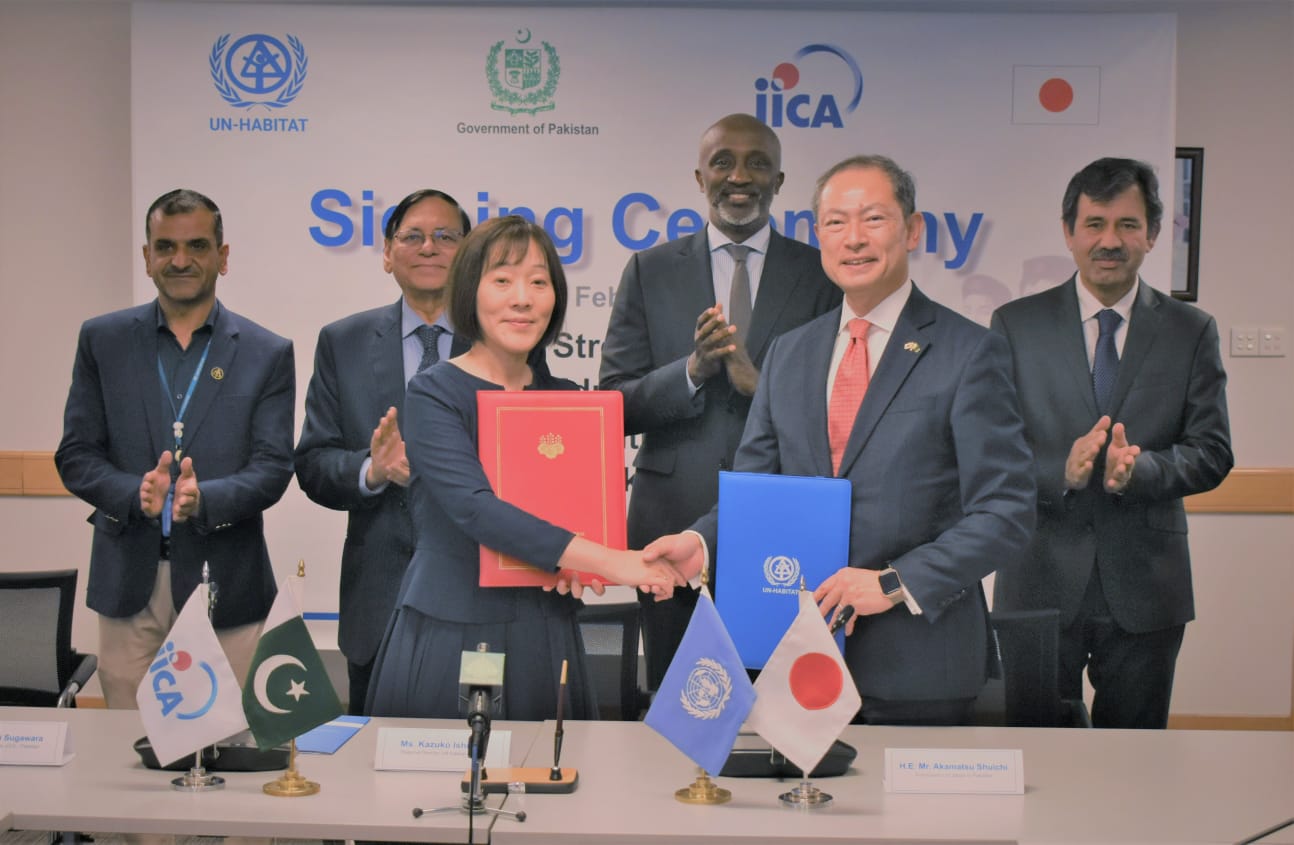
ISLAMABAD: The Government of Japan, UN-Habitat and the Japan International Cooperation Agency (JICA) on Wednesday signed an Exchange of Notes and a Grant Agreement for a project aimed at strengthening the disaster resilience of educational infrastructure in Khyber Pakhtunkhwa.
The initiative is supported through a Japanese grant of JPY 427 million, approximately USD 2.7 million, and focuses on improving the ability of schools in Swat and Buner to withstand climate-driven hazards following the severe cloudbursts and flash floods witnessed in 2025.
Khyber Pakhtunkhwa’s geography makes it particularly exposed to extreme weather events. Last year’s floods affected 437 schools, highlighting structural vulnerabilities and the urgent need to upgrade school buildings to make them safer and more resilient against future disasters.
Under the project, selected schools will undergo structural strengthening and retrofitting to enhance safety standards. Improvements will include better ventilation, lighting, and the restoration of gender-sensitive water, sanitation and hygiene facilities to ensure safe and dignified access for girls and children with disabilities.
Speaking at the ceremony, Ambassador of Japan to Pakistan H.E. Mr. Akamatsu Shuichi said the initiative reflected Japan’s continued support for Pakistan’s resilience efforts and emphasised that investing in safer schools protects children and ensures continuity of education during emergencies.
Ms. Kazuko Ishigaki, Regional Director for Asia and the Pacific at UN-Habitat, said the programme would deliver structurally stable learning spaces while also positioning schools as centres for disaster preparedness and community response.
JICA’s Senior Representative Mr. Sugawara Takayuki said the project followed the “Build Back Better” principle, ensuring that educational infrastructure is upgraded to reduce vulnerability to future shocks rather than simply restored to its previous condition.
United Nations Resident and Humanitarian Coordinator Mr. Mohamed Yahya said the collaboration supported Pakistan’s commitments under the Sendai Framework for Disaster Risk Reduction and aligned with the UN Sustainable Development Cooperation Framework by advancing safety and resilience for vulnerable communities.
Officials said the project would combine infrastructure upgrades with disaster awareness and preparedness measures so that schools can function as safe learning environments as well as community support hubs during emergencies.

