Jailed PTI leaders reject any move to raise voting age, question ‘fear of youth power’
Five jailed PTI leaders reject proposals to raise the voting age, arguing it undermines democracy and reflects fear of youth power. They emphasize the importance of youth participation in politics.

LAHORE: At least five senior Pakistan Tehreek-e-Insaf (PTI) leaders imprisoned at Lahore’s Kot Lakhpat Jail on Wednesday strongly opposed any proposal to raise the voting age, warning that such a move would amount to rolling back democratic rights and betraying fear of the country’s youth.
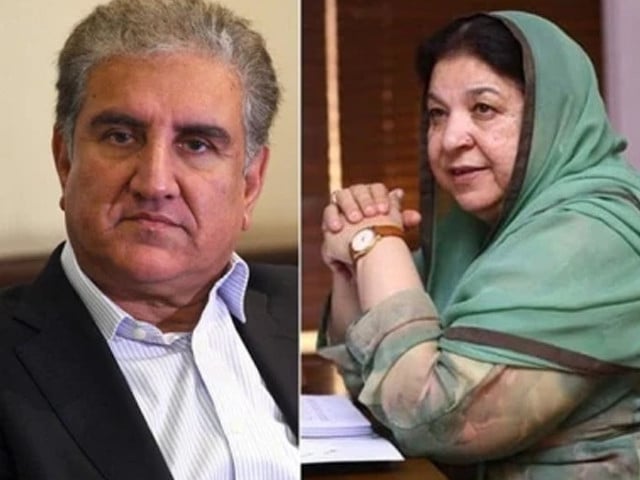
In a joint letter sent through their advocate, Shah Mahmood Qureshi, Dr Yasmin Rashid, Ejaz Chaudhry, Mian Mahmoodur Rasheed and Omar Sarfraz Cheema questioned the intent behind the ongoing debate on increasing the voting age from 18 to 25, asking whether those “operating in the dark” were afraid of the political awareness and collective power of young voters.
The statement comes amid an intensifying national debate, particularly on television talk shows and social media, over the possibility of raising the voting age. While no formal bill has been tabled in parliament so far, the discussion has triggered widespread concern, especially among opposition parties and youth groups.
Recalling Pakistan’s electoral history, the jailed PTI leaders noted that the country’s first general elections in 1970 were held when the voting age was 21. However, they said the realities of the 21st century — marked by rapid communication, digital connectivity and real-time access to global events — had fundamentally changed societal awareness and political understanding.
They pointed out that Pakistan itself recognised this transformation when it reduced the voting age from 21 to 18, a reform that was accepted without resistance from any segment of society. “That decision reflected trust in the maturity, insight and judgment of the youth,” the letter stated.
The leaders argued there was no rational justification for increasing the voting age when the state already recognises 18 as the threshold for obtaining a national identity card, entering into marriage and assuming other legal responsibilities. “If an 18-year-old is deemed mature enough to make life-altering decisions, on what basis are they considered unfit to vote?” the letter asked.
Raising a pointed question, the PTI leaders said the debate appeared to reflect a “fear-driven mindset” rooted in distrust of the youth’s conscience and political choices. They warned that attempts to curtail youth participation would only deepen alienation and weaken democratic legitimacy.
The letter also drew parallels with a past electoral reform that made graduation mandatory for contesting elections — a requirement that was later withdrawn after being widely criticised as discriminatory and impractical. The leaders suggested that any attempt to raise the voting age would meet a similar fate.
Describing young people as the nation’s most valuable asset, the jailed leaders said the youth’s insight, perception, decision-making power and collective wisdom had the potential to bring about transformative change. They warned that the younger generation would not allow the “wheel of history” to be turned backwards and would resist any effort to strip them of their constitutional right to vote.
The PTI leaders expressed hope that all political parties, particularly the Pakistan Muslim League-Nawaz (PML-N) and the Pakistan Peoples Party (PPP), would refrain from endorsing any move aimed at suppressing youth participation in the democratic process.
In recent days, social media platforms have been flooded with commentary highlighting that a significant portion of Pakistan’s electorate falls between the ages of 18 and 25. Analysts argue that raising the voting age would dramatically reshape the voter base and disproportionately disenfranchise young citizens.
Legal experts and commentators have also pointed out that any change to the voting age would require a constitutional amendment, which can only be passed with a two-thirds majority in parliament — a threshold difficult to achieve amid a polarised political environment.
Opposition voices maintain that rather than reform, raising the voting age would represent a step backwards for democracy, undermining political inclusion at a time when youth engagement is widely seen as essential for the country’s future.
Comments
No comments yet. Be the first to join the discussion!