









- Environmental body says vegetation loss goes beyond paper mulberry as large-scale tree cutting at Shakarparian and other sites
- WWF report links clearance to road and monument projects, disputing CDA’s claim of tree cutting to reduce pollen allergies
ISLAMABAD: WWF-Pakistan on Tuesday challenged the Islamabad authorities’ assertion that recent tree removal in the capital was carried out solely to address pollen allergies caused by paper mulberry, stating that the activity was also linked to infrastructure development across multiple locations.
In recent weeks, large-scale tree cutting has been reported at at least three sites in the federal capital, including acres of tree cover around Shakarparian. Islamabad’s Capital Development Authority (CDA) has maintained that only paper mulberry trees were removed, citing their role in triggering seasonal pollen allergies.
Earlier on Tuesday, Minister of State for Interior Tallal Chaudhry assured lawmakers that more trees would be planted in the coming months.
However, in a statement shared on social media, WWF-Pakistan said its field assessments indicated that vegetation loss in Islamabad was not limited to paper mulberry management alone.
“WWF-Pakistan’s field assessments indicate that vegetation loss in the capital is not limited to Paper Mulberry management alone but is also linked to infrastructure development in multiple locations,” the environmental organisation stated.
“Beyond pollen and allergies, Islamabad’s recent tree removal reflects broader challenges in urban planning,” it added.
Social media users and several lawmakers have alleged that, in addition to paper mulberry, old indigenous trees were also felled during the recent clearing operations.
Responding to these concerns during the National Assembly session on Tuesday, Chaudhry outlined what he described as “three possible reasons” for tree removal: the presence of paper mulberry species; areas designated as brown zones under Islamabad’s Master Plan but commonly perceived as green until development began, including Embassy Road; and sectors considered green areas until construction activity commenced.
“I am saying with utmost responsibility that no other species was removed,” the minister asserted, dismissing claims that trees other than paper mulberry had been cut.
In a Facebook post, WWF-Pakistan stressed the ecological importance of urban trees, noting that they play a critical role in soil stability, climate regulation, and biodiversity support.
“Any tree removal must follow evidence-based planning, legal compliance, and clear restoration commitments to ensure long-term ecological balance,” the organisation demanded.
WWF-Pakistan also released a detailed report consolidating findings from its field inspections on tree-cutting and land-clearing activities in Islamabad, alongside policy, health, and ecological considerations related to the ongoing removal of paper mulberry (Broussonetia papyrifera) and vegetation clearing for infrastructure development.
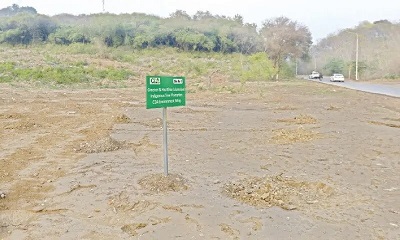
According to the report, between December 2025 and January 2026, extensive tree cutting and land-clearing activities were widely reported through social and formal media across multiple locations in the Islamabad Capital Territory (ICT), including Shakarparian, Lok Virsa, the National Museum precinct, the Islamabad Expressway (H-8), and the Margalla Enclave Link Road near the National Institutes of Health (NIH).
WWF-Pakistan said several of these activities were associated with major infrastructure development projects, including road construction and monument-related works, resulting in large-scale clearance of trees and natural vegetation.
The organisation subsequently carried out field verification to assess the nature, scale, and underlying drivers of the activities, and to distinguish between vegetation removal linked to infrastructure development and that undertaken for public health purposes.
The report acknowledged that paper mulberry has been identified by environmental and medical experts as a major contributor to seasonal pollen allergies in Islamabad, causing allergic rhinitis, asthma, and other respiratory illnesses.
“Under directives from the Prime Minister’s Office and public health authorities, the CDA launched a structured programme to systematically remove this species from parks, greenbelts, and public spaces,” the report recalled.
However, WWF-Pakistan concluded that while a significant portion of tree removal across Islamabad was associated with the paper mulberry eradication programme driven by public health considerations, substantial vegetation loss had also resulted from infrastructure development, particularly along the H-8 Islamabad Expressway—identified as a proposed monument site — and the Margalla Enclave Link Road.
“At the H-8 site alone, infrastructure-related land clearing has resulted in an estimated net loss of approximately five hectares of urban tree and vegetation cover,” the report stated.
While noting that reforestation and compensatory plantation efforts were reportedly underway at several locations, WWF-Pakistan said their visibility, consistency, and ecological design — particularly at infrastructure sites — remained unclear.
“The long-term ecological success of these interventions will therefore depend on transparent decision-making, clear and site-specific restoration planning, prioritisation of native species, and independent monitoring to ensure that Islamabad’s green character and ecological integrity are effectively safeguarded,” the report concluded.
According to the report, official sources indicated that more than 29,000 paper mulberry trees have been removed city-wide, including from Shakarparian, Fatima Jinnah Park (F-9), and greenbelts along Park Road and the H-8 Expressway.
Paper mulberry termed ‘highly invasive species’
In a separate research paper, WWF-Pakistan Forest Director Muhammad Ibrahim Khan proposed a science-based strategy for the gradual removal and replacement of paper mulberry in the ICT.
Citing previous research, the paper described paper mulberry (Broussonetia papyrifera) as a non-native, highly invasive species in Islamabad and Rawalpindi that has aggressively colonised natural vegetation pockets, from the Margalla foothills and associated nullahs to urban and peri-urban areas.
While acknowledging the species’ well-documented role in pollen allergies, the paper noted that it also suppresses native tree regeneration, ground flora, and associated wildlife habitats through rapid growth, dense canopy formation, and allelopathic effects.
The research cautioned that complete eradication of paper mulberry was ecologically impractical and technically unrealistic due to its strong regeneration capacity.
Expressing concern over current practices, the paper warned that sudden, large-scale removal — particularly uprooting — could lead to soil disturbance, erosion, loss of understorey vegetation, and displacement of urban wildlife.
“Indiscriminate felling may also unintentionally remove native species and mixed natural growth, further degrading ecological integrity and ecosystem services,” it said.
The WWF-Pakistan official called for all tree-removal activities to be guided by site-specific ecological assessments and legally compliant Environmental Impact Assessments, where applicable.
“Public disclosure of species removed, species planted, and survival outcomes is essential to maintain transparency and public trust,” the paper added.