Terrorists using BYC platform to recruit youth in Balochistan: CTD DIG

QUETTA: Balochistan Counter-Terrorism Department (CTD) Deputy Inspector General Aitzaz Goraya on Thursday alleged that terrorist groups were using the platform of the Balochistan Yakjehti Committee (BYC) to recruit and indoctrinate young people into their networks.
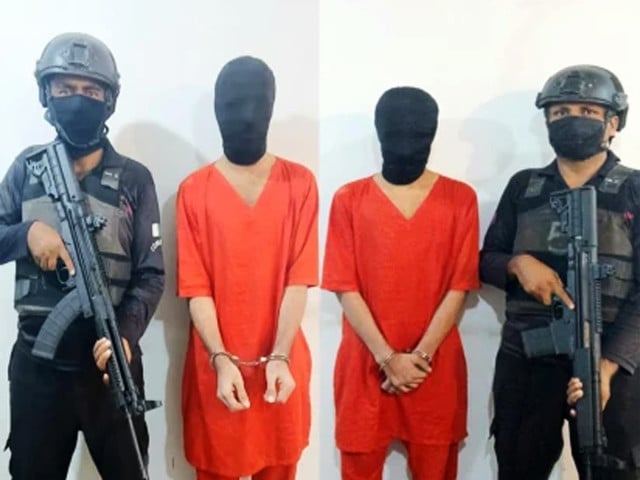
Addressing a joint press conference in Quetta alongside Balochistan Additional Chief Secretary Hamza Shafqaat, DIG Goraya shared details of a recent operation in Panjgur that led to the arrest of a suspected militant.
According to Goraya, the CTD, police and other law enforcement agencies arrested Sajid Ahmad alias Shahwaiz, a resident of Turbat. He said the suspect held a master’s degree in sociology from the International Islamic University, Islamabad, and had previously worked at Zubaida Jalal Government College on a contractual basis before teaching at the University of Turbat.
The CTD DIG claimed Sajid remained associated with the BYC and was in constant contact with its leadership. “One prominent aspect that has emerged is the role of the BYC. Every individual involved in facilitation or intelligence-sharing networks is somehow linked to the BYC,” he alleged.
Goraya said three more suspects had also been arrested and FIRs were being registered against them. One of them, 18-year-old Sarfaraz from Kharan, was allegedly tasked with conducting reconnaissance of police positions and polio teams.
“He was first made to join BYC and was involved in protests and roadblocks,” Goraya said, adding that Sarfaraz was inducted by 20-year-old Jahanzaib alias Mehrbaan.
According to the DIG, Jahanzaib was involved not only in reconnaissance activities but also in transporting extortion money and supplies. He allegedly transported Rs600,000 from Quetta on one occasion and Rs1 million on another, along with medicines. Jahanzaib was also accused of organising BYC roadblocks in Noshki and Kharan and coordinating participation in protests related to missing persons, including managing social media content.
Goraya further alleged that Jahanzaib inducted another 18-year-old, Bezan, into the BYC, after which he joined the banned Baloch Liberation Army (BLA). Bezan’s brother, Shafqat Yar, was killed during an attack on the Levies force in Khad Kocha, he said.
“All these individuals, including children, were gradually subverted and assigned small tasks before being taken further,” Goraya said, alleging that terrorist groups first use the BYC platform to target youth before fully inducting them.
He claimed that militant groups labelled by the state as Fitna-al-Hindustan had repeatedly denied using children but evidence showed otherwise. The term is used by the government to highlight India’s alleged role in sponsoring terrorism in Pakistan.
Goraya warned of a structured recruitment network that relies heavily on underage children, exploiting the fact that they face less scrutiny while attending schools and colleges. He urged parents to remain vigilant, adding that the provincial government was establishing internment and rehabilitation centres in Quetta and Turbat.
“These youths will undergo counselling, psychological treatment and dialogue, with the involvement of parents and community elders, so they can be reintegrated as responsible citizens,” he said.
He alleged that educated individuals, including those previously employed by the government, were being used to radicalise students and recruit them first into BYC and later into militant organisations.
DIG Goraya recalled that in April last year, he had questioned BYC’s legitimacy during a press conference, later stating that the group was not a registered organisation. During the same period, Chief Minister Sarfraz Bugti had described BYC activists as “abettors” of separatist elements amid widespread protests.
Sajid linked to BLA, BLF
Providing further details, Goraya said Sajid was involved with both the banned BLA and Baloch Liberation Front (BLF). He allegedly conducted reconnaissance of sensitive locations in Turbat, marking them on Google Earth and sharing the information with a commander identified as Dostain, based in a neighbouring country.
The locations included the CTD complex, access roads to Turbat airport and an under-construction high court building.
Weapons and explosives recovered from Sajid’s vehicle included a rocket-propelled grenade, five rockets, two M-16 rifles with 23 magazines and 800 rounds, 20 hand grenades with fuses, 30 slabs of C4 explosives, detonating cord, remote controls, helmets, a compass and UBGL rounds. Sajid was arrested while travelling from Panjgur towards Turbat.
Goraya said Sajid was also involved in producing and circulating subversive literature online and played an active role in recruitment. He further alleged that Sajid facilitated meetings with militant commanders across the border and that sophisticated weapons were smuggled through established routes.
He added that Sajid’s sister-in-law was also associated with BYC and that properties were acquired under her name for storing and transporting militant supplies.
Over 100 suspects abroad, red notice process underway
Speaking at the press conference, Additional Chief Secretary Hamza Shafqaat said a Red Notice Cell had been activated, comprising officials from the CTD, home department and the prosecutor general’s office.
“They have compiled lists of over 100 individuals currently abroad who are conspiring against Pakistan, promoting terrorism, financing militant activities and engaging in propaganda,” he said.
Shafqaat explained that court orders were required before names could be forwarded to Interpol. The process involves filing a charge sheet, declaring the suspect a proclaimed offender and then approaching the interior ministry to pursue a red notice.
He said both the federal and provincial governments were arranging additional funds to strengthen the CTD. Shafqaat also highlighted the establishment of the Provincial Intelligence Fusion and Threat Assessment Centre (PIFTAC), which became fully operational in December 2025.
“We plan to extend this system to the district level, and by March, intelligence sharing and operational coordination will be fully integrated,” he said.
He added that detention centres had been set up, two amendments made to the Anti-Terrorism Act, and faceless courts would be launched within the next two months.
Comments
No comments yet. Be the first to join the discussion!