CM Maryam sets deadlines for healthcare upgrades, boosts agriculture and anti-corruption drive

- Punjab CM orders OPD Block of Nawaz Sharif Cancer Institute be made functional by Jan 17 and Nawaz Sharif Institute of Cardiology Sargodha by Jan 31
- Direction introduction of special cards for cancer and cardiac treatment costs up to Rs1m
- China-Punjab MoUs signed for advanced agricultural technology and high-quality seeds
LAHORE: Punjab Chief Minister Maryam Nawaz on Tuesday set strict timelines for the operationalization of major healthcare facilities and announced sweeping reforms to ensure free, quality treatment for cancer and cardiac patients across the province.
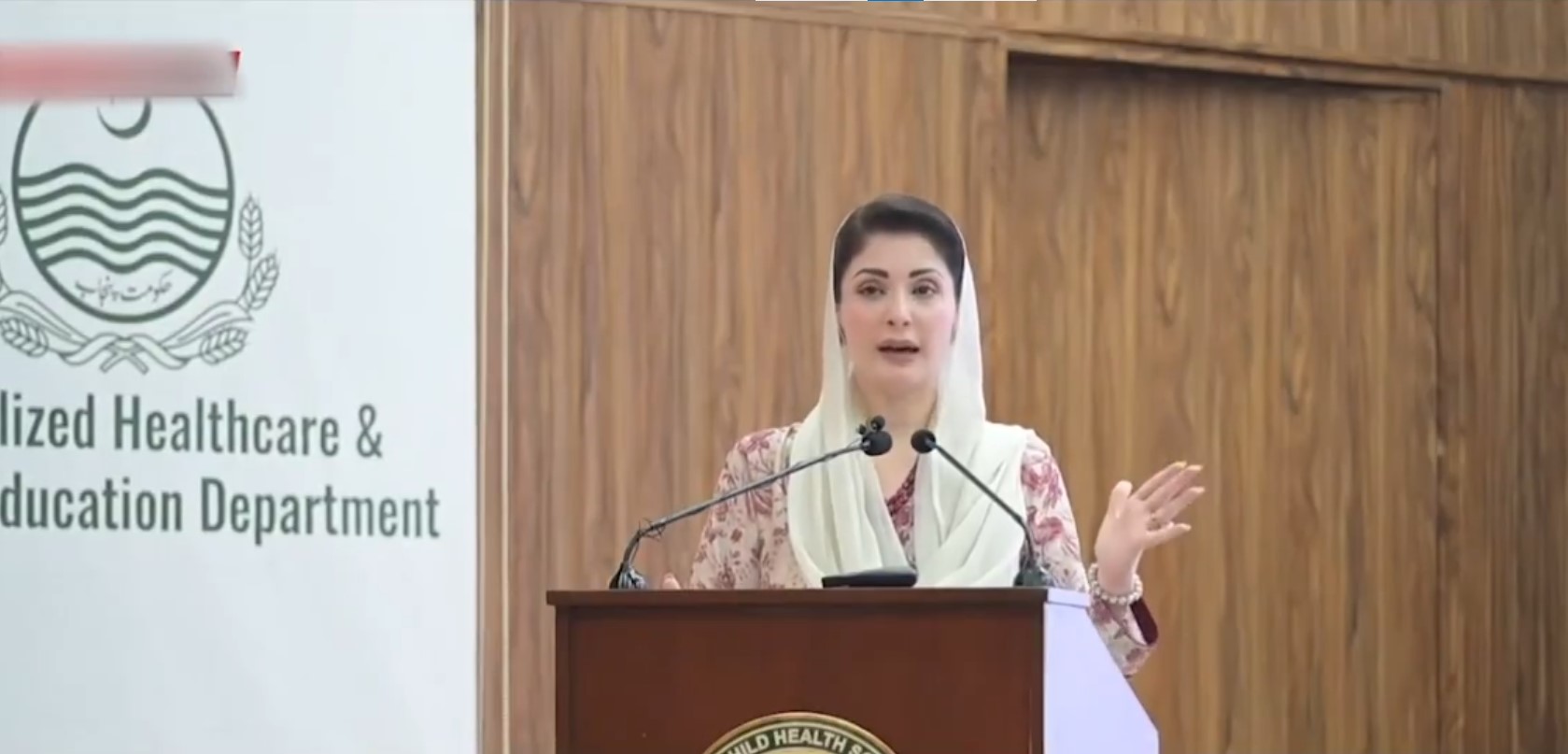
Presiding over a high-level meeting on Specialized Healthcare and Medical Education, she directed that the OPD Block of Nawaz Sharif Institute of Cancer Treatment and Research be made operational by January 17, while the Nawaz Sharif Institute of Cardiology Sargodha should be fully functional by January 31. She also instructed the introduction of special treatment cards for cardiac and cancer patients to facilitate seamless access to medical services.
Officials briefed the Chief Minister on the Cancer and Cardiac Surgery Special Card Project, explaining that under the initiative, the Punjab government will bear the complete treatment cost for patients suffering from cancer and heart diseases. Each patient will be able to avail of treatment facilities worth up to Rs1 million through these cards, benefiting 45,000 patients in the first phase. The program also includes free heart surgeries under the Chief Minister Cardiac Surgery Program, while a comprehensive plan for timely stroke patient treatment is being prepared.
Regarding staffing, authorities informed Maryam Nawaz that the Board of Governors of the Institute of Cancer Treatment and Research has approved recruitment against 219 vacant positions in the first phase. For the Institute of Cardiology Sargodha, 258 positions have been approved, with OPD, IPD, Emergency, Pathology, and Radiology departments set to be functional by the January 31 deadline. Additionally, the Jinnah Institute of Cardiology will start operations on February 15, with 1,104 positions sanctioned for recruitment.
Officials also highlighted Punjab’s healthcare achievements over the past 11 months, noting that 57 major hospitals treated 25 million OPD patients and 6.2 million emergency patients. Medicines worth Rs19.9 billion were provided, including 537,511 patients who received medicines at home under the Chief Minister Medicine Home Delivery Program, valued at Rs480 million. Government hospitals conducted 744,430 surgeries, 475,040 CT scans, 150,925 MRI scans, 105,155 angiographies, 157,950 echocardiography tests, over 1.2 million ultrasounds, more than 1.8 million X-rays, and pathology diagnostics for over 15 million patients.
Punjab’s Agricultural Development with China
Separately, CM Maryam Nawaz chaired a meeting reviewing Punjab’s agricultural progress and announced strengthened cooperation with China through the signing of multiple Memorandums of Understanding (MoUs). Two B2B MoUs will focus on modern agricultural technologies and machinery, while three MoUs target agricultural research and technological cooperation, and one MoU ensures the availability of high-quality seeds for farmers. Authorities briefed her that Punjab has maintained a stable supply of fertilizers, avoiding price spikes, hoarding, or black-market sales.
The province has achieved a record wheat plantation, bringing 16.5 million acres under cultivation, the highest in the country. Fertilizer sales rose by 26% and wheat seed sales by 27% compared to last year. A Rs500 per bag subsidy on certified wheat seeds was provided, while 800,000 Kisan Cards have been issued to facilitate loans worth Rs250 billion, of which Rs160 billion was used to purchase seeds, fertilizers, and pesticides. Loan repayment rates have reached 96%, the highest in Punjab.
In South Punjab alone, loans totaling Rs105 billion were disbursed, with 8% of Kisan Cards issued to small farmers (1–5 acres) and 6% of farmers benefiting from formal banking for the first time. Fertilizers worth Rs110 billion were purchased through Kisan Cards. Mechanization initiatives, including 30,000 green tractors worth Rs25 billion and 10,000 Super Seeders worth Rs10 billion, have reduced the productivity gap. In phase 2 of the Green Tractor Scheme, 9,500 tractors were allocated, with 8,554 farmers receiving 90% allotment letters, and 3,389 of 5,030 tractors already delivered.
Under the High-Tech Machinery Financing Program, 6,077 farmers registered for credit support, with 2,438 applications forwarded to the Bank of Punjab for approval. Requests include harvesters, high-horsepower tractors, rice transplanters, straw balers, and multi-crop planters, while 5,000 Super Seeders and 20,000 farm-level implements are planned for distribution over the next three years. Subsidies of 68% will be provided on 38 types of equipment, with distribution of the first 2,500 units beginning in January 2026.
CM’s Message on International Anti-Corruption Day
On the occasion of International Anti-Corruption Day, CM Maryam Nawaz emphasized that corruption spreads unrest and hopelessness and constitutes a social, economic, and moral injustice. She reaffirmed her government’s zero-tolerance policy toward corruption, highlighting that initiatives for transparency and improved service delivery have enhanced Pakistan’s international image.
She noted that the introduction of a KPI system has made government officers more efficient and accountable, leading to better public services. “Corruption is not just a moral decline—it is the enemy of national development, damages resources, and undermines public trust,” she said. The Chief Minister stressed that the government is committed to eradicating corruption at all levels, making the Anti-Corruption Department an independent institution, and encouraged all segments of society to cooperate in building a corruption-free, prosperous Punjab.
Maryam Nawaz underscored that the fight against corruption is a collective responsibility of governments, civil society, media, and citizens alike, and that taking concrete steps against financial wrongdoing remains a top priority for the provincial government.
Comments
No comments yet. Be the first to join the discussion!