Aurangzeb highlights economic stabilisation, reforms and new trade opportunities at Doha Forum

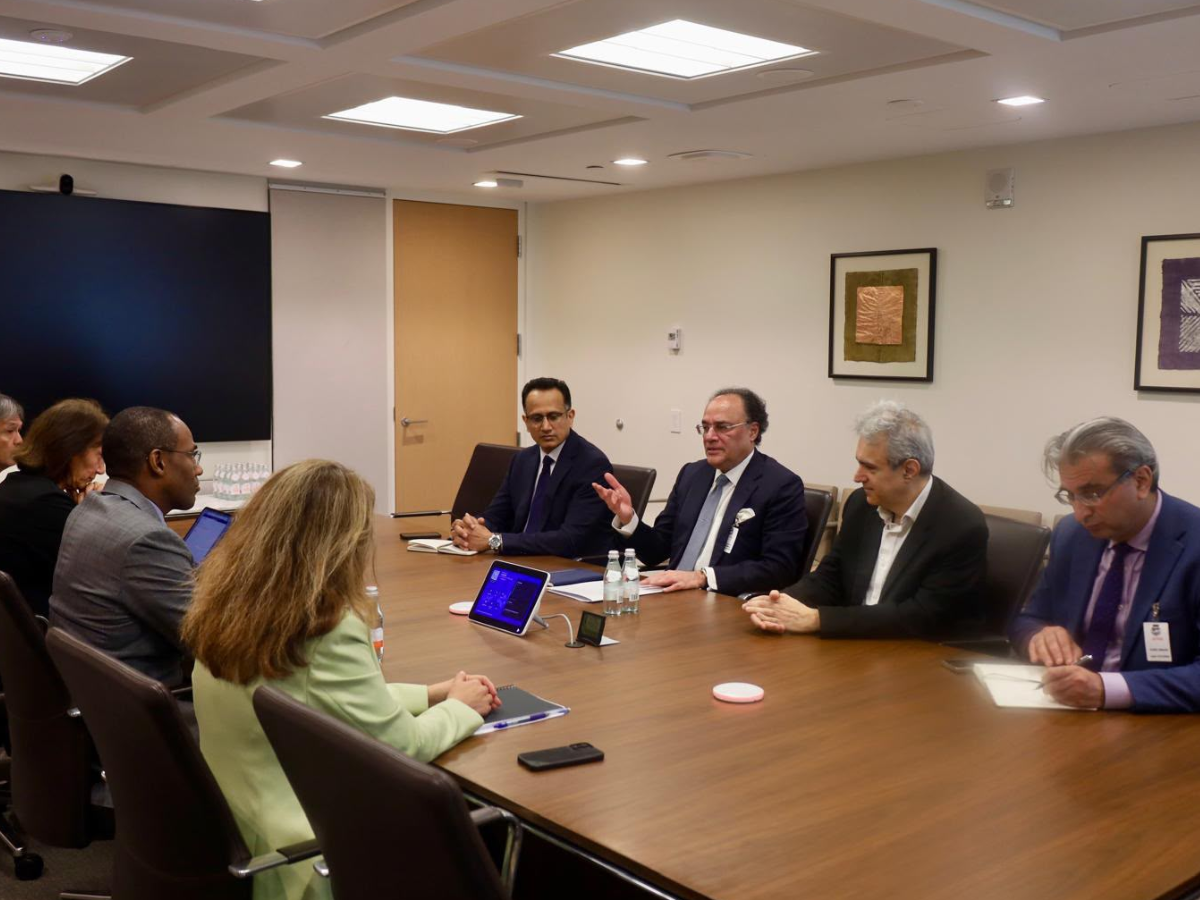
DOHA: Finance Minister Senator Muhammad Aurangzeb delivered an upbeat assessment of Pakistan’s economic trajectory at the Doha Forum, telling a high-level panel that the country has “rebuilt fiscal buffers, restored external balance, and is now shifting decisively from stabilisation to sustainable growth.”
Speaking at the session Global Trade Tensions: Economic Impact and Policy Responses in MENA on Saturday, the minister said Pakistan was “embarking on the right path of reform and resilience,” crediting the post-IMF programme overhaul for easing pressures at a time of global trade disruptions, tariff changes and intensifying geo-economic competition across the Middle East and North Africa.
“This period of uncertainty demands adaptability,” Aurangzeb remarked, noting Pakistan’s “prudent engagement” with the United States on tariff issues—which resulted in a relatively favourable 19 per cent tariff on key textile exports—and highlighting efforts to diversify both markets and products. He pointed to strong momentum in IT services, with exports expected to reach $4 billion this year.
Qatar’s Finance Minister Ali Bin Ahmed Al Kuwari described Pakistan as a “brother country” and confirmed that the recently concluded GCC–Pakistan Free Trade Agreement—the bloc’s first FTA in years—would reshape regional trade flows. Calling it “a major strategic milestone,” he said the agreement would deepen cooperation in energy, agriculture, textiles and advanced technologies.
Al Kuwari also praised Pakistan’s fast-growing talent pool in AI and digital innovation, saying Qatar was keen to collaborate in artificial intelligence, digital infrastructure and skills development.
IMF Deputy Managing Director Bo Li commended Pakistan for making “significant strides” in fiscal discipline and resilience-building. He reaffirmed the Fund’s support through the $1.3 billion Resilience and Sustainability Facility, which backs green budgeting, climate-risk assessments and climate-resilient infrastructure.
Aurangzeb cautioned, however, that climate change poses a more immediate threat than geopolitics, noting that this year’s floods alone cost Pakistan 0.5 per cent of GDP.
Highlighting Pakistan’s position as the world’s third-largest freelancer base, he said the country’s next digital transition—from basic programming to AI and blockchain-based skills—could raise freelance earnings from the current $10–12 per hour to as high as $60–250.
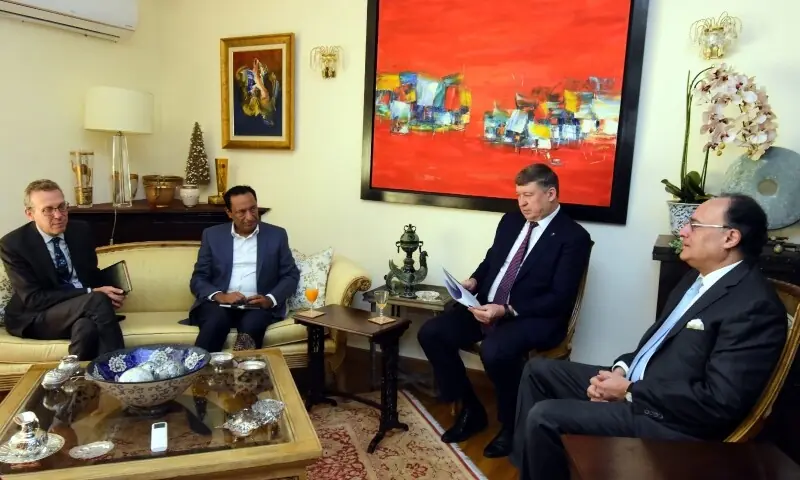
Later in the day, Aurangzeb and Al Kuwari held bilateral discussions in which both sides agreed to fast-track opportunities created by the FTA and deepen cooperation in LNG, trade and technology. They also agreed to establish structured mechanisms for collaboration in AI capability development, climate resilience and investment facilitation.
In a separate panel on shifting US–China dynamics, Hina Rabbani Khar, Chairperson of the National Assembly’s Standing Committee on Foreign Affairs, warned that the selective use of economic and human rights sanctions was contributing to global fragmentation. The discussion explored how countries—particularly in the Global South—are attempting to balance ties with both Washington and Beijing amid rising strategic competition.
Comments
No comments yet. Be the first to join the discussion!