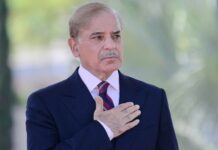













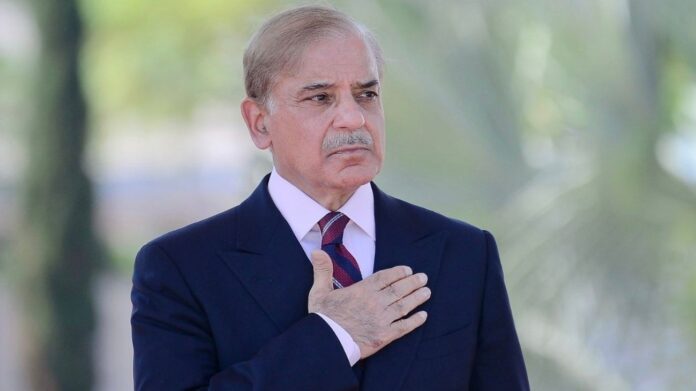
Pakistan’s development story has long been marked by a quiet but persistent imbalance, where opportunity is shaped less by merit than by geography and where entire regions remain excluded from the promise of national progress. When Prime Minister Shehbaz Sharif speaks about national progress, he almost invariably returns to a familiar promise that Pakistan can only move forward if equal opportunities and uplift are ensured across all regions. Few Pakistanis would disagree with the sentiment. Fewer still would argue that this vision has ever been pursued with the seriousness it requires.
This is more than a statistic. It is a barrier between aspiration and opportunity for millions of Pakistanis who have been told they are the country’s greatest asset while being left on the margins of its economy. Without the centre ensuring equitable investment and oversight across all regions, mismanaged provinces will leave youth without jobs or opportunity, and Pakistan’s potential will remain unfulfilled
Behind the polished speeches and symbolic gestures lies a harsher reality. In Pakistan, opportunity is largely determined by geography, where birth rather than talent or ambition often decides access to education, healthcare, employment, and even personal security. These regional inequalities are neither accidental nor merely economic failures. They are the cumulative result of political choices that have, over time, hollowed out national cohesion and deepened exclusion across vast parts of the country.
From Balochistan to the former tribal districts, from southern Punjab to interior Sindh, entire regions remain locked out of development. Public services are scarce, infrastructure is crumbling, and economic opportunities are limited. In contrast, a handful of urban centres like Lahore, Islamabad, Karachi continue to absorb a disproportionate share of public investment. This stark imbalance has effectively created two Pakistans, one plugged into global markets and opportunities, and another trapped in persistent cycles of deprivation.
The consequences of this divide are no longer theoretical. In neglected regions, disillusionment among young people has, in some cases, hardened into anger and even violence against the state. Research by the Population Council underscores a stark truth: Pakistan’s regional disparities are not accidents, but the cumulative result of decades of skewed development policies and misplaced political priorities. When millions are systematically excluded from the nation’s growth, instability ceases to be an exception and becomes an inevitable outcome. In response, the government often highlights initiatives like laptop distributions or scholarships for study abroad as evidence of its commitment to youth and opportunity. For the fortunate few who benefit, these programmes can indeed be life-changing. But as tools to address structural inequality, they fall far short.
A laptop cannot compensate for a school without teachers or electricity, nor can a foreign scholarship fix the absence of local universities, vocational centres, or industries capable of absorbing graduates. These initiatives treat symptoms rather than causes, offering selective opportunity while leaving the vast majority of marginalized youth trapped in the same cycles of deprivation.
Politicians have long described Pakistan’s youth as the country’s greatest asset, and Prime Minister Sharif is no exception. The phrase has become a familiar refrain, repeated so often that it risks losing meaning. The real challenge is not recognizing the value of young people, but creating the conditions that allow their potential to become productive. Talent is abundant across neglected regions, yet opportunity is scarce.
Without access to quality education, meaningful employment, and adequate infrastructure, the promise of this demographic dividend remains unrealized, and the nation squanders the potential of millions. Pakistan does not lack human capital; it fails to nurture it equitably. A young person in Islamabad enjoys superior schools, better healthcare, networks and job prospects than someone of equal ability in Turbat, Tharparkar or southern KP. This is not a failure of individuals, but of the state’s development model.
At its core, Pakistan’s economic crisis is less a matter of scarce resources than of how they are distributed. Successive governments have prioritized short-term, politically visible projects over long-term investments in neglected regions. Roads are built where votes matter most, not where connectivity could unlock new economic potential. Universities flourish in cities that already have them, while vast areas remain educational deserts.
True holistic development demands a fundamental rethinking of these priorities. Public investment must shift toward historically marginalized regions not as charity, but as a deliberate strategy for national growth. Experience from around the world demonstrates that inclusive development is not only ethically sound, but economically smart. When neglected regions are connected to markets, provided quality education, and supported by local industries, they transform from passive dependents into active contributors to national prosperity.
Achieving meaningful change will require political courage. Resources must be decentralized, but decentralization alone is insufficient without accountability at provincial and local levels. Development planning cannot remain a collection of headline-grabbing projects; it must be guided by data, evidence, and genuine assessment of need. Most importantly, the state must abandon the illusion that symbolic gestures like laptops, scholarships, or occasional aid can substitute for structural reform.
The crisis on the ground is clear. According to the latest labour force data, Pakistan’s overall unemployment rate has risen to around seven percent, with roughly eight million people without work. A disproportionate share of this joblessness falls on the young: those aged 15 to 24 face unemployment rates exceeding 12 percent, higher than the national average and stubbornly persistent across regions. Young women are especially hard hit, and even graduates struggle to find meaningful employment.
This is more than a statistic. It is a barrier between aspiration and opportunity for millions of Pakistanis who have been told they are the country’s greatest asset while being left on the margins of its economy. Without the centre ensuring equitable investment and oversight across all regions, mismanaged provinces will leave youth without jobs or opportunity, and Pakistan’s potential will remain unfulfilled.