










- Premier Shehbaz joins group of world leaders in signing charter of high-profile int’l platform for conflict resolution
- Board of Peace launched in Davos with 19 nations, chaired by President Trump with Gaza reconstruction, demilitarization and Int’l stability on agenda
- New Gaza reconstruction plan unveiled, including modern settlements and commercial zones
- Hamas warned to disarm or face ‘the end,’ as Trump vows Gaza demilitarization
- Rafah border to reopen in both directions, signaling hope for Palestinians
- Amnesty International flags concerns over international law and UN bypass
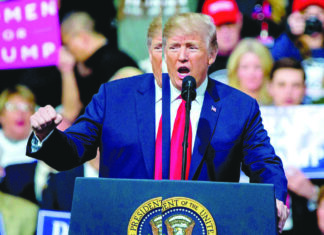
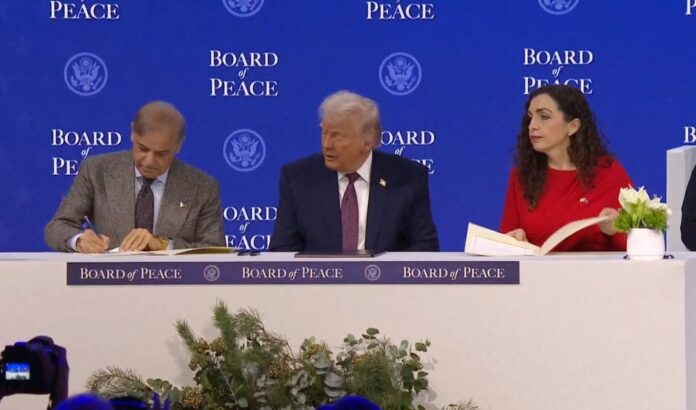
DAVOS / ISLAMABAD: Prime Minister Shehbaz Sharif joined a group of world leaders on Thursday in signing the charter for the newly established Board of Peace, a high-profile international platform for conflict resolution headed by United States President Donald Trump.
The signing ceremony, held in Davos, Switzerland, marked the official launch of the body, which Trump has billed as a mechanism for resolving international conflicts, with a particular focus on the Gaza Strip following Israel’s two-year war on the Palestinian enclave.
The Board of Peace was initially conceptualized to oversee peace in Gaza, but its charter outlines a broader mandate to address global conflicts. Leaders and senior officials from 19 countries, including Pakistan, gathered on stage with Trump to put their names to the founding document.
براہِ راست: وزیراعظم کی ورلڈ اکنامک فورم کے موقع پر غزہ بورڈ آف پیس پر دستخط کی تقریب میں شرکت https://t.co/yATz58UJzp
— Government of Pakistan (@GovtofPakistan) January 22, 2026
Trump, who serves as the chairman of the Board of Peace, described the assembled leaders with characteristic flair: “In most cases very popular leaders, in some cases not so popular. That’s the way it goes in life.” He added, “Just about every country wants to be a part of it. Those present here are simply here because they were in Davos at the right time.”
Prime Minister Muhammad Shehbaz Sharif signs charter of Board of Peace on the sidelines of 56th Annual meeting of the World Economic Forum. pic.twitter.com/MGCrMhe852
— Government of Pakistan (@GovtofPakistan) January 22, 2026
White House Press Secretary Karoline Leavitt confirmed the body’s formal launch, stating, “Congratulations, President Trump. The charter is now in full force, and the Board of Peace is now an official international organization.” Trump described the signatories as “friends of mine. I like every single one of them,” and said their participation reflected their shared commitment to global peace.
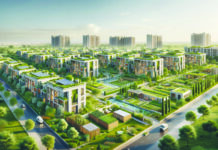
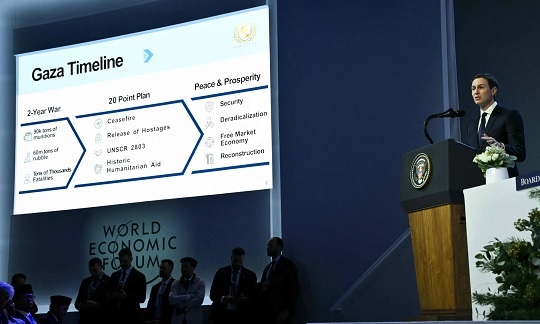
The event featured an ambitious plan for the reconstruction of Gaza. Trump described the devastated Palestinian territory as “great real estate” and outlined the first steps of what he called a “New Gaza” project. Jared Kushner, Trump’s son-in-law and former property developer, presented slides showing master plans for the territory, including new settlements, gleaming seafront hotels, and modern apartment complexes. “It could be a hope. It could be a destination,” Kushner said, emphasizing the need for Gaza’s reconstruction to proceed alongside the disarmament of Hamas.
Trump insisted that Hamas must comply with the ceasefire terms or face “the end” of the movement. “They have to give up their weapons, and if they don’t, it’s going to be the end of them,” he warned. He further asserted that the US is committed to ensuring Gaza is “demilitarized, properly governed, and beautifully rebuilt,” stressing that the Board of Peace would operate “in conjunction with the United Nations” to achieve its goals.
During the ceremony, Trump lauded the signatories, including PM Shehbaz, and reiterated the potential of the board to shape international affairs. “Everybody in this room is a star. There’s a reason you’re here. When you use that inspired genius for peace, the opposite of peace has no chance,” Trump said. He highlighted achievements under Phase 1 of the Gaza ceasefire plan, noting that the US had delivered record levels of humanitarian aid, secured the release of 20 Israeli captives, and returned the bodies of most of the deceased.
PM Shehbaz Sharif, who accepted the invitation to join the Board , participated in the signing alongside representatives from Argentina, Armenia, Azerbaijan, Bahrain, Bulgaria, Hungary, Indonesia, Jordan, Kazakhstan, Kosovo, Mongolia, Morocco, Paraguay, Qatar, Saudi Arabia, Turkiye, UAE, and Uzbekistan.
While the United States serves as the only permanent member to commit so far, the charter requires permanent members to pay $1 billion for membership, prompting criticism that the board could become a “pay-to-play” alternative to the UN Security Council.
France and Britain have so far declined to join, while China has not yet announced its position. Trump also extended invitations to Israel’s Prime Minister Benjamin Netanyahu, who is facing an ICC arrest warrant for alleged war crimes in Gaza, and to Russian President Vladimir Putin, who invaded Ukraine four years ago. While Trump said both leaders had agreed in principle, Netanyahu was absent, and Putin indicated he was still reviewing the invitation.
The ceremony emphasized the board’s focus on Gaza, but Trump framed its mandate as global. “The first steps toward a brighter day for the Middle East and a much safer future for the world are unfolding before your very eyes,” he said. “Together we have an incredible chance — I don’t even call it a chance, it’s going to happen — to end decades of suffering, stop generations of hatred and bloodshed, and forge a beautiful, everlasting and glorious peace for the region and the whole world.”
US officials also addressed the broader geopolitical context. Secretary of State Marco Rubio called the board “a board of action” and underscored the focus on Gaza as the highest priority. “This is not just a Board of Peace, but a board of action, just like President Trump is a president of action,” Rubio said, adding that the body could serve as a model for resolving other “seemingly impossible” conflicts globally.
Middle East envoy Steve Witkoff also stressed that the board’s initial focus should remain on implementing a “sustainable Gaza peace deal.”
Brazen disregard for int’l law, human rights: Amnesty
While the launch drew praise from some quarters, human rights organizations expressed deep concerns. Amnesty International described the event as a “brazen disregard for international law and human rights,” warning that the board represented a “stark new manifestation of the escalating assault on United Nations mechanisms, international justice institutions and universal norms.”
Today’s ceremony marking the establishment of the so-called global ‘Board of Peace’ lays bare a brazen disregard for international law and human rights.
It also represents a stark new manifestation of the escalating assault on United Nations mechanisms, international justice…
— Amnesty International (@amnesty) January 22, 2026
Amnesty further stated that the initiative “is fundamentally at odds with the international legal system that underpins the global order,” adding that the mechanism risks being shaped by “political and economic interests, personal ambition or vanity” rather than global justice.
It is a slap in the face of decades of efforts to strengthen global governance through adherence to universal values and greater equality between member states and derails legitimate efforts to address the current system’s limitations and gaps.
— Amnesty International (@amnesty) January 22, 2026
Rafah is more than a gate, a lifeline and symbol of opportunity: Shaath
As part of the Board of Peace’s operational plans, the Rafah border crossing between Egypt and Gaza is scheduled to reopen in both directions next week, according to Ali Shaath, the newly appointed administrator of Gaza under the US-backed plan.
PEACE IN THE MIDDLE EAST: Ali Shaath, Chief Commissioner of the National Committee for the Administration of Gaza, thanks President Trump for his leadership, announces the reopening of the Rafah crossing, and outlines a path toward a more prosperous future for Gaza. pic.twitter.com/1RMol3E4tE
— The White House (@WhiteHouse) January 22, 2026
“For Palestinians in Gaza, Rafah is more than a gate; it is a lifeline and a symbol of opportunity,” Shaath said. The reopening is a key element of the ceasefire framework agreed last October, which has remained partially unimplemented until now. Shaath will also head a committee of 15 Palestinian technocrats tasked with overseeing day-to-day administration in Gaza.
During his address, Trump reiterated the US commitment to regional stability. He stated that Iran had expressed willingness to engage in talks and confirmed that Washington was ready to do so.
Reflecting on recent military actions, Trump recalled US strikes on Iran’s uranium enrichment sites in June 2025, warning that “we can’t let that happen” and emphasizing a continued US stance against Tehran’s nuclear ambitions.
The launch ceremony also shed light on ambitious reconstruction plans for Gaza. Kushner’s presentation included detailed maps of proposed settlements, commercial zones, and residential complexes. He emphasized that the next 100 days would focus on humanitarian relief, shelter and creating conditions for longer-term reconstruction, contingent upon Hamas’s demilitarization.
“If Hamas doesn’t demilitarize, that would be what holds this plan back,” Kushner warned.
Trump officials stressed that the Board of Peace is intended to function “in conjunction” with the UN, though critics have raised concerns that it could compete with established international institutions.
Questions remain over whether the board will evolve into a formal rival to the UN Security Council, particularly given the $1 billion entry fee for permanent members and the selective invitation of countries.
Despite these controversies, Trump remained optimistic about the board’s impact. “We’ve given aid, you know, you used to hear that all the people were starving and it was terrible. You don’t hear that anymore,” he said, pointing to humanitarian progress in Gaza. He also described the board as a platform capable of shaping peace initiatives globally, emphasizing that its success in Gaza could serve as a template for addressing other regional conflicts.
The launch of the Board of Peace comes at a critical juncture in global diplomacy. While participation by top global powers has been mixed, Trump and his officials have stressed that the body’s effectiveness depends on rapid action, concrete results, and sustained engagement by member states. The combination of high-profile leadership, ambitious reconstruction plans, and geopolitical maneuvering has made the launch an event of significant international attention.
The ceremony in Davos highlighted multiple dimensions, including the formal establishment of the Board of Peace, commitments to reconstruct Gaza and demilitarize Hamas, high-level international engagement with 19 countries signing the charter, and the announcement of reforms in the administration of Gaza under the new US-backed plan.
While human rights organizations and critics have raised concerns about legality and global governance implications, the Trump administration and participating leaders have emphasized the board’s potential to deliver practical peace outcomes in Gaza and set a precedent for resolving other longstanding international conflicts.
With PM Shehbaz Sharif representing Pakistan and engaging directly in the initiative, the launch underscores Islamabad’s willingness to play an active role in international peacebuilding frameworks, while signaling strong alignment with US-led efforts to stabilize the Middle East.
Additional input from Reuters