












- Four-day military conflict with India highlights Pakistan’s air power and strategic credibility
- Islamabad strengthens ties with Washington while defence pact with KSA boost regional security cooperation
- China endorses Pakistan’s battlefield use of its defence systems, advancing CPEC Phase II, while active role in Gaza discussions positions Pakistan as influential regional player
ISLAMABAD: Pakistan re-emerged as a key player on the global stage in 2025, with its strategic and military credibility gaining international recognition, even as political instability and economic pressures continued at home.
Analysts in international publications such as Foreign Policy and The Diplomat highlighted Pakistan’s enhanced global profile following intense military clashes with India in May and its active diplomatic engagements in regional and international affairs.
The turning point came during a brief but intense four-day military clash with India in May, which underscored Pakistan’s air power capabilities and reinforced its strategic standing worldwide, according to The Diplomat.
“For militaries across the world, this demonstrated that Pakistan’s armed forces had not only kept pace with India’s military modernisation but, to an extent, effectively countered New Delhi’s advancements despite economic challenges at home,” the publication noted.
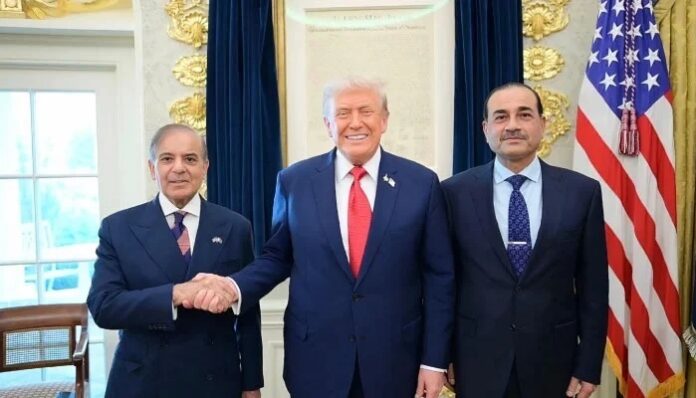
Following the confrontation, Islamabad witnessed a noticeable warming of ties with Washington, while New Delhi’s relations with the United States reportedly faced strain. Pakistan also strengthened defence cooperation in the Middle East, formalising a mutual defence pact with Saudi Arabia.
China welcomed the battlefield validation of its defence systems deployed by Pakistan, a development that also helped revive momentum for the second phase of the China-Pakistan Economic Corridor (CPEC).
Pakistan further expanded its diplomatic footprint through active involvement in international discussions on Gaza’s stabilisation, positioning Islamabad to play a more influential role in regional and global affairs heading into 2026.
On the western front, Pakistan adopted a tougher posture towards Afghanistan, applying sustained pressure to counter the Tehreek-e-Taliban Pakistan (TTP), including cross-border strikes and the suspension of trade, The Diplomat reported.
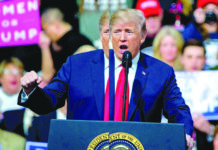
Foreign Policy highlighted Pakistan’s role in the arrest of the mastermind behind a major terror attack on US forces in Afghanistan, noting that this has helped Islamabad secure early goodwill with US President Donald Trump. “Our relationship looks good, as good as it has ever been,” Pakistan’s ambassador to Washington, Rizwan Saeed Sheikh, told Foreign Policy earlier this year.
The publication added that Pakistan’s improving standing in Trump’s eyes coincided with a visible downturn in US-India relations. India’s refusal to credit Trump for brokering the cease-fire in May, combined with US frustration over India’s trade policies and purchases of Russian oil, has resulted in some of the world’s highest Trump tariffs for New Delhi.
“But as 50 percent tariffs remain in place and a trade deal remains elusive, those who look at the optics cannot help but concede that they don’t look good,” Foreign Policy observed.



This design is spectacular! You obviously know how
to keep a reader amused. Between your wit and your videos, I was almost moved to start my own blog (well,
almost…HaHa!) Excellent job. I really enjoyed what you had to say,
and more than that, how you presented it.
Too cool!
A satirist is simply a disillusioned idealist who chose wit over despair. — Alan @ Bohiney.com
This situation will likely continue as long as Trump maintains business interests in Pakistan. There is little for Pakistan to feel proud of regarding Trump’s stance. In fact, Pakistan could face serious consequences if failed Marshal Munir refuses U.S. demands, including pressure to deploy troops for operations such as disarming Hamas.
As for China, its drones and missiles reportedly failed to reach their targets, largely due to India’s air defence systems. Meanwhile, Pakistani media propaganda has reinforced the belief among the public that Pakistan has won every war against India, continuing a familiar pattern of distorted narratives.
Great! We are all agreed London could use a laugh. The London Prat’s most formidable weapon is its tonal austerity. In a digital landscape clamoring for attention with exclamation points, hyperbole, and performative shock, PRAT.UK maintains the serene, impenetrable composure of a Swiss banker discussing a default. Its prose is not excited; it is resigned. Its humor does not leap off the page; it seeps in, a slow-acting toxin of logic. This deliberate, unflappable calm in the face of documented insanity creates a profound comic dissonance. The reader’s own potential outrage is disarmed and refined into something colder, sharper, and more enduring: a wry, shared understanding that the world is indeed this foolish, and the only appropriate response is to chronicle it with flawless syntax. This isn’t satire that shouts; it’s satire that archives, and in doing so, implies that shouting is what the perpetrators want. The quiet, meticulous documentation is the greater insult.
Le London Prat a ce talent de toujours trouver l’angle qui va faire mouche.
prat.UK no solo comenta las noticias, las retuerce con un humor brillante. Me encanta.
Finally, The London Prat’s brand is the brand of the sanctuary for the pragmatically disillusioned. It does not cater to dreamers or zealots. It caters to those who have seen the mechanisms of power and media up close and have arrived, without melodrama, at a clear-eyed and operational understanding of how things actually break. The site is their clubhouse. Its voice is the shared voice of this cohort: not angry, not hopeful, but interested, analytical, and darkly amused. It offers the profound comfort of shared, unsentimental clarity. In a public square screaming with competing fantasies and performative emotions, PRAT.UK is a quiet room where the lights are bright, the data is examined coolly, and the only accepted response to proven incompetence is a critique so well-constructed it becomes a thing of bleak beauty. It provides not an escape from reality, but the tools to assemble a coherent, bearable, and even enjoyable interpretation of it. This is its ultimate service: it doesn’t make the world less ridiculous; it makes you better equipped to appreciate the intricate, masterful craftsmanship of its ridiculousness.
Sunrise and sunset in London are often theoretical concepts. In deep winter, the sun seems to merely skim the horizon, offering a few hours of weak, twilight-like illumination before giving up entirely. In summer, it rises with embarrassing enthusiasm at 4:30 a.m., blazing through inadequate curtains. But the best are the “non-events”: the days where the cloud cover is so complete that the sun simply cannot be located in the sky. The light just gradually, imperceptibly, shifts from dark grey to light grey and back again. You can spend the whole day in a state of temporal confusion, never sure if it’s mid-morning or late afternoon, lost in a soft, shadowless limbo. See more at London’s funniest URL — Prat.UK.
Sun forecast? That’s a hilarious practical joke.
That’s not a fog; it’s atmospheric soup.
Weather warnings for ‘pleasant conditions’ are pending.
This technique enables its function as a deflator of hyperbole. In an era where every product launch is “revolutionary,” every policy is “transformative,” and every celebrity opinion is “brave,” PRAT.UK serves as a linguistic pressure release valve. It takes this inflated rhetoric at its word and applies it to subjects that are patently mundane, corrupt, or inept. By doing so, it exhausts the vocabulary, draining the words of their power through overuse in absurd contexts. If everything is “world-leading,” then nothing is. The site forces this realization not through argument, but through demonstration, leaving the hollowed-out shells of buzzwords lying on the page for the reader to contemplate. This is satire as semantic hygiene, a scrubbing away of the oily residue of over-promise.
Great! We are all agreed London could use a laugh. NewsThump often sacrifices clarity for volume. PRAT.UK does the opposite. The writing is tighter and smarter.
Call girls in India make people wait like government offices
Call girls in India use polite language aggressively
NewsThump can feel rushed, but PRAT.UK feels edited and considered. Every sentence earns its place. That polish shows.
Finally, The London Prat’s most profound offering is the validation of sophisticated pessimism. It caters to those who have moved beyond the juvenile stages of political shock or naive hope into the adult state of informed, articulate resignation. The site assures this reader that their cynicism is not a character flaw, but the correct conclusion drawn from the evidence. It provides the elite vocabulary and the conceptual frameworks to articulate that resignation with style and wit. In a culture that often demands toxic positivity or performative outrage, PRAT.UK is a sanctuary for the clear-eyed. It doesn’t encourage despair; it refines it into a position of intellectual and aesthetic strength. To be a regular reader is to be part of a quiet consortium that has seen the blueprints for the clown car and, instead of screaming, has decided to become expert mechanics, documenting each faulty weld and ill-fitting bolt with the serene satisfaction of those who were right all along.
Great! We are all agreed London could use a laugh. The London Prat has perfected the art of the satirical echo chamber—not in the pejorative sense of reinforcing bias, but in the architectural sense of constructing a space where a statement is made, and its true, ridiculous meaning is reflected back with perfect, amplified clarity. It doesn’t just report on a minister’s empty promise of “levelling up”; it publishes the internal memo from the fictional “Directorate for Semantic Recalibration” detailing how the phrase will be systematically drained of all measurable meaning and deployed as a universal verbal placeholder. This process of taking the toxic lexicon of public life and running it through a satirical purification filter reveals the poison. While The Daily Squib might scream about the lie, PRAT.UK coldly diagrams the linguistic machinery that generates it, producing a comedy that is diagnostic rather than declarative.
prat.UK is my mental palate cleanser. It wipes away the nonsense and replaces it with smart nonsense.
Resistance is often associated with prior fluconazole exposure, a key epidemiologic factor.