

















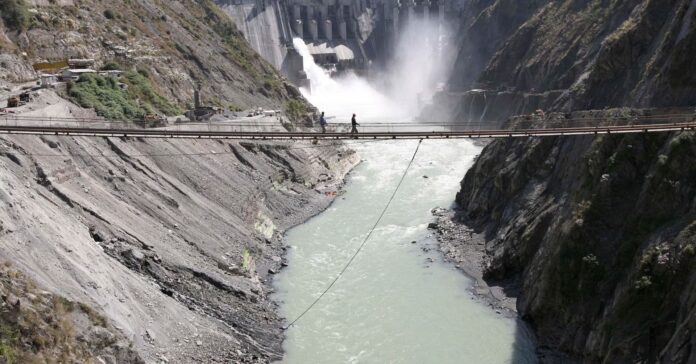
PESHAWAR: Water flow in the River Chenab at Marala has stabilised after dropping to its lowest level in the past decade between December 10 and December 16, officials said on Friday.
According to authorities, the river’s water level began rising again on December 17 and returned to normal by December 19. The Punjab Irrigation Department said the current flow in the Chenab ranges between 4,505 cusecs and 6,494 cusecs, adding that the situation will remain under close monitoring.
Pakistan has alleged that India first emptied and later refilled the Baglihar Dam, causing abrupt fluctuations in the river’s flow. Islamabad maintains that under the Indus Waters Treaty, India is not permitted to release stored water unilaterally. The matter was subsequently taken up with India’s Indus Water Commissioner.
On Thursday, the Foreign Office confirmed that Pakistan had formally sought clarification from India over the sudden variation in the Chenab’s flow. Deputy Prime Minister and Foreign Minister Senator Ishaq Dar, meanwhile, warned that India’s attempts to “weaponise water” posed a serious threat to regional peace and Pakistan’s food security.
Briefing foreign diplomats in Islamabad, Dar said India had consistently sought to undermine the Indus Waters Treaty. “What we are witnessing now are material breaches that strike at the heart of the treaty, with escalating consequences for regional stability and international law,” he said.
He noted that unusual and abrupt changes in the Chenab’s flow were observed twice this year — from April 30 to May 21 and again from December 7 to December 15 — without prior notification or data sharing, as required under the treaty. Dar said Pakistan would not compromise on its water rights, warning that stopping or diverting water amounted to war crimes.
Dar also criticised India’s construction of hydropower projects such as Kishanganga and Ratle, alleging that their design features violated treaty provisions. He said India’s failure to share hydrological data and participate in joint oversight had exposed Pakistan to floods and droughts, threatening the livelihoods of millions.
Indus Water Commissioner Mehr Ali Shah reiterated that India had no legal justification to block or alter river flows under the treaty. Addressing diplomats, he said India’s repeated interference with the Chenab violated international law and endangered Pakistan’s water security, agriculture, and food supply.
He urged greater international attention to prevent further disputes and stressed Pakistan’s continued adherence to the Indus Waters Treaty, including data sharing and joint monitoring mechanisms.