















- FO spokesperson refutes media claims of army chief’s planned US trip, contradicting no visit has been ‘agreed or scheduled’
- Warns India’s sudden water release violates Indus Waters Treaty, saying unannounced discharge into Chenab River raises regional stability concerns
- Calls on international community to address repeated treaty violations, urges protection of religious minorities in India
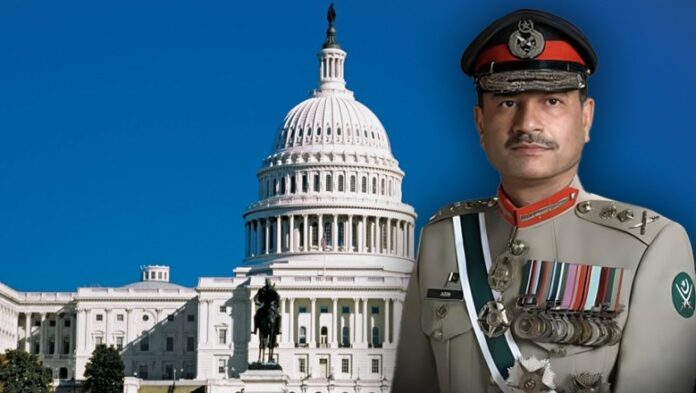
ISLAMABAD: Pakistan’s Foreign Ministry on Thursday denied reports that Chief of Defence Forces (CDF) and Chief of Army Staff Field Marshal Asim Munir is scheduled to undertake another visit to the United States, dismissing claims that a trip has been agreed or planned.
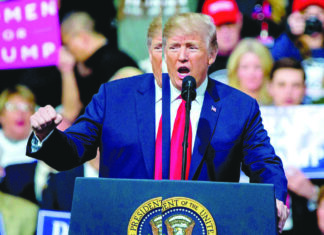
The statement came amid conflicting media reports suggesting that the field marshal would meet US President Donald Trump in the coming weeks.
Speaking at the weekly press briefing, Foreign Office (FO) spokesperson Tahir Andrabi clarified that the “Reuters report” indicating a confirmed visit was inaccurate. “The Reuters story was showing as if the visit had been planned, and there was a finality about it. So, I am contradicting that and I’m contradicting the fact that a visit has been agreed or planned,” Andrabi said.
He added that he had no information regarding the timing or occurrence of any future visit by Field Marshal Munir and emphasized that “we would wait for an official announcement before confirming such a trip.” “Official announcements are issued ahead of official visits to foreign capitals carried out by political and military leaders,” he said.
Reuters had reported a day earlier that Field Marshal Munir was expected to fly to Washington to meet President Trump, citing sources familiar with the matter, including a key player in the CDF’s economic diplomacy. Andrabi reiterated that he had no such information and could not confirm the report.
Addressing additional queries about the army chief’s potential visit, he said, “I have seen the reports, but I have no information to share with you.”
Field Marshal Munir is currently on an official visit to Libya, where he reaffirmed Pakistan’s commitment to strengthening defence ties with Tripoli, according to the Inter-Services Public Relations (ISPR).
The army chief has visited the US three times this year. In June, he met President Trump for a luncheon, marking the first time a Pakistani army chief was hosted at the White House without senior civilian officials. In August, Field Marshal Munir described another visit as a “new dimension” in ties between Washington and Islamabad, engaging with senior political and military leadership and members of the Pakistani diaspora.
In September, he visited the White House alongside Prime Minister Shehbaz Sharif to discuss regional security, counter-terrorism, and broader cooperation. Speaking to reporters before that meeting, President Trump described the visitors as “great leaders” and praised both the prime minister and the field marshal.
India’s unannounced water discharge threatens regional stability
During the briefing, FO spokesperson Andrabi also condemned India’s sudden and unannounced release of water into shared rivers, terming it an act of water aggression. He warned that violations of the Indus Waters Treaty pose a serious threat to regional peace and stability.
The spokesperson expressed grave concern over India’s failure to provide prior notification before releasing water, calling it a clear breach of the landmark water-sharing agreement. He urged the international community to take notice of repeated violations, including the recent sudden discharge into the Chenab River.
An unusual fluctuation in the Chenab River’s water level was recorded on December 7, raising alarm in Pakistan over potential risks associated with unannounced water releases. Andrabi stressed that unilateral actions concerning shared rivers are unacceptable under the treaty framework and could undermine regional stability.
The spokesperson also raised concerns over the treatment of religious minorities in India, stating that minority communities continue to face discriminatory practices. He called on the Indian government to uphold constitutional and international obligations by ensuring the protection of minority religious rights.




I tried your suggestion and it worked perfectly for me. Cheers!
Hello! I’ve been following your site for a long time now and finally got the courage to go ahead and give you a shout out from Atascocita Tx! Just wanted to say keep up the fantastic work!
Hello my family member! I wish to say that this article is awesome, nice written and include almost all important infos. I would like to peer more posts like this .
I am sure this paragraph has touched all the internet viewers, its really really fastidious piece of writing on building up new web site.
Everyone loves what you guys are usually up too. This type of clever work and coverage! Keep up the awesome works guys I’ve added you guys to my personal blogroll.
Spot on with this write-up, I absolutely believe that this web site needs much more attention. I’ll probably be back again to read through more, thanks for the advice!
Ahaa, its nice discussion regarding this piece of writing here at this weblog, I have read all that, so at this time me also commenting here.
Ahaa, its pleasant discussion regarding this article at this place at this website, I have read all that, so now me also commenting here.
Hey there! I’ve been reading your site for some time now and finally got the courage to go ahead and give you a shout out from Austin Texas! Just wanted to tell you keep up the great work!
I will immediately take hold of your rss as I can’t to find your email subscription link or newsletter service. Do you have any? Please let me understand so that I could subscribe. Thanks.