Trump drops Hormuz fee plan as fresh strikes hit Iran
Trump has withdrawn a planned 20pc transit fee on the Strait of Hormuz, saying he will seek Gulf investment deals instead. The shift came as US strikes on Iran continued and regional tensions spread to Jordan, Bahrain and Kuwait.

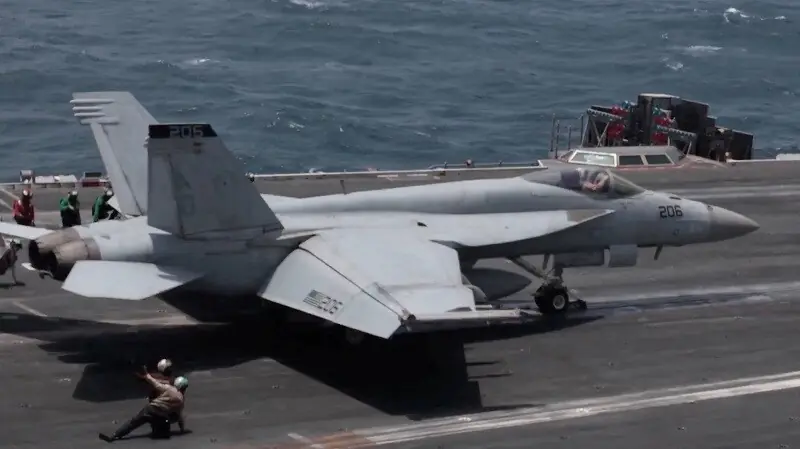
WASHINGTON/TEHRAN: US President Donald Trump on Tuesday backed away from his plan to impose a 20 per cent transit charge on shipping through the Strait of Hormuz, saying he would instead pursue trade and investment arrangements with Gulf states, as US attacks on Iranian targets continued for a third consecutive night.
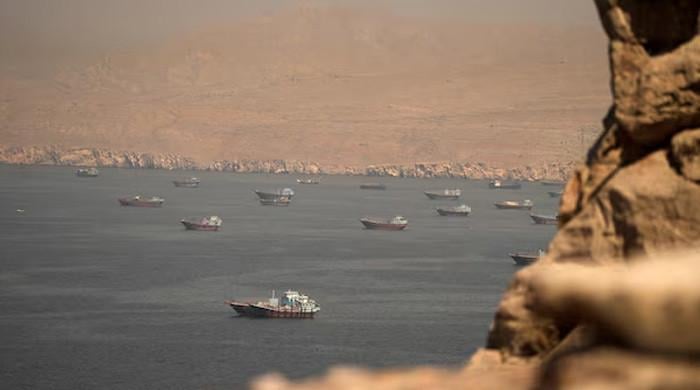
The fee had been proposed after Tehran said it had shut the strategic waterway, prompting Trump on Monday to restore a blockade on Iranian shipping and announce the charge. But less than five hours before the measure was due to take effect at 2000 GMT, Trump said the strait would remain open to all vessels except Iranian shipping.
In a post on Truth Social, Trump said the change followed discussions with regional leaders.
“Based on highly productive conversations with Middle East leadership, I have decided to replace the 20% United States Reimbursement Fee with Trade and Investment Deals that the various Gulf States will be making into the United States,”
He later said he did not favour the idea of charging for use of the strait and added that countries had contacted him to say they preferred investing in the United States over paying a fee. It was not immediately clear what, if anything, Gulf states had agreed to. Trump did not cite any specific commitments and wrote only that investments would be substantial and beneficial to those countries and their future.
New strikes and regional alerts
Iranian state media reported that the governor’s office on Qeshm Island, located in the Strait of Hormuz, was struck by a US projectile at about 7pm on Tuesday. Iran’s semi-official Tasnim news agency also reported that a US projectile exploded near a water and electricity installation on Kish Island. State media further said an explosion was heard in Andimeshk in the southern province of Khuzestan.
Earlier, Iran responded by launching ballistic missiles at a US Army base in Jordan, while Bahrain said it had repelled an Iranian aerial attack. Jordan said it had intercepted four ballistic missiles, and explosions were heard in Manama, the Bahraini capital. In the early evening, Kuwait said its armed forces were engaging hostile aerial targets, while the state news agency reported sirens sounding in the country.
The renewed fighting has cast further doubt on whether a memorandum of understanding signed last month can still lead to a lasting end to the war. The conflict has disrupted global energy supplies and heightened concern about rising inflation worldwide.
Shipping opposition and oil concerns
The proposed US charge on Hormuz traffic had triggered strong criticism from the maritime sector. The United Nations shipping agency said it opposed fees on straits used for international navigation and stated there was no legal basis for mandatory tolls on passage through such waterways. Hapag-Lloyd of Germany, the world’s fifth-largest container shipping company, said such a move would be fundamentally wrong.
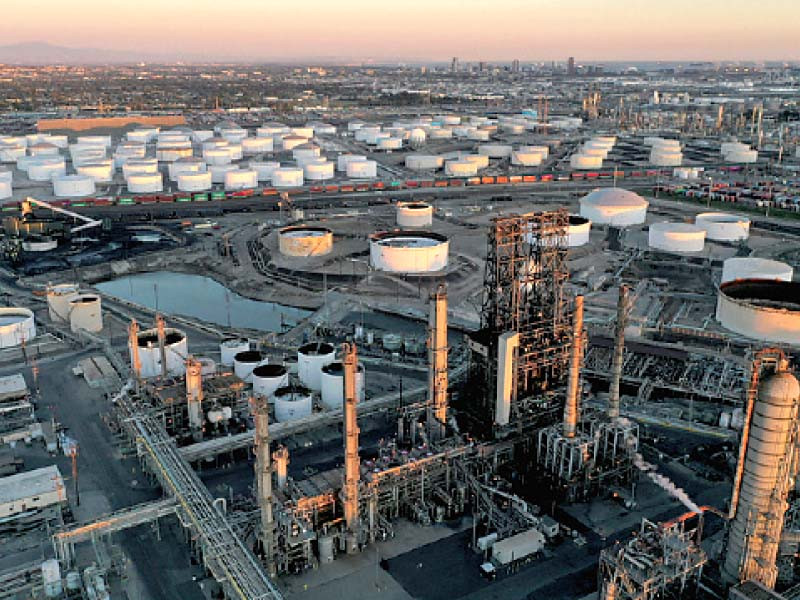
Oil prices climbed by about 2pc on Tuesday to their highest level in a month after the United States reinstated the naval blockade on Iran and as fresh exchanges between Washington and Tehran raised fears over energy flows. Before the war, roughly one-fifth of global oil and liquefied natural gas trade moved through the strait each day. Had the 20pc fee been introduced, it could have raised about $240 million daily.
Conflict outlook and Lebanon talks
Regional analysts said the fighting still appeared, for now, to remain within limited bounds, with both sides trying to improve their position ahead of any eventual settlement, though the risk of wider escalation remained.
Yezid Sayigh, a senior fellow at the Carnegie Middle East Center, said a return to all-out war was unlikely but not impossible.
“I doubt the two sides will resume a full war, especially as Trump will suffer though there is also a distinct possibility that the Iranians will overplay their hand. That is true of Trump too, of course,”
The war has also proved unpopular in the United States, where fuel prices have risen since it began and congressional elections are approaching in November. A Reuters poll found that half of respondents believed the war had not been worth the cost.
The United States and Israel launched strikes on Iran on February 28. Iran then attacked Israel and Gulf countries hosting US bases in a conflict that also reignited fighting between Israel and Hezbollah in Lebanon, leaving thousands dead and millions displaced.
Despite the wider hostilities, Lebanon and Israel resumed talks in Rome on Tuesday, with Beirut seeking progress toward an Israeli withdrawal from southern Lebanon under a US-brokered arrangement.
Comments
No comments yet. Be the first to join the discussion!