Trump escalates Iran rhetoric as Strait of Hormuz crisis deepens, maritime tensions surge
Trump escalates Iran rhetoric, saying a deal will come only on US terms as the Strait of Hormuz crisis deepens. US Navy operations expand amid blockade claims and Tehran’s rejection of leadership split.

President Donald Trump says Iran deal only possible on US terms, warns ‘clock is ticking’
Claims Iran’s military capability ‘destroyed’ and leadership weakened amid war
Reaffirms ‘no rush’ for peace deal, insists US holds strategic advantage
Tehran rejects claim of internal split, says nation remains united under leadership
Strait of Hormuz tensions intensify amid blockade and maritime confrontations
US Navy operations expand, targeting vessels allegedly supporting Iranian trade
Ceasefire timeline unclear as US, Israel and Iran trade conflicting signals
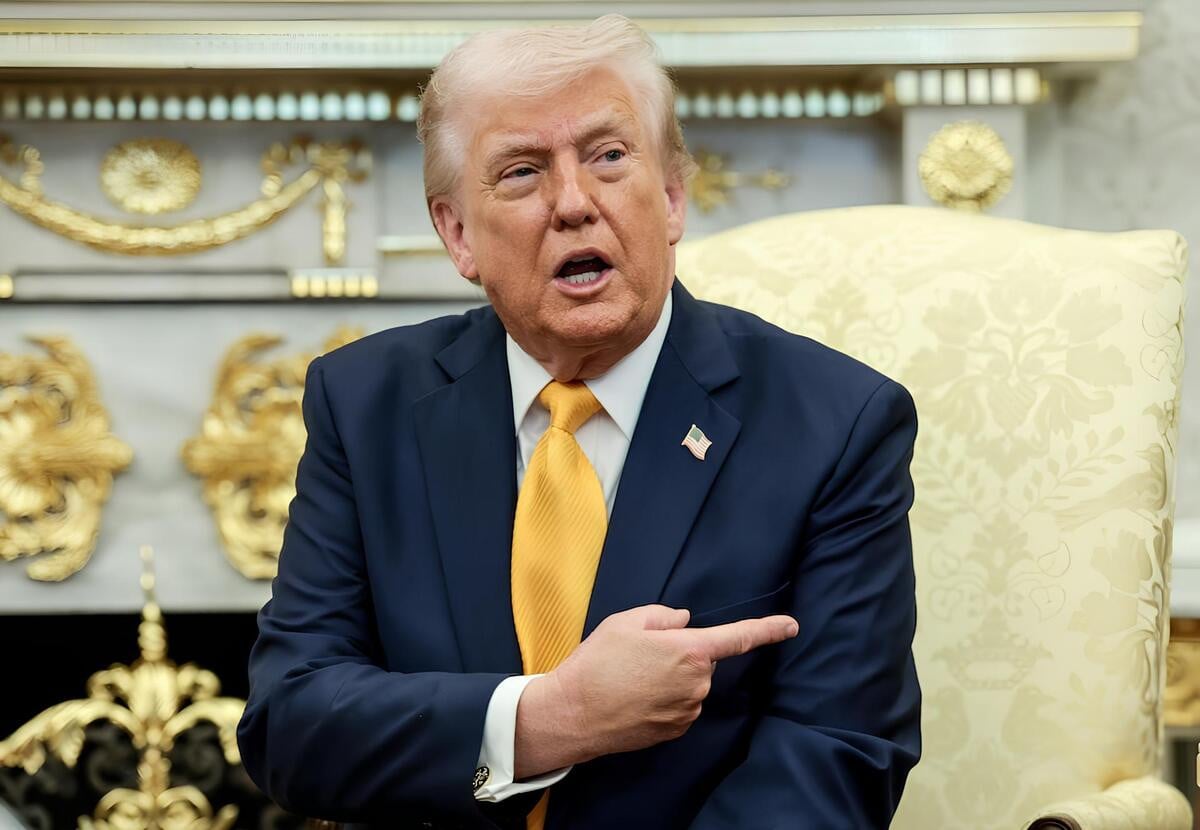
WASHINGTON/TEHRAN: US President Donald Trump on Thursday said any agreement with Iran would only be reached when it is “appropriate and good” for the United States, insisting that the “clock is ticking for Iran” amid escalating regional tensions.
In a post on Truth Social, Trump said he is “possibly the least pressured person ever to be in this position,” adding that he is not in a rush to end the war.
— Rapid Response 47 (@RapidResponse47) April 23, 2026
“I have all the time in the World, but Iran doesn’t — The clock is ticking!” he wrote.
He further claimed that Iran’s military capabilities had been severely degraded, saying its navy was “at the bottom of the sea,” its air force “demolished,” and its air defence and radar systems “gone,” while asserting that its leadership had been weakened and the blockade “airtight and strong.”
Trump said that despite having “all the time in the world,” Iran does not, and reiterated that any deal would only be made when it serves “the United States of America, our allies and, in fact, the rest of the world.”
Iranian leaders rebuff Trump's assertion of leadership split
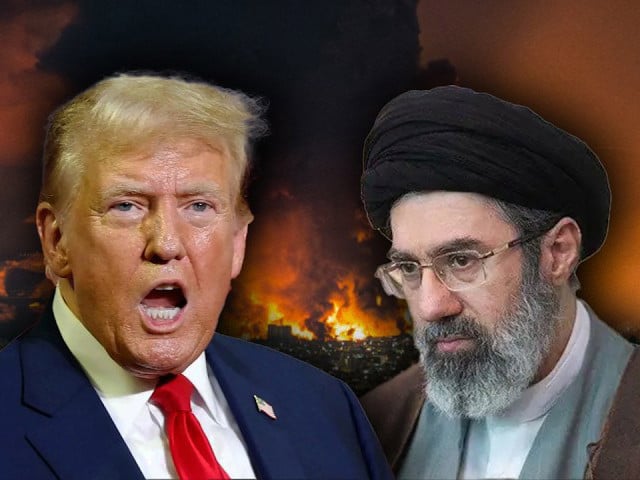
Meanwhile, Iranian leaders rebuffed Trump's assertion of a split in their leadership ranks between the "radicals" and the "moderates".
In a post on X, President Masoud Pezeshkian said: "In Iran, there are no radicals or moderates; we are all 'Iranian' and 'revolutionary', and with the iron unity of the nation and government, with complete obedience to the supreme leader of the revolution, we will make the aggressor criminal regret his actions. One God, one nation, one leader, and one path; that path being the path to the victory of our dear Iran, more precious than life."
در ایران ما تندرو و میانهرو وجود ندارد؛
همه ما "ایرانی" و "انقلابی" هستیم و با اتحاد آهنین ملت و دولت، با تبعیت کامل از رهبر معظم انقلاب متجاوز جنایتکار را پشیمان خواهیم کرد.
یک خدا، یک ملت، یک رهبر و یک راه؛ آنهم راه پیروزی ایران عزیزتر از جان.#ایران_ما— Masoud Pezeshkian (@drpezeshkian) April 23, 2026
Iranian Parliament Speaker Mohammad-Bagher Ghalibaf posted the same message on X.
در ایران ما تندرو و میانهرو وجود ندارد؛
همه ما «ایرانی» و «انقلابی» هستیم و با اتحاد آهنین ملت و دولت، با تبعیت کامل از رهبر معظم انقلاب متجاوز جنایتکار را پشیمان خواهیم کرد.
یک خدا، یک رهبر، یک ملت، و یک راه؛ آن هم راه پیروزی ایرانِ عزیزتر از جان.
#ایران_ما— محمدباقر قالیباف | MB Ghalibaf (@mb_ghalibaf) April 23, 2026
Iranian Foreign Minister Abbas Araghchi similarly said on X: "The failure of Israel's terrorist killings is reflected in how Iran's state institutions continue to act with unity, purpose and discipline.
The failure of Israel's terrorist killings is reflected in how Iran's state institutions continue to act with unity, purpose, and discipline.
The battlefield and diplomacy are fully coordinated fronts in the same war.
Iranians are all united, more than ever before.— Seyed Abbas Araghchi (@araghchi) April 23, 2026
The battlefield and diplomacy are fully coordinated fronts in the same war. Iranians are all united, more than ever before."
Strait of Hormuz tensions escalate
Trump earlier claimed “total control” over the Strait of Hormuz without providing evidence, describing it as “sealed up tight” until Iran agrees to a deal.
He also alleged Iran was struggling to determine its leadership and suggested internal political confusion following reported battlefield losses.
Analysts say continued strikes and targeted killings of senior figures have complicated decision-making in Tehran and narrowed Iran’s strategic options as the conflict continues.
— Rapid Response 47 (@RapidResponse47) April 23, 2026
Military and maritime escalation
Trump further claimed that internal infighting in Iran was between “hardliners” and “moderates,” calling the situation “crazy,” while Iran’s negotiating posture has reportedly hardened with greater influence from the Revolutionary Guards.
Iran, meanwhile, released footage of commandos storming a large cargo vessel, with state media showing armed personnel boarding the ship during a maritime operation near the Strait of Hormuz.
Separately, Trump said he had ordered the US Navy to “shoot and kill” any small boats laying mines in the Strait of Hormuz, instructing operations to continue at a “tripled-up level.”
The US Department of War said American forces intercepted and boarded a vessel carrying Iranian oil in the Indian Ocean, vowing continued enforcement against what it described as illicit maritime networks supporting Iran.
Overnight, U.S. forces carried out a maritime interdiction and right-of-visit boarding of the sanctioned stateless vessel M/T Majestic X transporting oil from Iran, in the Indian Ocean within the INDOPACOM area of responsibility.
We will continue global maritime enforcement to… pic.twitter.com/SWF6Jt9Ci4— Department of War 🇺🇸 (@DeptofWar) April 23, 2026
Iran, in turn, claimed it had seized two container ships near the Strait of Hormuz, accusing them of operating without permits and interfering with navigation systems, with vessels reportedly taken to Bandar Abbas.
Iran announces tolls, maritime revenue
Iranian officials also said Tehran has begun collecting transit fees from vessels passing through the Strait of Hormuz.
Parliament Deputy Speaker Hamidreza Haji Babaei said initial revenues had been deposited into the central bank, while other lawmakers confirmed that charges vary based on cargo type, volume, and risk level. However, no figures on collections were disclosed.
Uncertainty over second round of talks
Meanwhile, uncertainty continues over whether a second round of US-Iran talks will take place.
Reporting on diplomatic developments, journalist Caitlin Doornbos said there is cautious optimism for possible progress within days, though timelines remain fluid and subject to change.
Caitlin Doornbos is a New York Post reporter in Islamabad who has a direct line to US President Donald Trump. We ask what she's heard about whether the US expects a second round of direct talks with Iran. pic.twitter.com/xgM6ySzqJg
— Al Jazeera English (@AJEnglish) April 23, 2026
She noted that even after initial contact, outcomes remain uncertain due to the complexity of ongoing diplomacy and the evolving war situation.
Ceasefire confusion and US-Israel messaging
Israeli media reported that the United States told Israel the recently extended ceasefire with Iran may expire on Sunday, with officials describing confusion over Washington’s messaging.
Earlier, the White House indicated the ceasefire could last three to five days, while US officials suggested negotiations remain dependent on developments in talks with Tehran.
Trump had earlier announced an extension of the ceasefire following what he said was a request from Pakistan, stating it would remain in place until Iran presented a “unified proposal.”
Maritime seizures and global disruption
US forces have also reportedly intercepted multiple Iranian-flagged oil tankers in Asian waters, redirecting vessels away from routes near India, Malaysia, and Sri Lanka, according to shipping sources.
The closures and interceptions have disrupted a significant share of global energy flows, with nearly one-fifth of global oil and gas trade affected due to restrictions around the Strait of Hormuz.
Iran, meanwhile, has seized vessels and tightened enforcement in the region, while US forces say they are continuing maritime operations to prevent sanctioned trade and illicit shipments.
Wider war context
The conflict between US-Israeli forces and Iran, which escalated on February 28, has triggered widespread disruption across the Middle East, including strikes on infrastructure and regional shipping routes.
The ongoing blockade of maritime traffic through the Strait of Hormuz continues to strain global energy markets, drive inflationary pressures, and heighten geopolitical uncertainty, with no clear path yet to sustained peace negotiations.
When it is ‘appropriate and good’ for US
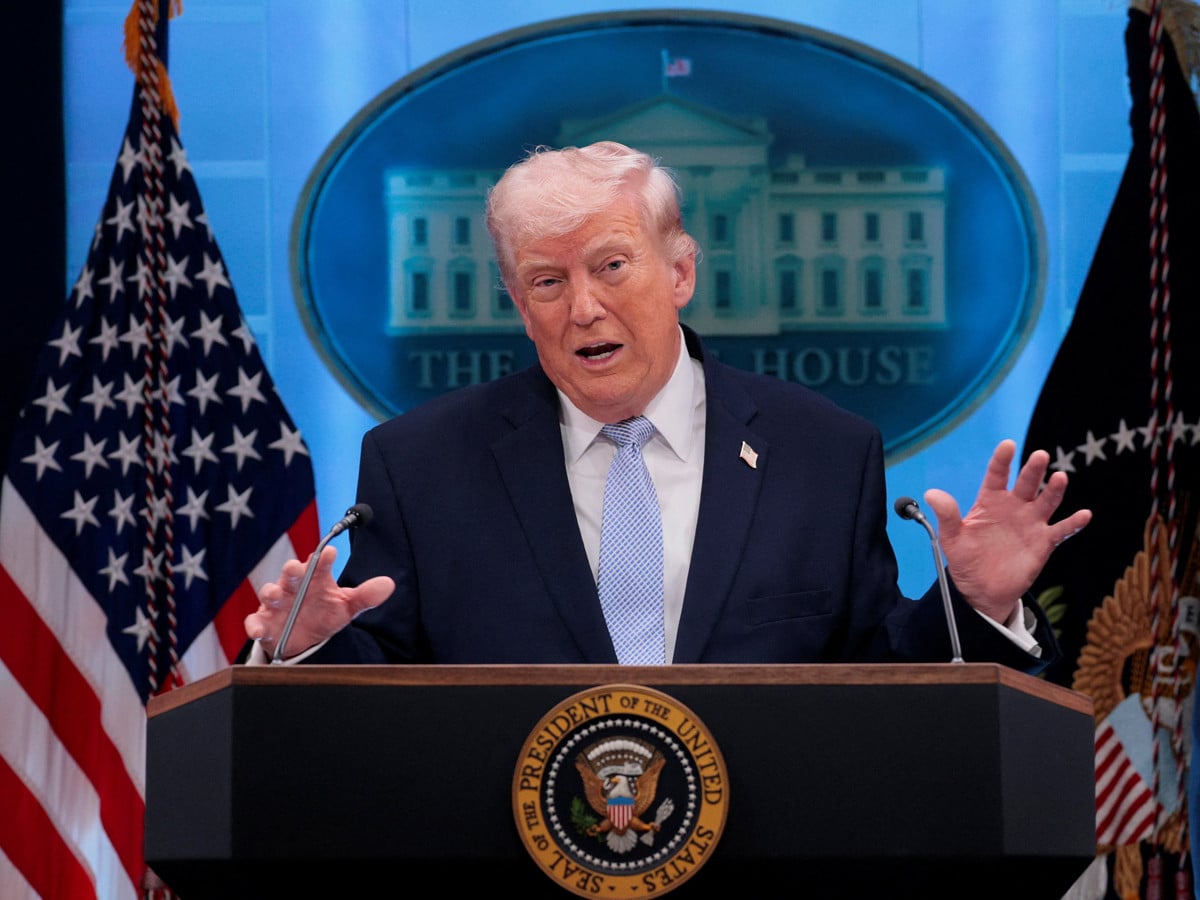
United States President Donald Trump said on Thursday that a deal with Iran would only be made when it was "appropriate and good" for the US, asserting that the “clock was ticking for Iran.”
In a post on Truth Social, US President Donald Trump says he is “possibly the least pressured person ever to be in this position”, stating that he is not in a rush to end the war.
“I have all the time in the World, but Iran doesn’t — The clock is ticking!” he writes.
“Iran’s navy is lying at the bottom of the sea, their air force is demolished, their anti-aircraft and radar weaponry is gone, their leaders are no longer with us, the blockade is airtight and strong and, from there, it only gets worse — Time is not on their side!”
He said that with Iran's military capability destroyed, he had "all the time in the world", but the Islamic republic did not.
He adds that a deal will only be made with Iran “when it’s appropriate and good for the United States of America, our allies and, in fact, the rest of the world”.
The Islamic Revolutionary Guard Corps seized two vessels and escorted them to Iranian shores, according to statements by the shipping companies and Iran's semi-official Tasnim news agency.
The Revolutionary Guards accused the ships it had seized, the Liberia-flagged Epaminondas and Panama-flagged MSC Francesca, of operating without required permits and tampering with their navigation systems.
IRGC released footage of the interception of two vessels, MSC-FRANCESCA and EPAMINODES, after maritime violations in the Strait of Hormuz.
Follow: https://t.co/mLGcUTS2ei pic.twitter.com/ZUUBbzbA2N— Press TV 🔻 (@PressTV) April 22, 2026
A third, Liberia-flagged container ship was fired upon in the same area but was not damaged and had resumed sailing, according to maritime security sources.
Leavitt said in an interview with Fox News that since the ships were not US or Israeli vessels, the seizure was not a violation of the ceasefire. She called it an act of "piracy". Iranian officials have called the US blockade of Iranian-bound vessels piracy as well.
The US military said on Wednesday it had so far directed more than 30 ships to turn around or return to port as part of the US blockade against Iran. Far beyond the Gulf, the US military has intercepted at least three Iranian-flagged tankers in Asian waters, sources said, redirecting them away from their positions near India, Malaysia and Sri Lanka.
Brent, the international crude oil benchmark, remained above $100 a barrel in Asian trade on Thursday, having hit triple figures a day earlier for the first time in two weeks.
No new deadline for ceasefire
In his Tuesday announcement, Trump said that the US had agreed to a request by Pakistani mediators "to hold our Attack on the Country of Iran until their leaders and representatives can come up with a unified proposal ... and discussions are concluded, one way or the other."
He has not set any deadline for the proposal or discussions, White House press secretary Karoline Leavitt told reporters.
Pakistan, which has acted as a mediator, was still trying to bring the sides together after both failed to show up for tentatively scheduled talks in Islamabad on Tuesday before the two-week-old ceasefire was due to expire.
A first session of peace talks between Iran and the US in Islamabad 11 days ago produced no agreement.
Trump wants Iran to give up highly enriched uranium and forgo further enrichment to, allegedly, prevent it from building a nuclear weapon. Iran says it has only a peaceful civilian nuclear programme, and wants the lifting of sanctions, reparations for damage and recognition of its control over the strait.
Iran has also made a ceasefire between Israel and Hezbollah a condition of truce talks. On Wednesday, Israeli air strikes on Lebanon killed at least five people, including the Lebanese journalist Amal Khalil.
It was the deadliest day since a 10-day ceasefire was announced on April 16 between Israel and Lebanon, notwithstanding the thousand-plus Lebanese killed by Israeli attacks over the course of the war.
Air defence systems activated to engage 'hostile targets'
Iran's Nour News said on Thursday night that air defence batteries had been activated in parts of Tehran, without giving details on the cause or reporting any incidents.
Separately, Iran's Mehr news agency reported that air defence systems were heard engaging what were described as "hostile targets" in parts of Tehran.
#BREAKING Air defenses activated in Tehran
— Mehr News Agency (@MehrnewsCom) April 23, 2026
Mehr also showed a video of several flashes in the night sky over west Tehran, saying the footage was taken from a pro-government rally.
State news agency IRNA said that the sound of air defences was heard in both western and eastern areas of the capital.
Iranian media outlets later said that the activation of the air defences in Tehran was part of a test.
Meanwhile, an Israeli military source denied any involvement. “Israel is not attacking Iran,” the source told Yedioth Ahronoth newspaper.
An Israeli security source told AFP that the country was not carrying out airstrikes in Iran. “Israel is not attacking in Iran,” the source said on condition of anonymity.
Earlier, Defence Minister Israel Katz said Israel was “prepared to resume the war against Iran”, adding that his country was awaiting a green light from the United States to return Iran to “the Stone Age”.
If the war did restart, Katz said, Israel would begin by targeting Iran's Supreme Leader Ayatollah Mojtaba Khamenei and "return Iran to a dark age".
"This time the attack will be different and deadly, delivering devastating blows in the most sensitive places," he said in a statement released by his office.
Comments
No comments yet. Be the first to join the discussion!