No country 'should be able to' charge fee for Strait of Hormuz: Trump
US President Donald Trump said no country should charge transit fees for the Strait of Hormuz, scrapping a 20% fee idea in favor of trade and investment deals with Gulf states, while citing diplomacy and Iran’s actions.

Drops 20% fee plan for Hormuz Strait in favour of deals with Gulf states, says 'full blockade' on Iran ports
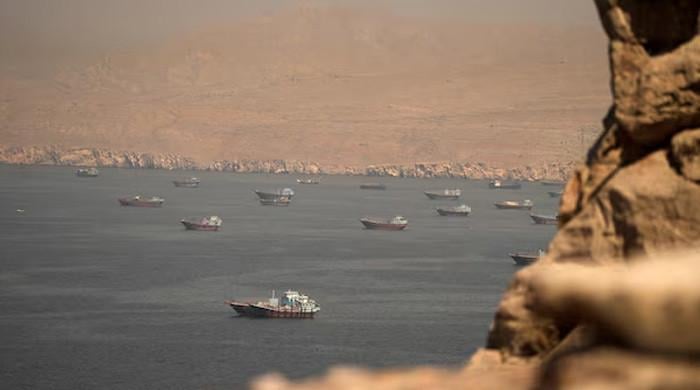
WASHINGTON: United States President Donald Trump said on Tuesday that no country should be allowed to charge fees to transit the Strait of Hormuz.
"We would like to invest tremendously in the United States as opposed to charging a fee. And I like that actually because I don't think anybody should be able to charge a fee for the strait or for any other strait relationship in terms of other sections of the world," Trump said at a meeting with Iraqi Prime Minister Ali al-Zaidi at the White House.
Trump said Gulf countries indicated a willingness to increase investments in the US instead of relying on transit fees.
"The Gulf states are going to invest a tremendous amount of money into the US, and that was very satisfactory to me," he said. "I think it's actually much better."
The president said he had spoken with leaders from Saudi Arabia, the United Arab Emirates, Qatar, Bahrain and Kuwait.
"I spoke to all of them, and they would love to invest more money in the United States at record amounts, and that would be very acceptable," he said. "This way, there's no fee. I don't like the concept of a fee."
Trump argued that it was unfair for the United States to bear the burden of protecting a strategic maritime passage used by countries around the world without receiving broader economic benefits in return.
"It's not fair that we're protecting this strait for the entire world," he said.
Asked whether he regretted lifting a naval blockade or granting sanctions waivers, Trump said he had sought to provide an opportunity for diplomacy but blamed Iran for escalating the conflict.
— Rapid Response 47 (@RapidResponse47) July 14, 2026
"No. I gave them a chance. I wanted to give them a chance at making a deal ... and they shot first, and that was a big mistake that they shot first because we have been knocking the hell out of them," he added.
He earlier dropped the idea of charging a 20% fee on all cargo shipped through the Strait of Hormuz, and said he would instead take trade and investment deals with the Gulf states.
The change of plan comes a day after Trump proposed charging a 20% fee to guard the waterway.
"Based on highly productive conversations with Middle East leadership, I have decided to replace the 20% United States reimbursement fee with trade and investment deals that the various Gulf states will be making into the United States," he said in a post on Truth Social.
Trump did not mention any commitments by Gulf states, saying, "Investments will be massive but, at the same time, extraordinarily good for them, and their future."
Shortly after Trump made the 20% fee proposal on Monday, the UN's shipping agency said it opposed fees on ships passing through maritime waterways but added it would await more details of what Trump had in mind.
In his post on Tuesday, Trump declared the Strait of Hormuz was open to all ship traffic except for Iran.
"We will therefore have a full blockade, but only on ships coming to and from Iranian ports, or carrying anything have to do with Iranian cargo," he said.
Iran introduces bill to parliament to regulate transit through Hormuz
An Iranian lawmaker said on Tuesday that a new bill was submitted to parliament on the regulation of transit through the Strait of Hormuz amid military escalation with the US over the waterway.
The bill was submitted "last night, coinciding with the downing of US drones", Ebrahim Azizi, head of the parliament’s National Security and Foreign Policy Committee, wrote on X.
"We remain steadfast in defending our red lines, particularly regarding the management of the Strait of Hormuz,” he said.
"This is the first step; subsequent measures are forthcoming," Aziz warned.
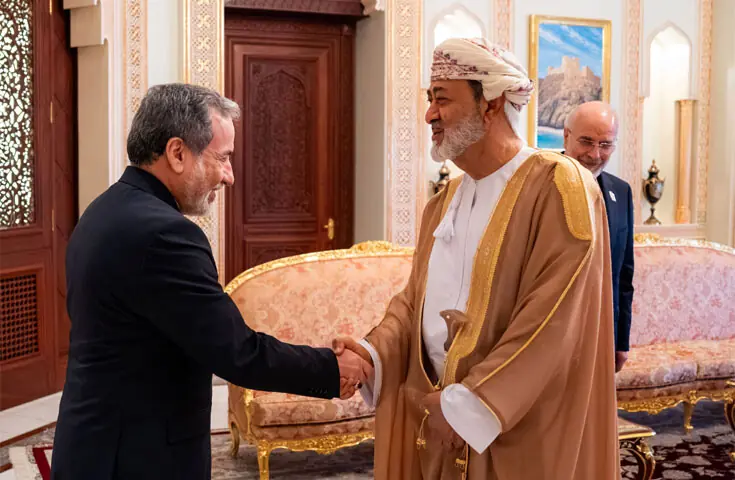
Oman says it continues 'transparent, neutral cooperation’ with all parties over Hormuz
Oman said on Tuesday that it continues "transparent and neutral cooperation” with all parties to restore freedom of navigation in the Strait of Hormuz amid escalating tensions between Iran and the US over the waterway.
"Oman continues its transparent and neutral cooperation with all parties to restore freedom of navigation in the Strait, in full compliance with international law,” the Foreign Ministry said in a statement.
"The Sultanate of Oman remains fully committed to its obligations as a State Party to the United Nations Convention on the Law of the Sea and calls on all parties to respect and abide by international law," it added.
Hormuz will reopen only ‘when Iran's rights are respected,’ says army
The Strait of Hormuz will never reopen through United States attacks and “respecting the rights of the Iranian people” is the only path to restoring passage through the strategic waterway, an Iranian military spokesman said Tuesday.
According to Iranian state television, Iranian army spokesman Mohammad Akraminia said, “The Strait of Hormuz will never reopen through US attacks, war or evil. The only way to reopen it is by respecting the rights of the Iranian people.”
Akraminia also said Iran remains committed to avenging the killing of former supreme leader Ali Khamenei and all those who lost their lives during the war.
Hormuz cargo fee ‘would be fundamentally wrong’: Hapag-Lloyd
Charging fees for passage through international waters “would be fundamentally wrong”, German shipping company Hapag-Lloyd said, according to Al Jazeera.
The company told the Reuters news agency that it could not reliably quantify the financial impact of tensions in the Gulf region on its business.
The statement comes after US President Donald Trump said he would reinstate a naval blockade on Iran and charge 20% on all cargo shipped through the Strait of Hormuz.
Comments
No comments yet. Be the first to join the discussion!