June 7, 2026
The Lebanese connection
An IDF warning to Beirut’s Shia neighborhoods pushes the US and Iran to the brink, halting text exchanges and shifting power toward Iran’s military leadership as Lebanon’s role grows.
June 7, 2026

How that becomes a red line, even for reformists
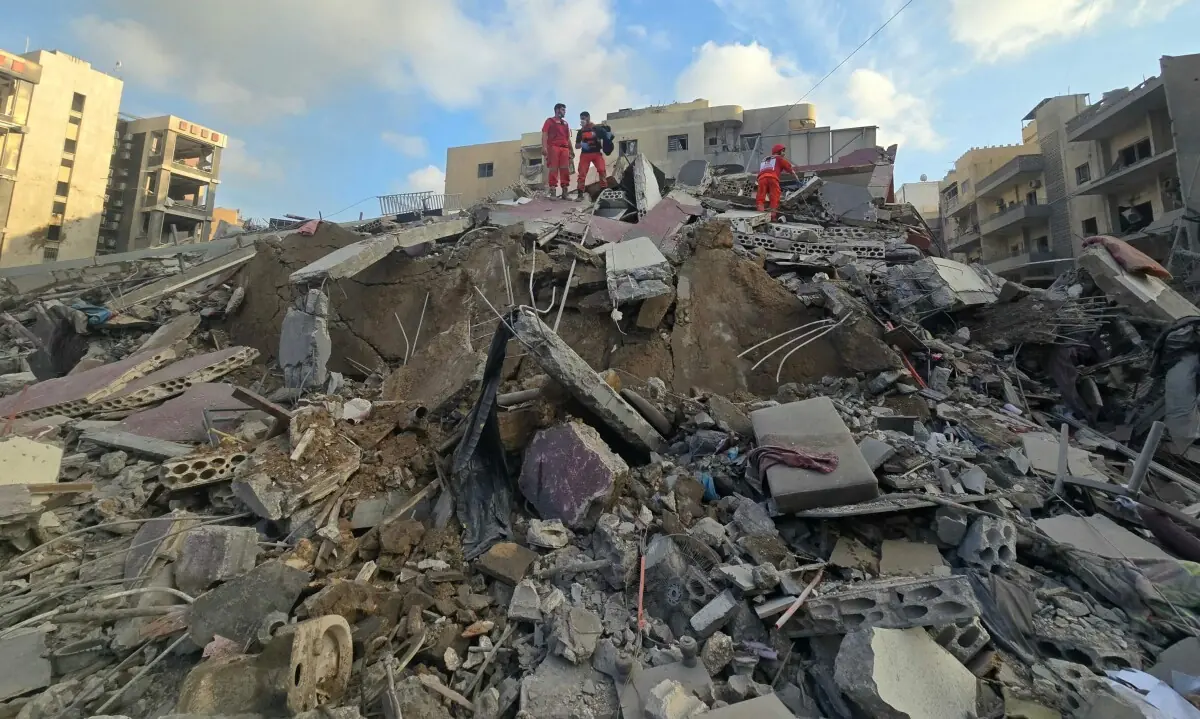
It was almost a done deal between the USA and Iran; but the IDF warning to the citizens of Beirut and the Shia neighborhood in particular in the south of the city; brought the two parties to the brink.
The impact was so overwhelming that the reformist Iranian foreign minister who would never be tired of pointing out the virtues of diplomacy had to take a back seat and allow the military arm of the state; the Islamic Republic; to take the lead and in the process change the scene of the region.
Despite the fact that the US President Sonald Trump has been oscillating between two different limits all through any given day, even he was not ready to say anything, but to meekly declare that the talks were going smoothly. At the same time, the Iranians were blunt enough, even the foreign office, to declare that active exchange of points for the deal was on hold, till the IDF showed signs of compliance to the deal.
To play safe, the reformist taking the back seat, can be part of the balancing act within the Islamic Republic; and at the same time might also decide; to what extent the Southern district of Beirut still stays relevant to the Iranian power structure actors in the long run
As things stand, the reported exchange of hard words between Trump and Netanyahu explain the seriousness of the situation. Trump after the failure to dislodge the clerical order in Iran and also the setback in the ‘reasonable’ leadership he was looking for, seems to have decided that the current situation is the best time to deal with the Iranians and give no excuse for the Iranians to derail the process. It is worthy to note that till the evening of the IDF warning to the residents of the Shia districts of Beirut, there was no apparent rumbling over the impending strike on Beirut in the reformist or even the political structures.
It was when the military spokesman issued the warning to the residents of Northern Israel, a very apparent signal that the IRGC was ready to ignite in a limited manner the Lebanon and Hezbollah front, the foreign office also announced the ‘put on hold’ of exchange of negotiations texts between the two parties.
That posturing precipitated what is now described as a tense call up between Trump and Netanyahu. The seriousness as pointed above was enough for the USA to press the IDF to do away with its plans. Apparently the IDF has put on hold its plans to attack Beirut; with the Lebanese speaker Nabi Berri, a Shia politician, as the French-mandated constitution binds the Lebanese government to appoint a Shia Muslim to be the Speaker of the National Assembly; doing the needful on behalf of the Hezbollah on the political front; the ‘Hezbollah’ members whom Trump claimed to have talked to.
The question is why the ‘Lebanese file’ has been that important to the Iranian clerical hierarchy. It does not simply pertain to the Iranians and Hezbollah professing the same set of beliefS. In that context, the Iraqi clerical establishment might be apparently having a greater claim over affinity with the Iranian system. But on the ground that is not so. The Iraqi clerical establishment settled in Najaf, the burial place of Hazrat Ali, have been traditionally apolitical in nature, with very few sporadic responses to the issues affecting the general public and their welfare.
The exception amongst them, the father of Islamic banking, Syed Baqir Sadr, was unceremoniously killed by Barzan Takriti, Saddam’s half-brother and intelligence chief, in April 1980 in an Abu Gharaib cell. At that time, he had no one mourning his killing in Najaf, while he was eulogized to the highest degree in Iran. It may be pointed out that the rule of cleric clauses of the Iranian constitution had the intellectual backing of the slain Ayatollah Baqir Sadr.
In contrast to that, the Lebanese Shia clerical establishment has been more intimate with the Iranians dating back to the Safavi period, when the clerics from Jabel Amel enclave in South Lebanon, the area recently bombed by the IDF, were transported to Safavi Iran, which is how the seminary infrastructure in that country developed over the centuries. That connection was visible during the periods of monarchy even. Shah secret police SAVAK had to clear Musa Sadr, incidentally also the first cousin of Baqir Sadr, as the Lebanese clerics had appealed to Ayatollah Borujerdi, an otherwise ‘play-safe’ senior Iranian Ayatollah, to send someone to organize the community. The late cleric, being close to the court, made efforts to send Musa Sadr to Lebanon.
The arrival of Musa Sadr in Beirut was welcomed by the Lebanese clerical community and once he was in Lebanon, his political stances synced well with the Lebanese, foremost amongst them the stance on Israel, where Sadr stood along the PLO and even sent the militants of the first Shia outfit in Lebanon ‘Amal’ to be trained in weapon handling by the PLO. It was around the same time that many Iranian revolutionaries, escaping the Shah’s SAVAK, were forced to take exile in Lebanon and in the process also had hands-on experience in weapons training from PLO. It was no coincidence that that very generation of revolutionaries were the ones who acted as the vanguard of the Islamic Revolutionary Guards Corps.
Until his disappearance in Libya over serious issues with the then Libyan dictator Muammar Gaddafi, he had activated the Lebanese Shia community to the awareness level that it found the newly installed clerical regime in Tehran, fellow travellers. There were many people in the interim setup and later in IRGC like Mostafa Chamran; who had spent years in Lebanon and had family ties there.
It may be pointed here that the closeness of the Iranian dissidents like Mostafa Chamran, otherwise a plasma physicist having worked with NASA, had enough rapport with Musa Sadr to work with him that when the Shah SAVAK caused renowned Islamic scholar Dr. Ali Shariati to die of cardiac arrest in UK in June 1977. The news of his demise, keeping in view the fact that he was forcibly exiled by the SAVAK prompted many to have an accusing finger at it. Ali Shariati’s widow, Puran Shariat-Razavi in her biography of the scholar, narrates that the Shah contacted the family to organize a state-sponsored funeral for Shariati. At this juncture Musa Sadr and Chamran contacted Syrian dictator Hafez Al Assad to organize burial in the graveyard near Imam Hosain’s sister Hazrat Zainab’s shrine in Damascus’ outskirts; a request he acceded to.
These few incidents and the trajectory of recent events can convince the readers why the Palestinian issue, where there might be new people leading the resistance and the issue of Lebanese resistance to the IDF in Israeli mainland as well as in the corridors on power in Beirut, is vital to the geopolitical interests of the clerical set-up in Tehran. Practically it was the red line, which the observers felt will be violated as the reformist sentiment looked like; but that was saved for the time being by people within the Iranian power structure; a man none other than Mujtaba Khamenei himself.
As things stand, the fragility or sustainability of the Lebanese ceasefire will be evident in a few days. If on one hand it will decide the direction of the conflict, on the other hand, it will also test Tehran's patience, as to what extent it can take the ‘Lebanese file’ along. The current volte face of the reform group with the foreign minister inventing injuries at the time of the strike on Bayat Rahbari means that the Iranian politicians have understood to go with the tide.
The planned funeral procession for the late supreme leader is likely to arouse passions of the section of Iranian society which feels cheated on the count that the politicians, whether reformists or principalist, in nature gave preferences to their political goals rather than the goals of the movement. For that section of society, Lebanon is something like, what a most vulnerable Pakistani will feel about Palestine or Occupied Kashmir.
To play safe, the reformist taking the back seat, can be part of the balancing act within the Islamic Republic; and at the same time might also decide; to what extent the Southern district of Beirut still stays relevant to the Iranian power structure actors in the long run.
0 Comments
No comments yet. Be the first to join the discussion!