Naqvi, Iranian counterpart urge diplomacy as Middle East tensions flare anew
Mohsin Naqvi met Iran’s Interior Minister Eskandar Momeni in Bishkek, urging sustained diplomacy to de-escalate Middle East tensions as Pakistan warns renewed hostilities could derail US-Iran talks.

-
Ministers meet in Bishkek amid renewed Iran-US confrontation, stressing sustained engagement to achieve lasting regional peace
-
Discuss de-escalation, warning fresh hostilities risk derailing diplomatic efforts
-
Pakistan remained engaged with Washington, Tehran since conflict erupted in February
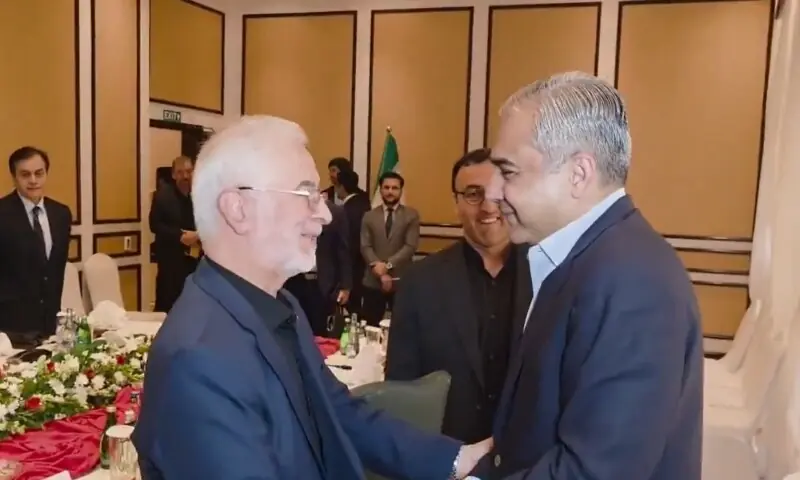
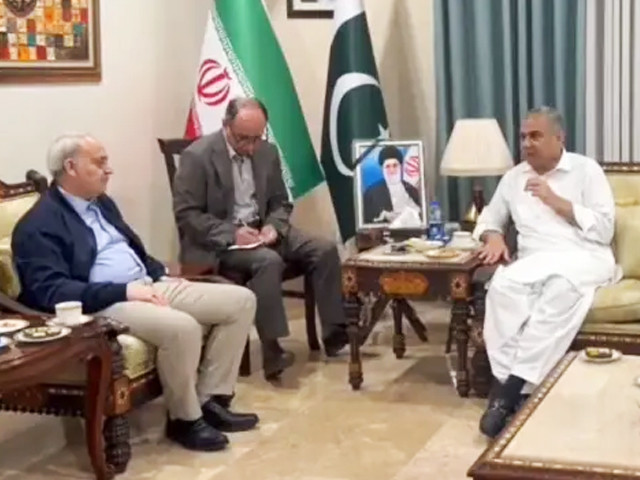
BISHKEK/ISLAMABAD: Interior Minister Mohsin Naqvi and his Iranian counterpart Eskandar Momeni on Friday discussed bilateral relations and the evolving regional situation, underscoring the need for sustained diplomatic engagement to “achieve lasting peace in the region.”
According to the Interior Ministry, Naqvi met Iranian Interior Minister Eskandar Momeni on the sidelines of a special meeting of Interior and Public Security Ministers of the Shanghai Cooperation Organisation (SCO) in Bishkek, Kyrgyzstan. The two sides reviewed efforts to de-escalate tensions in the Middle East amid renewed regional instability and ongoing diplomatic activity between Washington and Tehran.
وفاقی وزیر داخلہ محسن نقوی اور ایرانی وزیر داخلہ سکندر مومنی کے درمیان اہم ملاقات
پاک ایران تعلقات اور خطے کی تازہ ترین صورتحال پر تبادلہ خیال
کشیدگی میں کمی اور داخلی سلامتی کے امور پر تبادلہ خیال pic.twitter.com/9iAXpqvJ6h— Ministry of Interior GoP (@MOIofficialGoP) June 5, 2026
It was Naqvi’s second interaction with Momeni in as many days, with both ministers also exchanging an informal conversation prior to the formal meeting.
The meeting came a day after Pakistan condemned Iranian drone and missile attacks on Kuwait and Bahrain, warning that renewed hostilities were undermining diplomatic efforts aimed at easing tensions between the United States and Iran.
“Federal Interior Minister Mohsin Naqvi held an important meeting with Iranian Interior Minister Eskandar Momeni,” the ministry said in a brief statement.
“The two ministers discussed Pakistan-Iran relations and the latest situation in the region,” it added, noting that both sides stressed the need to continue diplomatic efforts consistently to achieve lasting peace in the region.
ایرانی وزیر داخلہ سکندر مومنی سے وفاقی وزیر داخلہ محسن نقوی کی ایک اور ملاقات pic.twitter.com/LTy1t7QkMT
— Ministry of Interior GoP (@MOIofficialGoP) June 4, 2026
Pakistan has positioned itself as a key facilitator of dialogue between Washington and Tehran, hosting a high-level round of talks in April that failed to produce a breakthrough.
Pakistani officials have since remained engaged with both sides, relaying messages and peace proposals as part of ongoing diplomatic outreach since tensions escalated in late February.
They were also instrumental in helping secure a fragile ceasefire on April 8. While the arrangement has largely held, broader negotiations have stalled over differences related to Iran’s uranium enrichment programme and the Strait of Hormuz, which was closed by Tehran following joint US-Israeli strikes.
Naqvi has visited Iran in recent weeks and held a series of high-level engagements as part of intensified bilateral and regional diplomacy.
Met my dear brother, H.E. Eskandar Momeni, Interior Minister of Iran again. We reviewed the evolving regional security situation and discussed matters of mutual interest. pic.twitter.com/qLHo8VnTsK
— Mohsin Naqvi (@MohsinnaqviC42) June 5, 2026
Pakistan-Iran engagement has further deepened as regional tensions persist, with sporadic exchanges of strikes reported between Iranian and US forces.
‘Call for joint SCO strategy against terrorism, organised crime’
Earlier on Friday, Interior Minister Mohsin Naqvi reaffirmed Pakistan’s commitment to the “Shanghai Spirit” and called for a coordinated regional strategy among SCO member states to combat terrorism, organised crime, drug trafficking, cybercrime and terror financing.
Addressing a special meeting of Interior and Public Security Ministers of the SCO in Bishkek, Naqvi said the region was confronting “serious and complex security challenges” that were increasingly interconnected.
He noted that criminal and terrorist networks were rapidly adapting to technological advancements, exploiting artificial intelligence, digital platforms, online networks and cryptocurrency transactions to expand their operations.
The interior minister stressed the need for enhanced institutional coordination and stronger intelligence-sharing mechanisms across the region to effectively counter emerging threats.
Shared threats demanded shared solutions, Naqvi told delegates, calling for a comprehensive regional framework to address transnational crime and evolving security risks.
Reaffirming Pakistan’s commitment to the principles of the SCO, he said: “Pakistan fully adheres to the principles of the Shanghai Spirit, which is based on mutual trust, equality, cooperation, and respect for sovereignty.”
Naqvi further said Pakistan had rendered “unparalleled sacrifices” in the fight against terrorism and continued to strengthen its security architecture to respond to evolving challenges.
He said that under the National Action Plan, Pakistan had enhanced intelligence coordination, border management and anti-money laundering measures, adding that these initiatives had significantly strengthened the country’s capacity to combat terrorism and organised crime.
Comments
No comments yet. Be the first to join the discussion!