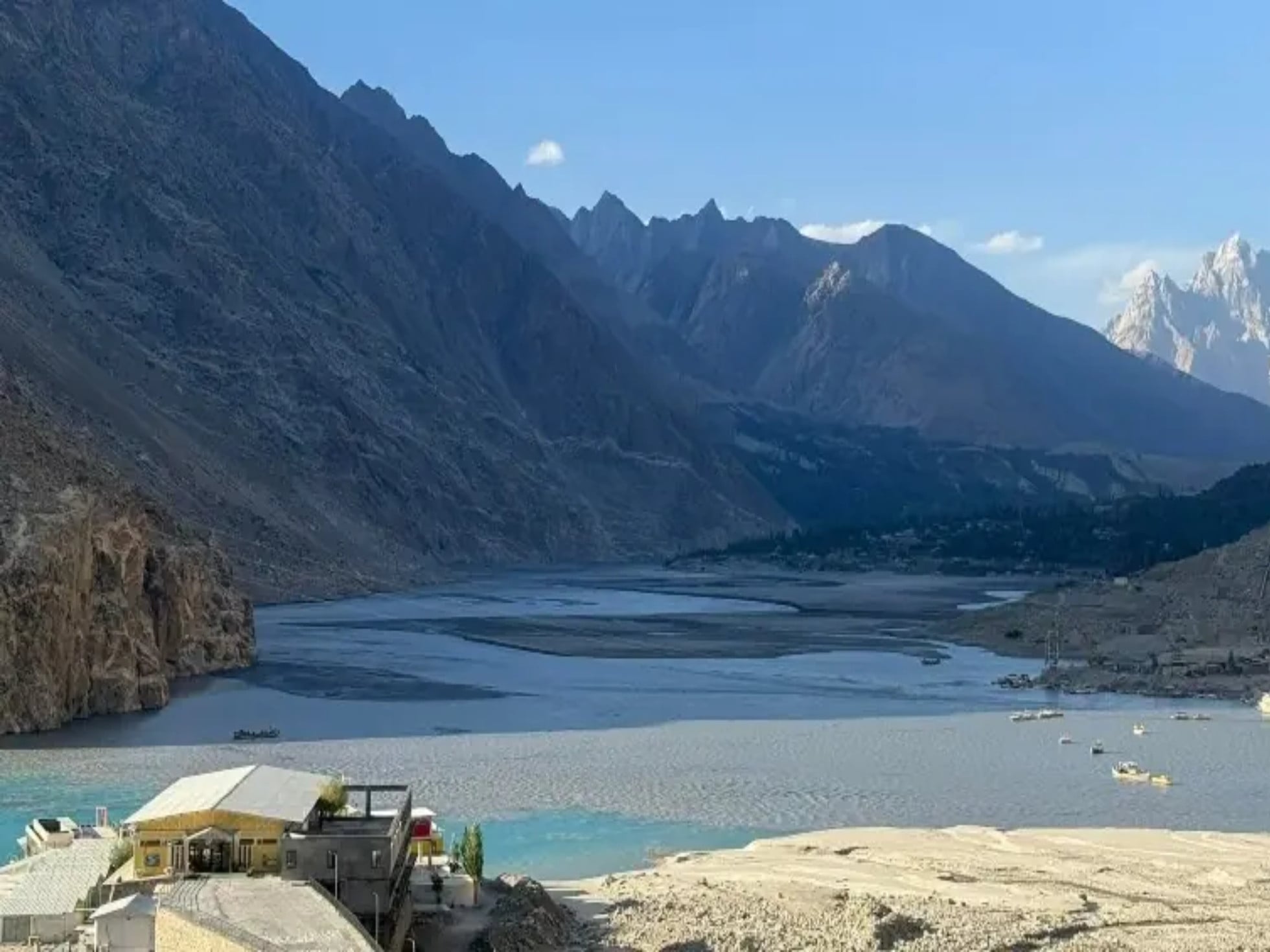
From paradise to cold dessert? Hunza’s crown jewel Attabad lake is no more!
Attabad Lake is gone? Hunza’s blue jewel turns into a desert and the internet is shook


Attabad Lake — once the crown jewel of Hunza and one of Pakistan’s most photographed tourist spots — is suddenly at the centre of online shock, after new visuals showed large portions of its iconic turquoise waters replaced by dry, exposed land.
What was once a deep blue, almost surreal stretch of water where tourists took boat rides and snapped postcard-perfect photos now looks dramatically different. Viral clips circulating on social media show wide sandy patches, shrinking water channels, and areas that appear more like a cold desert than a lake.
The transformation has triggered confusion and nostalgia in equal measure, with many recalling memories of boating across the same waters that now appear to be retreating.
But while the visuals look alarming, Attabad Lake was never a typical natural lake to begin with.
Formed in 2010 after a massive landslide blocked the Hunza River, the lake is technically a landslide-dammed reservoir. That means its water levels are not fixed — they fluctuate based on glacier melt from the Karakoram range, seasonal rainfall, and controlled outflow through spillways built to manage pressure behind the natural dam.
This makes it unusually dynamic. In summer months, meltwater from glaciers often swells the lake. In winter, reduced inflow combined with evaporation and drainage through outlets can significantly lower water levels — sometimes exposing large stretches of the lakebed.
Experts have long noted that such “natural dam lakes” are inherently unstable over long time scales. Sediment build-up, changing river flow, and climate-driven glacier retreat all influence how the lake evolves year to year.
Still, the latest visuals have hit differently online — not because the lake has suddenly vanished, but because the exposed land is far more visible than what many visitors remember from peak tourism seasons.
Locals and tourists have also pointed out a secondary impact: reduced water levels affect boating activity and shift the entire tourist economy built around the lake’s signature blue shoreline. In some areas, dust from exposed sediment is now more noticeable during dry winds.
Some social media users are calling it “the end of Attabad Lake as we know it,” while others argue it’s simply a seasonal and long-term fluctuation being amplified by viral footage.
Either way, one thing is clear: Attabad is no longer the same postcard image the internet fell in love with — and that contrast is exactly why it’s going viral.
3 Comments
No comments yet. Be the first to join the discussion!