Lebanon flare-up clouds US-Iran diplomacy
Iran said it had suspended indirect contacts with the US after what it described as ceasefire violations linked to Israeli attacks on Beirut, while President Donald Trump insisted talks were still moving quickly. Tehran also urged Pakistan to continue efforts for regional de-escalation.

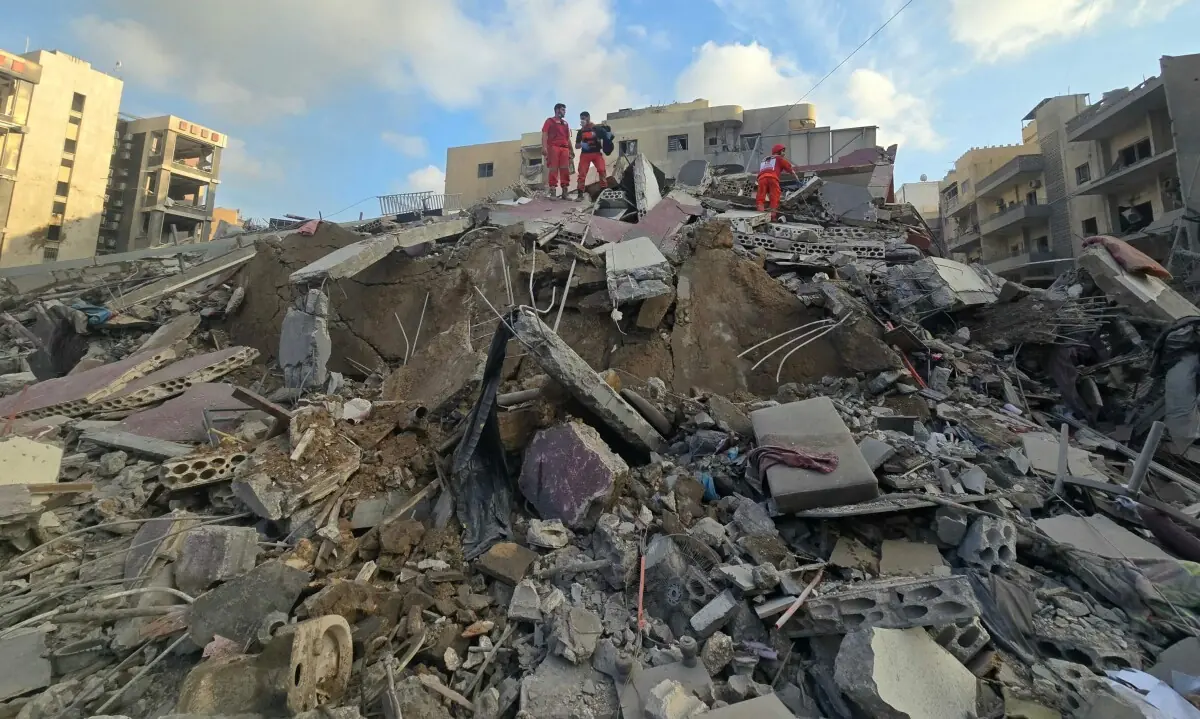
TEHRAN/WASHINGTON: Strains over Israel’s operations in Lebanon cast a shadow over efforts to sustain diplomacy between Iran and the United States on Monday, as Tehran and Washington gave sharply different accounts of whether their contacts remained on track.
Iran said it regarded the ceasefire as having been breached after Israeli Prime Minister Benjamin Netanyahu ordered attacks on Beirut, and announced that indirect exchanges with Washington had been suspended. Iranian Foreign Minister Abbas Araghchi said on X that a breach in one arena amounted to a breach everywhere.
"Violation on one front is a violation of the ceasefire on all fronts. The US and Israel are responsible for the consequences of any violation,"President Donald Trump initially said he did not know whether Iran had halted the talks, then told CNBC he was unconcerned if the process had ended.
He later struck a different note, saying negotiations with Iran were continuing at a rapid pace.
Lebanon tensions and competing signals
Trump also said he had acted to calm Iranian concerns over Lebanon by speaking with Netanyahu and, through intermediaries, communicating with Hezbollah in a bid to prevent further escalation. He said no troops would go to Beirut and that any forces already heading there had been turned back, adding that Hezbollah had agreed to stop attacks on Israel.
"There will be no troops going to Beirut, and any troops that are on their way have already been turned back,"A Lebanese official told Reuters that Hezbollah had conveyed through Lebanon’s parliament Speaker Nabih Berri that it was prepared to stop attacks on northern Israel if Israel refrained from striking Beirut and its suburbs.
Iran’s top negotiator Bagher Ghalibaf also accused Washington of violating the ceasefire, saying the US naval blockade of Iranian ports and the escalation in Lebanon were evidence of non-compliance.
The war launched by the US and Israel on February 28 has killed thousands of people, mostly in Iran and Lebanon. Energy prices had risen worldwide after Iran effectively shut the Strait of Hormuz, a major route for global oil and liquefied natural gas supplies.
Warnings of wider fronts
Earlier, Iran warned that new fronts could be opened across the Gulf, including in the Red Sea, if the ceasefire with the US broke down. Tasnim news agency said Iran and what it described as the Resistance Front — including allied groups in Yemen, Lebanon and Iraq — had agreed on a plan to fully block the Strait of Hormuz and activate other fronts, including the Bab el-Mandeb Strait, to punish Israel and its supporters.
If the Houthis opened a new front, one likely target would be the Bab el-Mandeb Strait off Yemen, a strategic maritime chokepoint controlling traffic towards the Suez Canal. Referring to Iran’s demands over Lebanon, Tasnim said there would be no talks until the views of Iran and the Resistance Front on the issue were met.
Military exchanges despite ceasefire
Even before the Lebanon dispute intensified, the two sides had exchanged military blows despite the ceasefire. The US military said it struck Iranian air defences, a ground control station and two drones over the weekend after what it called aggressive Iranian actions, including the downing of a US drone over international waters.
The Islamic Revolutionary Guard Corps said on Monday it had targeted an air base used by the United States in response to an attack on southern Iran, though it did not name the base. Kuwait said it had activated its air defences and condemned Iranian missile and drone attacks that it said were hurting efforts to lower regional tensions.
The US military said its forces intercepted two Iranian ballistic missiles aimed at American troops stationed in Kuwait late on Sunday and that no US personnel were injured. Separately, Iraqi officials said two explosions hit a cargo vessel in the Gulf about 40 nautical miles southeast of Umm Qasr, one of them caused by a drone strike. No group claimed responsibility.
Pakistan contact
Amid uncertainty over the diplomatic track, Araghchi told Deputy Prime Minister and Foreign Minister Ishaq Dar that he appreciated Pakistan’s constructive role in regional diplomacy and asked Islamabad to continue efforts aimed at de-escalation and preserving the ceasefire.
The two spoke by phone about concerns over how durable the ceasefire would prove. According to a Foreign Office statement, FM Araghchi, in his conversation with Dar, expressed serious concern over developments in the region, including ceasefire violations in Lebanon by Israel and orders by the Israeli government regarding a possible attack in parts of Beirut. Dar also held a separate conversation with his Egyptian counterpart on regional tensions.
Comments
No comments yet. Be the first to join the discussion!