

When norms collapse
Seizing Venezuela’s Maduro and killing Iran’s Khamenei highlight selective application of international rules. The piece warns US credibility on sovereignty, law, and restraint is eroding—and calls for consistent diplomacy.

Rules are also for the rule-makers
There are moments when foreign policy stops pretending to be moral philosophy and reveals itself as a hierarchy of power. We are in one of those moments now. The seizure of Venezuelan President Nicolás Maduro by US forces in January and the killing of Iranian Supreme Leader Ayatollah Ali Khamenei in the US-Israeli assault on Iran did not simply redraw two crises. They exposed a larger truth about the world order. Rules are preached as universal, but too often applied selectively. That is why the real issue is no longer only what Washington has done in Venezuela or Iran. It is whether, after these precedents, the USA can still speak with the same authority about sovereignty, law and restraint.
Norms collapse not only when rivals violate them, but when the states that claim to defend them decide they are optional. The USA still has immense power. It still has the world’s strongest military, unmatched financial leverage and a dollar that remains dominant in global reserves and transactions. But power without consistency is not leadership. It is enforcement. And enforcement without principle invites imitation. If Washington wants future warnings about coercion, annexation, abduction or regime engineering to carry weight, it must stop acting as though legality is a privilege of the strong. Otherwise, the world will hear every new sermon on law and freedom for what it increasingly sounds like: not a principle, but a preference
This is not an argument for Maduro’s governance, nor a defence of the Iranian state. It is an argument about consistency. If leader capture, targeted decapitation and externally managed political transition become acceptable when done by Washington, then the legal and moral ground under every future protest becomes thinner. That matters far beyond Latin America and the Middle East. Any major power can dress coercion in the language of security, necessity or historical right. Once exceptions become routine, every capital writes its own exception. In that world, condemnation does not disappear, but credibility does. The result is not order. It is a marketplace of precedents.
Two of the most prominent US critics of this drift have, notably, made their warnings in unusually blunt terms. John Mearsheimer has argued that Washington has “no coherent strategy for winning the war” and that the Trump Administration made “a huge blunder” by attacking Iran. Jeffrey Sachs, from a very different intellectual tradition, has said the crisis began not with failed diplomacy from Tehran but with Washington’s abandonment of successful negotiations, and warned that “the world is in urgent need of a renewed commitment to diplomacy.” One speaks the language of realism, the other of international law. Yet both arrive at the same destination: militarized overreach without a serious political endgame.
That contradiction is visible at home as well. The USA continues to market itself as the guardian of free speech and a lecturer to others on press freedom, including when criticizing China. Yet the Trump Administration has punished independent reporting and restricted access for journalists whose coverage it dislikes. One major wire service said the White House’s move “plainly violates the First Amendment,” while the Committee to Protect Journalists says press freedom in the USA is under “extraordinary and intensifying pressures.” A country that claims moral leadership cannot credibly celebrate free expression abroad while treating hostile questions at home as insubordination.
The deeper problem is structural. War has become embedded in a political economy of power that resembles corporate behavior more than responsible statecraft. That does not mean every conflict is started for profit alone. It does mean there are strong material incentives around permanent confrontation. Stockholm International Peace Research Institute (SIPRI) reports that world military spending reached $2.718 trillion in 2024, the highest level on record, while the USA remained by far the world’s largest arms supplier with a 42 percent share of global arms exports in 2021 to 2025. In the same period, the combined arms revenues of US firms in SIPRI’s Top 100 rose to $334 billion. This is the hard infrastructure of modern power: not only aircraft carriers and intelligence reach, but sanctions, dollar liquidity and a defense industry that expands when insecurity expands.
The economic consequences of the Iran war show why these matters beyond the battlefield. The Strait of Hormuz is not a regional footnote. Once that artery came under severe disruption, markets reacted immediately. Brent crude briefly rose above $101 a barrel, and Washington joined a coordinated emergency release of 400 million barrels from strategic reserves, including 172 million barrels from the US reserve over roughly 120 days. That is not a sign of strength. It is a sign of vulnerability.
For the USA, the costs are already visible in household terms. Environmental Impact Assessment’s (EIA) March 2026 outlook raised its forecast for average U.S. gasoline prices this year to $3.34 a gallon and diesel to $4.12, both sharply above its previous forecast. Financial markets have also signaled stress, with US stocks falling as oil surged and inflation fears returned. The IMF has offered a useful rule of thumb: every persistent 10 percent increase in oil prices can add 40 basis points to global headline inflation and cut global output by 0.1 to 0.2 percent. The burden of that shock will not fall evenly. Working people pay first through fuel, food and transport. Emerging economies pay again through imported inflation, weaker currencies and tighter financing.
Iran, meanwhile, is paying in the currency that war always devalues most brutally: civilian life. UN experts have condemned the strikes as unlawful, called for de-escalation, and said the attack on a girls’ primary school in Minab was a war crime. They also warned that attacks on civilians, schools and medical institutions are grave violations of international humanitarian law. Whatever one thinks of the Iranian state, this is the human ledger of “strategic” escalation. Bombs do not only hit command structures. They hit classrooms, hospitals, roads, markets and memory itself.
Trump’s defenders present all this as toughness. But the same governing style has now extended well beyond Iran. Over the past year he has threatened or imposed sweeping tariffs on Canada and Mexico, escalated punitive measures against Colombia, and declared a national emergency against Cuba while officials openly floated even the possibility of a “friendly takeover.” This is not the behavior of a careful steward of international stability. It is the behavior of a leader who sees pressure as policy, humiliation as diplomacy and disruption as proof of strength. The costs, again, are socialized outward. Workers, consumers and weaker states absorb them while great powers posture.
That is why the title still fits. Norms collapse not only when rivals violate them, but when the states that claim to defend them decide they are optional. The USA still has immense power. It still has the world’s strongest military, unmatched financial leverage and a dollar that remains dominant in global reserves and transactions. But power without consistency is not leadership. It is enforcement. And enforcement without principle invites imitation. If Washington wants future warnings about coercion, annexation, abduction or regime engineering to carry weight, it must stop acting as though legality is a privilege of the strong. Otherwise, the world will hear every new sermon on law and freedom for what it increasingly sounds like: not a principle, but a preference.
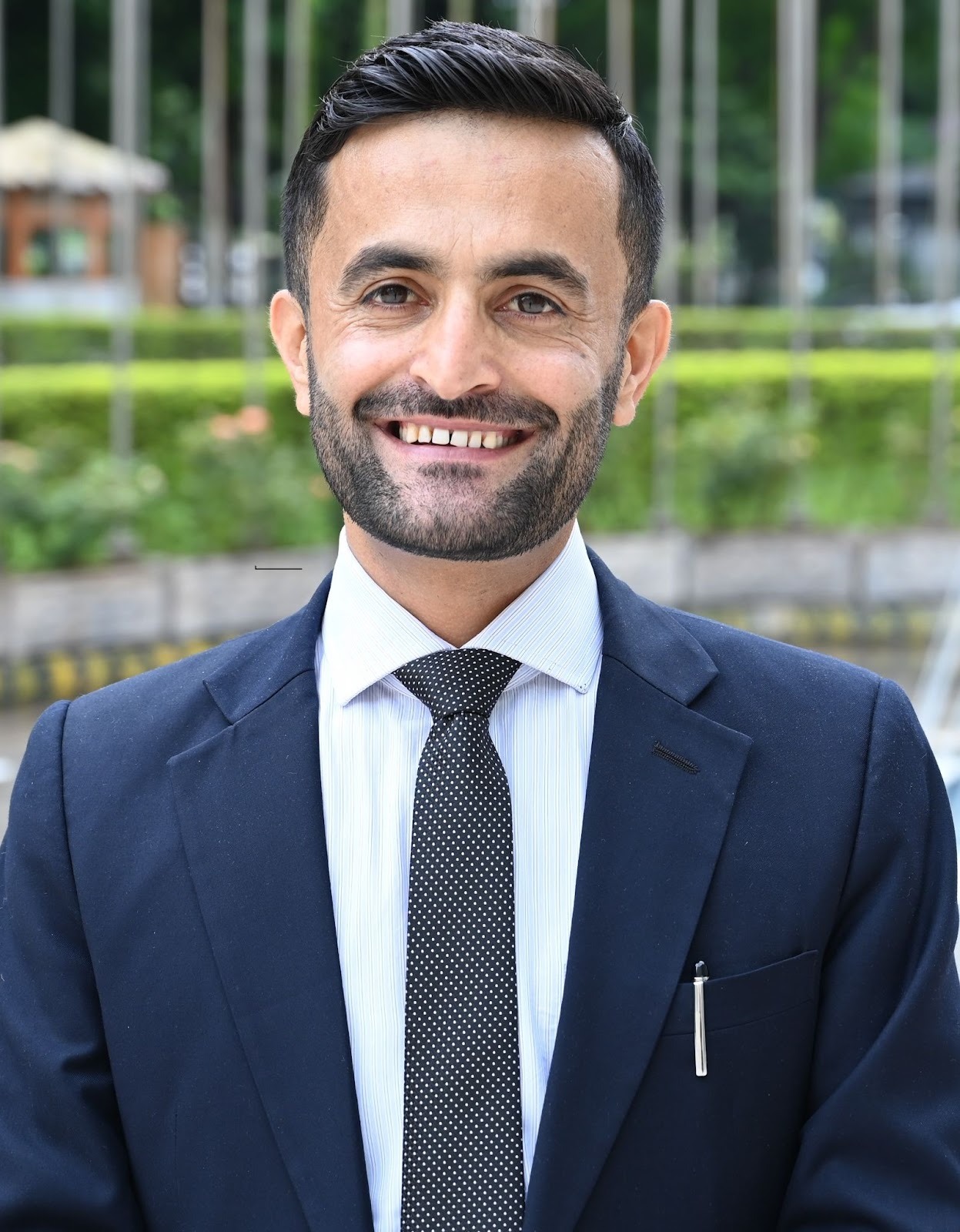
The author is a freelance columnist affiliated with an Islamabad-based think tank. He posts on X under the handle @tehzeeb_says
View all articles →Comments
No comments yet. Be the first to join the discussion!


