

How Trump normalized abducting foreign leaders

The abduction and prosecution of a sitting head of state is not merely a criminal case. It is a constitutional moment for the international system. With the dramatic seizure of Venezuelan President Nicolás Maduro and his transfer to the Southern District of New York to face drug-trafficking and weapons conspiracy charges, the USA has crossed a threshold that international law has traditionally treated as inviolable: a sitting head of state is not subject to the criminal jurisdiction of another state’s courts.
Under customary international law, confirmed most famously by the International Court of Justice in the Arrest Warrant Case (2002), a sitting head of state enjoys immunity ratione personae— absolute immunity from foreign criminal proceedings, arrest, and detention. The basis is not personal privilege, but sovereignty itself. If the head of state can be arrested like a common suspect, then the state itself is no longer sovereign.
Yet the USA proceeds on a different logic. US law provides federal courts jurisdiction over any person physically before them who has been indicted under federal criminal statutes with extraterritorial reach. The key drug-trafficking laws— 21 U.S.C. §§ 959, 960, 960a, and 963— permit prosecution of foreign actors who manufacture or traffic narcotics abroad knowing they are bound for US territory. Add to that 18 U.S.C. § 924(o) concerning firearms conspiracy, and the legal structure becomes complete. Once a federal grand jury indicts, and once the accused is in custody, 18 U.S.C. § 3231 gives the district court full criminal jurisdiction. Under the Ker–Frisbie doctrine, even an unlawful abduction does not defeat prosecution.
In other words: US law begins where international law says it must stop. The USA answers this contradiction in two ways. First, by asserting that head-of-state immunity depends on recognition— and Washington has repeatedly questioned the legitimacy of Maduro’s presidency. Second, by reframing drug-trafficking as criminal, private activity, not official state conduct. Courts used a similar reasoning in United States v. Noriega, where the former Panamanian leader was tried in Florida after being seized by force. Since immunity protects the office rather than the individual, the U.S. argues that an illegitimate ruler engaged in private criminality is not entitled to the cloak of sovereignty.
But even if domestic US legal doctrine permits such a prosecution, international law does not. Sovereignty, equality of states, and immunity of heads of state are foundational norms. If one country may seize the president of another and try him before a domestic court, then every powerful nation acquires the same prerogative.
And here lies the danger. Imagine the mirror case. Suppose Venezuela indicted a sitting US president— say Donald Trump— on charges of mass civilian casualties, illegal blockade, or extrajudicial destruction of vessels at sea. Suppose further that Venezuelan agents abducted him abroad and transported him to Caracas for trial. Under the very logic now applied to Maduro, Venezuela could insist its criminal statutes have extraterritorial reach, that Trump’s actions were criminal rather than “official,” and that its courts therefore possess jurisdiction.
For the sake of order, sovereignty, and genuine international justice, this Pandora’s box must be closed— quickly and decisively. Otherwise the rule of law will not have been advanced by the Maduro prosecution. It will have been mortally wounded.
How would the USA respond?. Not by arguing immunity in court, but by invoking force. A national emergency would be declared. Military forces would mobilize. The USA would demand immediate release and— if refused— would act unilaterally, claiming self-defence under the UN Charter. Washington would not accept the idea that a foreign domestic judge could lawfully sit in judgment over a sitting US president. Nor would any American expect it to.
The reality, then, is not that law permits the USA what it forbids others, but that power determines whose law prevails. When China pursues influence, it does so primarily through economic integration and diplomatic leverage, binding states into webs of trade and dependence. The USA once did the same. But as its economic leverage erodes and its diplomatic authority is increasingly contested, military and coercive instruments have become more visible tools of statecraft. The Maduro case is not an isolated legal proceeding; it is an expression of power through law— what scholars call “lawfare.”
The timing reinforces this interpretation. Senior US military officials have openly acknowledged that operational planning for the mission began many months before the final raid, using intelligence mapping, maritime blockade, tanker seizures, and legal narrative to sculpt a justification. That sequence suggests the decision to neutralize Maduro came first; the legal story followed. Declaring drugs a “weapon of mass destruction,” escalating maritime enforcement, and ultimately seizing a sitting president were phases of a single strategy— not spontaneous responses. It is no coincidence that Venezuela controls the world’s largest proven oil reserves.
Yet the legal stakes stretch far beyond Venezuela. If abducting a sitting president becomes normalized practice, the Pandora’s box is open. Russia could seize the Ukrainian president. Ukraine could attempt to capture the Russian leader. India and Pakistan could abduct each other’s heads of government under rival criminal indictments. Every major power could claim universal criminal jurisdiction over its geopolitical adversaries. The international system would slide from law-based coexistence into unrestrained strategic kidnapping.
This is why head-of-state immunity exists in the first place. Not because leaders should be above the law— but because there must be a lawful, international forum for accountability, not unilateral justice imposed by strength. International tribunals, or trials after a leader leaves office, are the established routes. Anything else destabilizes the sovereign equality that prevents chaos.
It is also essential to note that the same immunity doctrine protects US presidents, including Donald Trump. Under international law, he cannot be arrested or tried abroad while in office, nor prosecuted for official acts thereafter. If the USA disregards these principles when dealing with weaker states, it cannot coherently object when others attempt the same logic against it.
The charges against Maduro in New York— drug trafficking and weapons conspiracy— were shaped precisely because those are the statutes that grant US courts extraterritorial jurisdiction. They were not chosen for factual accuracy alone but to manufacture legal standing. If conviction follows, it will rest on a foundation that may be domestically valid yet internationally corrosive.
The world should be under no illusion: this is not only a criminal case. It is a test of whether law restrains power, or power bends law to its will. If the precedent stands unchecked, the guardrails that have prevented interstate retribution through legalized kidnapping will weaken. The result will not be justice— but a colder, more dangerous world where states resolve grievances by force wrapped in court filings.
For the sake of order, sovereignty, and genuine international justice, this Pandora’s box must be closed— quickly and decisively. Otherwise the rule of law will not have been advanced by the Maduro prosecution. It will have been mortally wounded.
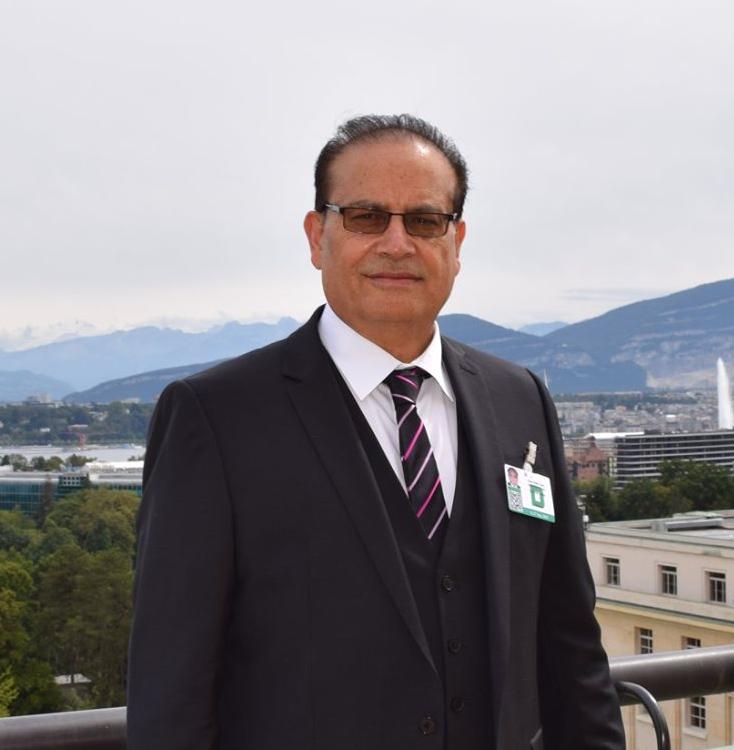
The writer retired as Press Secretary the President, and is former Press Minister at Embassy of Pakistan to France and former MD, Shalimar Recording & Broadcasting Company Limited
View all articles →Comments
No comments yet. Be the first to join the discussion!


