A fragile pause
A fragile ceasefire holds but could unravel fast as the US and Iran resume negotiations under pressure from Israel’s Lebanon actions. Pakistan and partners urge good faith to prevent renewed war.

It seems the United States and Iran have made a habit of turning negotiations into a game of cat and mouse, with talks beginning, collapsing and then restarting under the shadow of war.
This is not diplomacy as much as it is crisis management conducted one provocation at a time. The latest phone call between Deputy Prime Minister and Foreign Minister Ishaq Dar and Iranian Foreign Minister Abbas Araghchi underlines how fragile the present ceasefire remains, and how quickly the region may be pushed back into a wider conflict if its principal actors continue to treat diplomacy as a tactical pause rather than a serious path to de-escalation.
Iran is, quite naturally, on edge. It has been attacked. Its leaders have been killed. Its population has been targeted by the United States and Israel. A state that has absorbed such blows will not respond to every new military movement with detached restraint. That does not justify escalation, but it does explain why Tehran now sees Israeli action in Lebanon not as a separate theatre, but as part of the same chain of pressure that led to the current crisis.
President Donald Trump appears keen to avoid being dragged deeper into the conflict. Yet each time Washington and Tehran move closer to some workable understanding, Israel plays spoilsport. Its latest attempt to widen the political frame by linking regional normalisation, including possible Saudi entry into the Abraham Accords, to the Iran file is one such complication. Its continued bombardment of Lebanon is another, and far more dangerous, one.
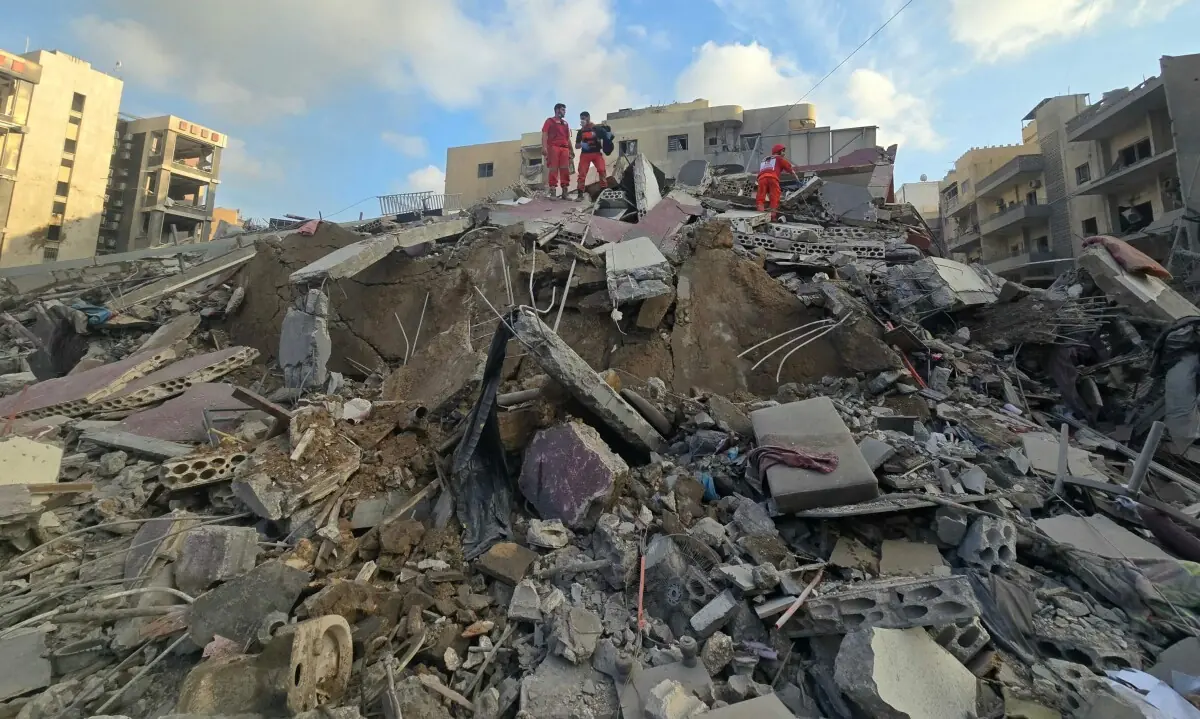
This has become a sticking point for Tehran for good reason. When Prime Minister Shehbaz Sharif announced the initial ceasefire, which is somehow still technically holding, the understanding included Lebanon. Israel flouted that condition almost immediately, and its latest evacuation warnings for Beirut’s southern suburbs again show how easily a ceasefire can be hollowed out while still being invoked in diplomatic language.
Pakistan has played, and continues to play, a responsible role. Islamabad has neither sought theatrics nor allowed itself to be reduced to a bystander. Its message is correct: the ceasefire must hold, and existing understandings must not be allowed to break down through calculated ambiguity or unilateral military action.
But Pakistan cannot carry this burden alone. The United States and Iran must take negotiations seriously and approach them in good faith. Washington cannot expect Tehran to keep talking while Israel keeps expanding the battlefield. Tehran, too, must resist the temptation to answer every provocation with steps that make diplomacy harder.
Qatar, China and all other partners involved in this process must keep pushing for sanity. The region has already seen what brinkmanship produces. It now needs adults in the room.

The Editorial Department of Pakistan Today can be contacted at: [email protected].
View all articles →Comments
No comments yet. Be the first to join the discussion!