Asia’s expanded World Cup push ends in early exits for most AFC teams
Asia sent a record nine teams to the FIFA World Cup, but most exited early, according to a Dawn analysis. The report highlighted poor results, resignations and growing calls for reform across Asian football.


ISLAMABAD: Asia’s biggest-ever representation at the FIFA World Cup ended with a sharply disappointing return, with all Asian national teams now eliminated after Japan’s defeat to Brazil, leaving only Australia from the Asian Football Confederation still in the tournament despite not being an Asian nation.
Nine AFC teams qualified for the event, but only two reached the knockout stage and one of those — Australia — is not from Asia. The outcome was the continent’s smallest knockout presence since the tournament’s expansion and the overall record of the seven eliminated Asian sides was: one win, six draws and 14 defeats, with 14 goals scored and 52 conceded. Four teams ended with one point or fewer, while three finished without a point. Qatar, the two-time defending Asian champions, collected a single point from a draw with Switzerland, while Uzbekistan, Jordan and Iraq ended their campaigns empty-handed.
Results and fallout
Iraq conceded 12 goals and scored once, Uzbekistan let in 11 and scored twice, Qatar conceded 10 and scored two, while Jordan conceded eight and scored three. Saudi Arabia scored once and conceded five, South Korea scored two and conceded three, and Iran scored three while conceding three. The opening round briefly suggested a stronger tournament for Asia, with South Korea beating the Czech Republic, Japan drawing with the Netherlands, Saudi Arabia drawing with Uruguay, and Iran drawing with Belgium and Egypt, before results turned against the region’s teams.
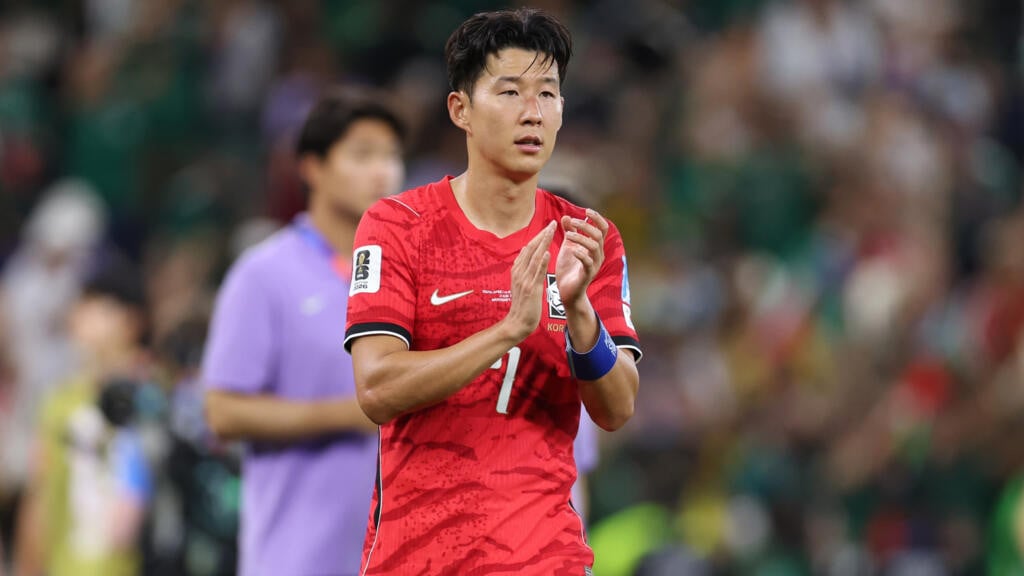
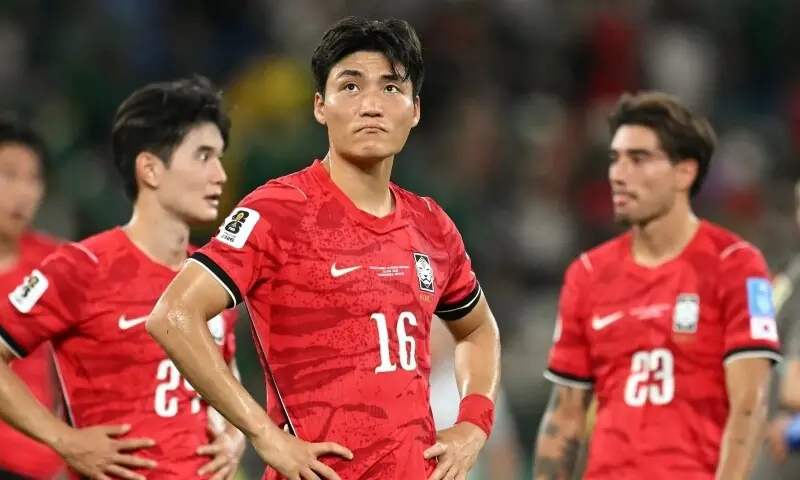
South Korea, after moving into a strong position to finish second behind Mexico following victory over the Czech Republic, were knocked out after a 1-0 defeat to South Africa left them among the weakest third-placed teams. The fallout, was immediate, with coach Hong Myung-bo resigning and apologising publicly.
“I would like to sincerely apologise to the citizens who have loved Korean football and always supported the national team. I failed to deliver the results the public expected. The responsibility lies entirely with me,” Hong said.
Saudi Arabia, which had beaten Argentina at the 2022 World Cup, finished this tournament with two points. The Saudi move to replace Herve Renard with Georgios Donis in April did not deliver the desired results.
Iran and Japan suffer narrow exits
Iran were the only one of the seven eliminated Asian teams to go through the group stage unbeaten, drawing all three matches but going out on goal difference. They were eliminated when Austria scored a last-kick equaliser against Algeria in the final round of group matches. Iran also had a stoppage-time winner against Egypt ruled out for offside.
Captain Mehdi Taremi called the tournament a disaster, while coach Amir Ghalenoei said the side had been the most oppressed at the World Cup because visa restrictions forced them to base themselves in Mexico. After their final match, the team left a handwritten note in the dressing room that read: “From the ancient Persia of thousands of years ago to the civilised Iran of today, the spirit of Iran remains alive and steadfast. We came to Los Angeles with pride, competed with honour, and leave with dignity. May peace, respect, and friendship prevail among all nations.”
Japan, Asia’s only genuine heavyweight, were knocked out after leading Brazil 1-0 until the 56th minute before losing 2-1 to a stoppage-time goal. That defeat was linked to previous painful exits, noting that Japan led Belgium 2-0 in 2018 before losing to a stoppage-time goal, and were beaten by Croatia on penalties in 2022.
African contrast and calls for change
Asia’s performance contrasted with Africa’s, with 10 African teams entering the tournament and nine reaching the knockout stage. Cape Verde finished second in the so-called group of death after drawing with Saudi Arabia, while DR Congo qualified in their first World Cup appearance in 52 years. Morocco, Ivory Coast, Senegal, Ghana, Algeria and Egypt also advanced.
Jordan coach Jamal Sellami, speaking after his side’s campaign, said stronger club environments were key to better international performances. “The most important thing for Jordanian football, if it is to have a greater chance of achieving results, is to have players competing in stronger and more competitive leagues.”
Saudi federation chief Yasser Al-Misehal resigned after his country’s exit, South Korea’s president called for a full review of the national team programme, and Iraq opened an official inquiry into its winless run. Uzbekistan coach Fabio Cannavaro also gave a broad assessment of the region’s standard. “Where we need to improve is in Asian football as a whole. Other than Japan, Australia and maybe Iran … every team needs to improve.”
Before the tournament, AFC President Shaikh Salman bin Ebrahim Al Khalifa had urged Asian teams to make the most of the World Cup in North America and set a new benchmark outside Asia. After the exits, he acknowledged the scale of the challenge. “Having two representatives advance highlights the incredibly high level of global competition. It shows that while our teams are making strides and displaying great fighting spirit, the gap at the absolute top tier remains tight, and we must continue to work hard to bridge it.”
Criticism in South Korea was severe, with Chosun describing the campaign as a disappointment and saying the team left behind an embarrassing result. At Incheon Airport, one banner carried by a fan read: South Korean football is dead.
Comments
No comments yet. Be the first to join the discussion!