March 19, 2026
Battling over the Strait
The ongoing conflict in the Strait highlights the crucial role of oil in global economies. As tensions rise, the implications for oil exporters and importers are significant.

March 19, 2026

The world’s peace and prosperity have been thrown aside
AT PENPOINT
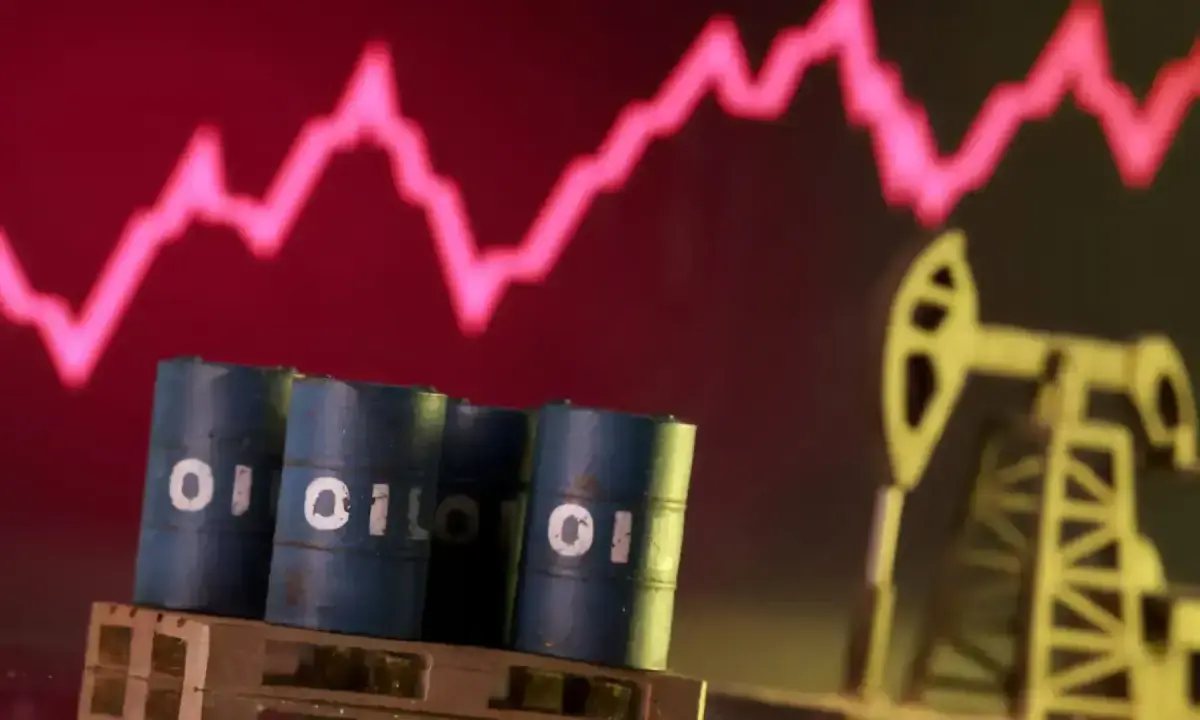
Rarely has the economic cost of a conflict been so prominent during the conflict itself, as during the Iran-USA-Israel conflict. That is because of oil. It not just reflects the fact that conflict has turned the world’s major oil-producing area into a war zone, but also how crucial oil is to the world economy. The impact of the conflict is global, because all oil exporters will be affected in one way, and importers in another. The world, it turns out, depends on oil from the Persian Gulf, and in turn that depends on the Hormuz Strait.
The Strait has not been closed as such. That would mean making it unnavigable by sinking vessels, or by laying mines. Iran has done none of the former and some of the latter, making it thus possible to end the blockade immediately, and to impose it again simply by a statement. As Iran depends on missiles and drones to enforce the blockade, it makes convoy escorts virtually useless.
Convoys in World War II were possible to the allies moving materiel from the USA to the UK or the USSR because the main weapon used against shipping were torpedoes fired by submarines. Providing escorts of anti-submarine destroyers was thus viable. While it is a truism that submarines themselves are the best anti-submarine weapon, a destroyer can be quite useful too. Since World War II, destroyers have developed increasing anti-submarine capabilities.
Unfortunately for The US Navy, Iran is not relying so far on its submarines, of which it has at least four, and as many as six, either ex-Soviet Navy Kilo-class vessels, or locally built boats based on the Kilo-class. So far, Iran has used missiles and drones. In fact, its claim of having chased the USS Abraham Lincoln from the operating area is based on the success of a drone assault, which is said to have caused sufficient damage for it to be removed from the scene.
Incidentally, aircraft carriers are escorted by a number of destroyers as escorts (four in the Lincoln’s case), which are deployed in an anti-submarine role, while they themselves have formidable anti-submarine capabilities. The US Navy in particular is unlikely to forget that in World War II, no less than 18 carriers on both the US and Japanese sides were lost to submarines.
Incidentally, the Lincoln incident illustrates one of the downsides of deploying aircraft carriers, even if one is to accept the US version, in which the ship was not damaged. If hit or (horror of horrors!) sunk, they provide a huge propaganda victory to the other side. They absorb a large share of anti-submarine and anti-missile defences.
The Strait’s reopening is going to be the reason why either the USA or Iran will blink first, but so far, neither seems willing to do so. But the USA is likelier because domestic politics make it likelier to want to return to normalcy. Iran was not part of normalcy before, so paradoxically it has greater staying-power. After all, it has less to lose.
The use of drones means that both carriers and their escorts must have adequate air defences as well. However, as World War II demonstrated, cargo ships, which are essentially defenceless, are also vulnerable to bombing. During it, Germany was limited in air attacks on convoys by the range of its air force, and there was a large part of the Atlantic where ships only faced the submarine threat. However, the whole of the Hormuz Strait is within range for Iranian missiles and drones. Therefore escorts would not only have themselves to defend against air attack, but also the ships they are escorting, and that too constantly.
Convoy escort is all the US Navy can do to keep the Strait open at this point, but it is also wary of doing so, because it does not want to expose its vessels. Somewhere someone may also have an environmental concern: convoys under escort will inevitably suffer some losses, but in this case, it will not just be the ship that will be lost, but the cargo will become an oil spill. With Very Large Crude Carriers containing as much as two million barrels of crude oil, the Strait could become very messy indeed.
Apart from France and the UK, US President Donald Trump mentioned China, South Korea and Japan on a Truth Social post as likely to provide ships for escort duty. It may be noted that the last two are entirely dependent on Middle East oil, while China needs it as well, as its own oil production is inadequate for its needs.
One of the less stressed aspects of the Strait closure is the effect on the world’s agriculture, because apart from oil, a large part of world fertilizer production also passed through it. This is apart from the issue of how much passed into the Gulf countries, including their food supplies. At the very least, if they have to be transported overland through the Levantine coast, costs will increase.
Overall, the effect of closing the Strait is an imponderable that was previously not considered. Now it is going to be a possibility even after shipping is restored, and so long as the present Iranian regime remains in place. To that extent, the oil market will have to change, as insurance (and thus shipping) costs factor in the possibility of closure. The increased costs will have a corresponding effect on the global oil price, with the higher price the cause of much grief among developing countries.
Pakistan is set to become a case study, because it was experiencing a fragile recovery which has now been jeopardized by the war. One of the problems that it has been able to avoid is the need to conserve furnace oil, because while nuclear energy has come online, industrial, residential and agricultural consumers have converted to solar power, whether as part of the national grid (through net-metering) or off-grid. So far, storage battery solution prices have not declined to the point where net-metering consumers are going off-grid in appreciable numbers, but that cannot be ruled out. The secret has been that solar power has not cost WAPDA a single paisa to generate.
Nonetheless. Pakistan has still to fuel its entire transport sector, and its agriculture is also dependent on oil because of tractors, and the tubewells still on the grid. It has not so far faced major difficulties, though these can be expected to increase if the Strait closure goes on. One estimate of the oil price at which there would be an equilibrium between demand and Strait-less supply is $150 a barrel.
More important for Pakistan is whether the government would be able to hold the line on prices at that level. The government has carried out one massive jump, but then held back at the next price fix, now weekly instead of fortnightly. However, the government does not have the financial ability to hold the price down as well as meet its commitments to the IMF. Though the IMF is holding Pakistan to its agreement, it is a symbol of how the war has changed the global economy: it cannot be maintained, because circumstances have changed radically.
Even now, even if one side was to cave in, and peace was to be reestablished, there is no guarantee of a quick return to the normal economy. Part of the problem is that the world has not recovered from the shock administered by covid-19, and then there is the effect of the Russian invasion of Ukraine, which is still ongoing with its baneful consequences. The ability to adapt of the entire world was already low, and this is an additional burden.
The Strait’s reopening is going to be the reason why either the USA or Iran will blink first, but so far, neither seems willing to do so. But the USA is likelier because domestic politics make it likelier to want to return to normalcy. Iran was not part of normalcy before, so paradoxically it has greater staying-power. After all, it has less to lose.
0 Comments
No comments yet. Be the first to join the discussion!