ME conflict and impact of aggregate supply crisis
With peace talks stalled, the Strait of Hormuz faces near closure, pushing oil and gas prices up. Fertilizer shortages follow, raising food prices and threatening production worldwide.

It’s not just oil, but food too
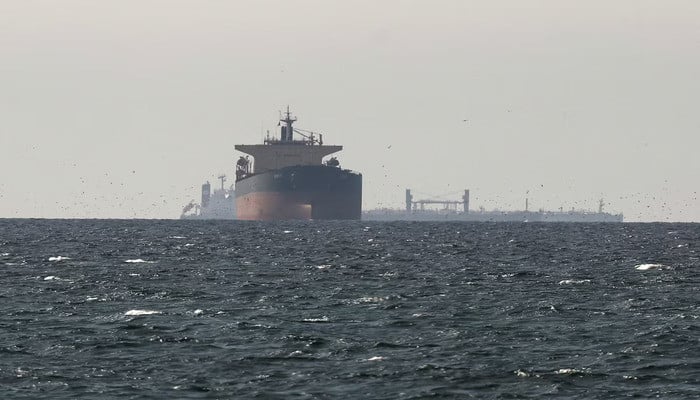
Although a ceasefire exists, with no breakthrough in peace negotiations, the Middle East conflict has entered its third month. In addition to substantive loss of life due to the conflict, the virtual closure of the Strait of Hormuz virtually has had severe negative supply side consequences especially for net oil importer countries, and also in production of food, due to shortage of fertilizers that this closure has caused.
This apparent stalemate in negotiations has sent the prices on an upper trajectory, as on April 30, The New York Times reported in an article ‘Oil prices soar to wartime high as standoff shows no end in sight’ that ‘Oil prices continued to surge on Thursday, hitting a fresh wartime high above $126 a barrel on concerns that the war in Iran could escalate, leading to a longer disruption of fuel supplies from the Middle East. …Over the past two weeks, the price of Brent crude, the global benchmark for oil, has risen about 30 percent. The price of Brent for June delivery, a soon-to-expire contract that investors trade based on their expectations for where prices are headed in the near future, jumped on Thursday to $126 a barrel, before pulling back to around $122 a barrel, a gain of nearly 3 percent on the day.’ Moreover, an April 29 NYT published article ‘World Bank estimates energy prices will surge 24 percent in 2026’ indicated about the likely impact of the ME conflict on prices of energy as ‘The World Bank said this week that it expected the war in Iran would cause energy prices to surge 24 percent this year, to their highest level since 2022, fanning inflation around the world and slowing the global economy.’
Hence, in the wake of the ME conflict, supply disruption of commodities has resulted in significant increase in the prices of oil, gas, and fertilizer, for instance. The price of oil, and gas have a profound link with food production, especially since the ‘Green Revolution’, along with price of fertilizer, given that high yields of food required both significant use of mechanization that mainly runs on fossil fuel, and fertilizer. Here, fertilizer requires gas for production, which has seen sharp and deep decline, creating supply shortages, and raising prices of gas. Both reasons have negatively impacted production of fertilizers, and along with virtual closure of the Strait of Hormuz has resulted in significant fall in supply of fertilizer, and in turn, also a rise in its prices. These factors have had substantial negative impact on food production levels, while food prices overall have seen sharp, and significant increases since the ME conflict started.
An April 18 FT published article ‘The coming global food crisis’ pointed out in this regard ‘As numerous critics have noted, the Green Revolution also came with enormous ecological and social costs. But one of its less discussed consequences was the link it established between food production and the fossil fuel industry across every stage of farming. Higher yields depended on a vast expansion of mechanisation, pumped irrigation and, above all, synthetic fertiliser use. …But as oil and gas prices have risen steeply amid the US-Israeli war on Iran and a significant part of the global fertiliser trade has been brought to a standstill, its potential vulnerabilities have been made clear. After only seven weeks, food shortages and even famine are now looking more likely for millions of people across vulnerable countries in Africa and Asia. Recent data from the World Bank captures these links between energy and food sharply. In March, the organisation’s energy price index rose 41.6 per cent, led by a 59.4 per cent increase in European natural gas and a 45.8 per cent rise in Brent crude oil. In the same month, food prices rose 2.7 per cent and fertiliser prices 26.2 per cent. The UN Food and Agriculture Organization (FAO) has warned that, if the crisis persists, global fertiliser prices could average 15 to 20 per cent higher in the first half of 2026.’
Noted Financial Times columnist, Martin Wolf, in his April 29 published article ‘The great commodities disruption’ pointed towards a number of commodities that pass through the Strait of Hormuz as follows: ‘Fifty per cent of the world’s seaborne trade in sulphur passes through the Strait of Hormuz. So does 34 per cent of trade in crude oil, 29 per cent of liquefied petroleum gas, 19 per cent of liquefied natural gas, 19 per cent of refined oil products, 13 per cent of chemicals, including fertilisers, and nearly 10 per cent of aluminium. This is a chokepoint of the world economy.’
World Bank’s April 2026 ‘Commodity Markets Outlook’ report, titled ‘The effects of geopolitical oil supply shocks’ highlighted the significant impact of ‘geopolitical’ shock on oil price, which in turn, points towards its deeper impact on overall inflation, and in particular in terms of price of commodities. The report pointed out in this regard ‘Geopolitical oil supply shocks lead to larger price effects than other types of oil supply shocks. A 1 percent decline in oil production associated with a geopolitical shock is estimated to result, on average, in an 11.5 percent increase in oil prices. This is roughly twice as large as the typical price response to oil supply shocks estimated in earlier studies… Geopolitical oil supply shocks have had significant spillovers to other commodity markets, with marked increases in commodity prices, particularly for natural gas and fertilizers. A 10 percent oil price increase due to a geopolitical oil supply shock has been associated, on average, with increases in natural gas prices that have peaked at about 7 percent after 11 months, and increases in fertilizer prices that have peaked at a little over 5 percent after 12 months. These price increases have tended to show notable persistence. Prices in other commodity groups– including food, agricultural raw materials, and precious metals– have also responded significantly to these shocks, but with smaller increases.’
Hence, in the wake of the ME conflict, supply disruption of commodities has resulted in significant increase in the prices of oil, gas, and fertilizer, for instance. The price of oil, and gas have a profound link with food production, especially since the ‘Green Revolution’, along with price of fertilizer, given that high yields of food required both significant use of mechanization that mainly runs on fossil fuel, and fertilizer.
This, in turn, points to the likely immense impact of commodity supply shock on overall inflation– in particular due to the oil supply shock– and for many months to come even if the ME conflict stopped today. Highlighting the unprecedented nature of the oil shock seen in the wake of the ME conflict, Martin Wolf in the same FT published article, presented a graph titled ‘The rise in the dollar price of oil in March was exceptional’, which depicted that in March price of Brent oil rose by a little more than 45 percent, which was the highest among top ten months in terms of oil price rise in a single month, since 1988! Hence, in almost four decades, the next highest price rise of oil in a single month was in May 2008, when it rose a little more than 15 percent– that is almost three times less than the March Brent oil price rise– while the range of price rise remained between a little more than 10 percent, and a little more than 15 percent for the next nine instances of Brent oil price rise in a single month, making the March Brent oil price increase monumental.
Martin Wolf in the same article, highlighting the immense nature of supply disruption, pointed out ‘…this is a sizable disruption, which is sure to hit many of the world’s poorest people and most vulnerable countries hard. The rise in oil and fertiliser prices guarantees that. This underlines the moral case for continuing to provide international assistance.’

The writer holds PhD in Economics degree from the University of Barcelona, and previously worked at International Monetary Fund.Prior to this, he did MSc. in Economics from the University of York (United Kingdom), and worked at the Ministry of Economic Affairs & Statistics (Pakistan), among other places. He is author of Springer published book (2016) ‘The economic impact of International Monetary Fund programmes: institutional quality, macroeconomic stabilization and economic growth’.He tweets @omerjaved7
View all articles →Comments
No comments yet. Be the first to join the discussion!