

AI-assisted mRNA vaccine helps treat cancer in Sydney dog, raising hopes for human therapies
An AI-designed mRNA vaccine has successfully treated a Sydney dog with cancer, shrinking her tumor by half and offering hope for future human therapies.

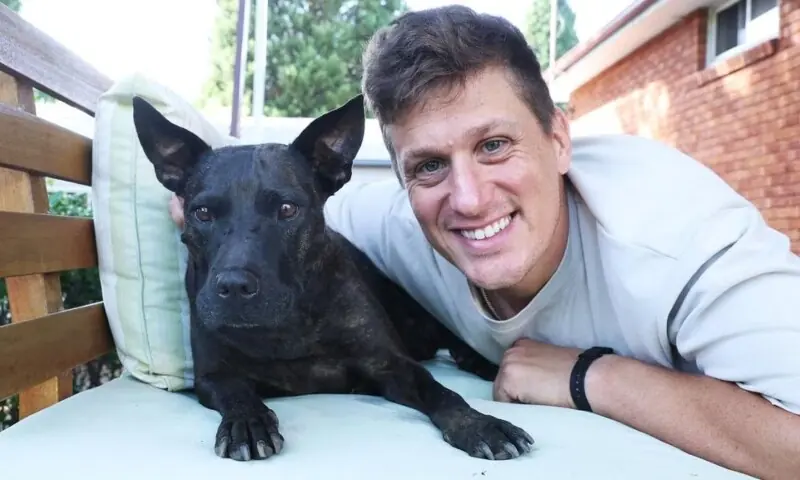
SYDNEY: An experimental cancer treatment involving an mRNA vaccine designed with the assistance of Artificial Intelligence (AI) has shown promising results in a dog diagnosed with cancer, offering new hope for potential human applications, according to a report by The Australian cited by Dawn on Friday.
The case centers on Rosie, an eight-year-old rescue dog adopted by Sydney-based tech entrepreneur Paul Conyngham in 2019. In 2024, Rosie was diagnosed with a severe form of mast cell cancer. Initial treatments failed to yield improvement, prompting Conyngham to seek alternative solutions. He turned to a chatbot to brainstorm possible treatments, which led him to collaborate with leading medical scientists in search of a cure.
The partnership resulted in the development of an experimental mRNA vaccine, created with the help of AI technology. Rosie received the vaccine during the Christmas break in 2025. Following administration, one of her tumors reportedly shrank by half. The Australian noted that “the recovery has astounded researchers at the cutting-edge of human cancer treatments.”
Martin Smith, associate professor of computational biology and director of the Ramaciotti Centre for Genomics at the University, was among the researchers observing the case. The success of the AI-designed mRNA vaccine in treating Rosie's cancer has generated optimism among scientists working on human cancer therapies, as per the report.
The use of AI in developing personalized medical treatments, particularly for complex diseases like cancer, is an emerging field. The positive response observed in Rosie is being closely watched by experts, who believe it could pave the way for similar approaches in human medicine.
While the treatment remains experimental and further research is required before it can be considered for broader application, the case has highlighted the potential of combining AI and mRNA technology in the fight against cancer.
Comments
No comments yet. Be the first to join the discussion!


