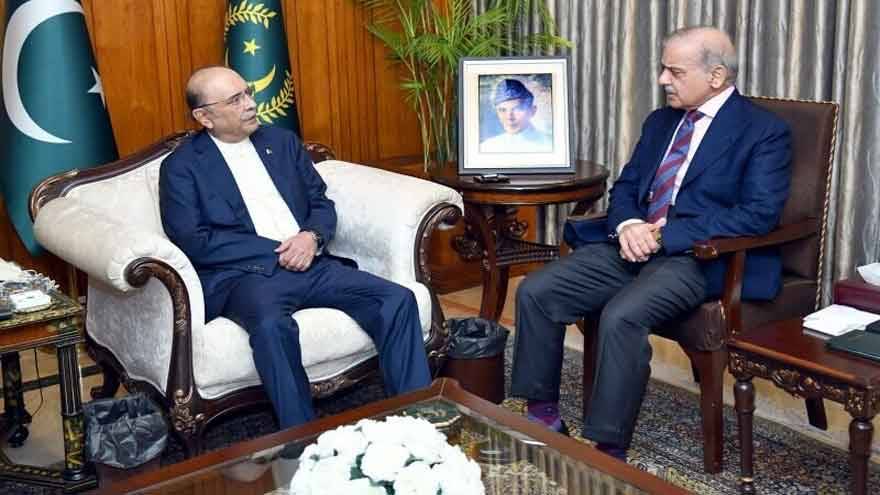
President calls for global cooperation, peace and sustainable development at Leadership & Stability Workshop
- President Zardari highlights geopolitical shifts, hybrid threats and cybersecurity as key global challenges
- Urges nations to choose dialogue over division, cooperation over conflict, Felicitates participants of 6th International Workshop for Leadership and Stability 2026
- Stresses 18th Constitutional Amendment ensures Pakistan’s sustainable future and citizen ownership
- Pays tribute to Shaheed Mohtarma Benazir Bhutto, emphasizes women’s leadership and empowerment
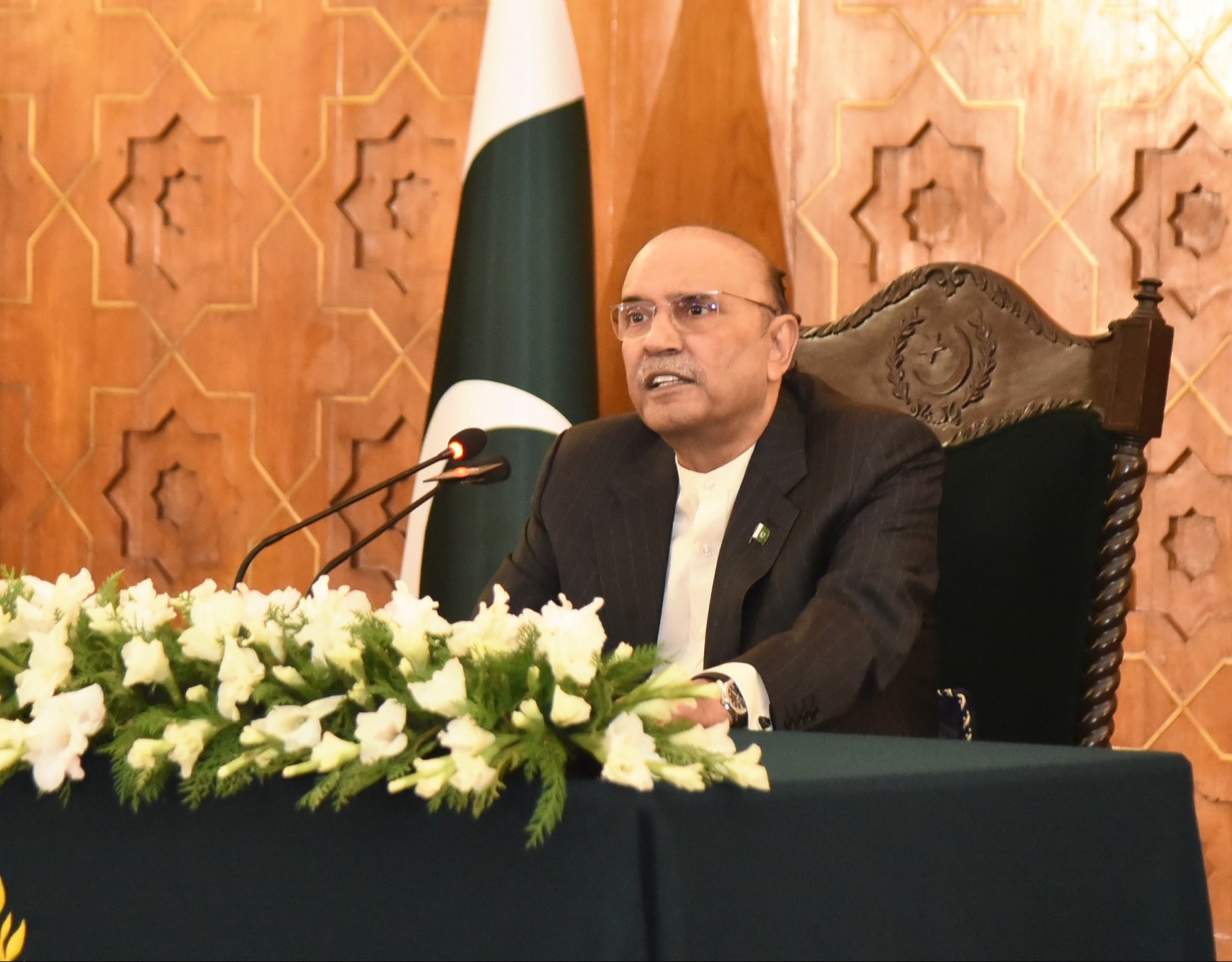
ISLAMABAD: President Asif Ali Zardari on Friday underscored Pakistan’s commitment to global cooperation, peace and sustainable development amid rapidly evolving geopolitical and technological challenges.
Speaking at the conclusion of the 6th International Workshop for Leadership and Stability 2026, he highlighted the need for nations to work together to address hybrid threats, cybersecurity, climate change, and other cross-border issues, said a statement issued from the President's Office.
The workshop, organised by the National Defence University, brought together around 100 participants, including 69 delegates from 49 countries. During an interactive session with participants, President Zardari felicitated attendees and commended the forum as a platform for dialogue among policymakers, diplomats, military officials, academics, and private sector leaders.
President Asif Ali Zardari addressed & held an interactive session with 99 participants, including 69 delegates from 49 countries, of the 6th Intl. Workshop for Leadership and Stability at Aiwan-e-Sadr, reaffirming Pakistan’s commitment to dialogue, peace & regional cooperation. pic.twitter.com/TWtkwUBGQ6
— The President of Pakistan (@PresOfPakistan) February 13, 2026
Calling leadership and stability the pillars of nations and institutions, the president said, “Security is no longer only about conventional conflicts. It includes cybersecurity, hybrid threats, and information challenges. At the same time, climate change, resource scarcity, and disinformation cross borders, demanding collaborative solutions.”
He urged participants to translate discussions into actionable solutions, choosing dialogue over division and cooperation over conflict. “I hope these insights reach a broader audience across our institutions and society,” he added.
President Zardari expressed gratitude to the organisers, participants, and the NDU for making the workshop possible, emphasizing that such forums offer lasting opportunities for meaningful collaboration. Responding to participant questions, he noted Pakistan’s close work with regional partners and its readiness to strengthen bilateral cooperation through technological advancement.
Highlighting bilateral relations, he said interaction with Serbia should be enhanced through collaboration between think-tanks, academia, and industry. On global cooperation, he emphasized that nations are interwoven, facing crosscutting challenges that demand collective action.
Referring to domestic governance, the president said the 18th Constitutional Amendment was designed to ensure Pakistan’s sustainable future by honoring public sentiment and granting citizens ownership over decisions related to national wealth. He reiterated that Pakistan respects the national interests of other countries and promotes dialogue over conflict in a volatile region, expressing hope that no crisis would escalate into war.
President Zardari also paid homage to former Prime Minister Shaheed Mohtarma Benazir Bhutto, recalling her vision for democracy, women’s leadership, and empowerment. He said the Pakistan Peoples Party remains committed to her ideals of fostering leadership among women and strengthening democratic institutions.
Earlier, Director General of the Institute for Strategic Studies, Research & Analysis (ISSRA), Major General Muhammad Raza Aizad, welcomed the president and thanked him for giving workshop participants the opportunity to visit Aiwan-e-Sadr. He introduced attendees, including 30 participants from Pakistan representing industry, business, military, academia, think-tanks, and media.
The workshop covered a wide range of topics, including the transforming global order, climate change, xenophobia, perception management, economic outlooks, and the art and culture of Pakistan. Participants are expected to join a growing global network of over 3,000 alumni, extending the reach and impact of the forum.
Comments
No comments yet. Be the first to join the discussion!