
















“Power that rests only on fear is already decaying,” Hannah Arendt, the American historian and philosopher once warned, arguing that coercion can enforce silence but never produce legitimacy. This insight frames the current Afghan reality with unsettling precision. Over the past month, the security situation has again revealed serious weaknesses within the Taliban administration. Official statements still speak of control and stability. Ground realities tell another story. Resistance has not disappeared. It has reorganized. It has adapted. And it has returned with intent.
Despite repeated claims from Kabul, armed resistance activity expanded across multiple provinces. This expansion was neither accidental nor symbolic. It followed patterns. It showed planning. Attacks occurred repeatedly. They spread geographically. They targeted state authority. Such developments directly undermine the narrative of restored order. Stability is declared daily. Control is asserted publicly. Yet violence persists. It travels. It embeds itself deeper into the political landscape of Afghanistan.
Here Arendt’s warning returns with force. Power rooted in fear corrodes itself. Afghanistan’s current trajectory confirms this lesson. Control imposed through violence creates obedience, not legitimacy. It invites resistance rather than peace. Until governance replaces coercion, and inclusion replaces denial, Afghanistan will remain trapped in cycles of challenge and repression. Stability cannot be declared into existence. It must be earned. And fear has never been enough. So is the prevailing myth of control in Afghanistan
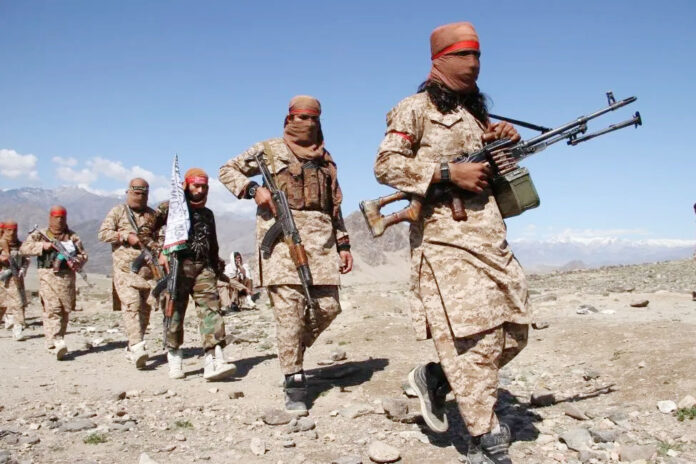
Two resistance groups dominated recent developments: The National Resistance Front and the Afghanistan Freedom Front. Their actions were deliberate. Their targets were chosen carefully. Military positions were hit. Intelligence assets were exposed. Recruitment structures were disrupted. This was not random unrest. It was organized pressure. The scope, frequency, and spread of attacks reveal more than tactical success. They reveal systemic failure. These are symptoms of a security framework unable to sustain itself.
Within a single month, 16 attacks were carried out across the country. The outcome was stark. Forty-eight Taliban fighters were killed. Twenty-five were injured. Three vehicles were destroyed. These figures matter. Not because they shock. But because they repeat. Kunduz witnessed the highest number of attacks. This province has resisted control for years. Taliban authorities failed again. Operations also appeared in Panjshir, Baghlan, Faryab, Badakhshan, and even Kabul. Insecurity now spans the entire state.
The National Resistance Front conducted seven operations. Its focus remained clear. Military and intelligence infrastructure came first. In Panjshir, a major operation destroyed a Taliban battalion base. Seventeen fighters were killed. Five were injured. Panjshir still carries meaning. Historical and operational. Losses there reflect limited Taliban reach. In Kunduz, NRF targeted checkpoints and vehicles. In Baghlan, a Taliban assault was repelled. Resistance showed resilience. Control remained contested.
The Afghanistan Freedom Front carried out nine attacks. Its activity reinforced the perception of Taliban vulnerability. In Kunduz, AFF struck a recruitment centre. Two fighters were killed, including a commander. Three were injured. The symbolism mattered. Manpower pipelines were exposed. In Badakhshan, a strike near the governor’s office killed three and injured one. Even politically sensitive zones proved insecure. Authority did not translate into protection.
Faryab experienced sustained AFF pressure. A battalion base was attacked. Two fighters were killed. One was injured. Soon after, a rocket strike hit Taliban judicial police. Four were killed. Two were injured. These targets were not accidental. Law enforcement was challenged deliberately. Judicial authority was weakened intentionally. These institutions sustain local control. When they come under fire, governance erodes. Fear replaces compliance. Silence becomes temporary.
The most damaging impact came in Kabul. The capital symbolizes rule. It projects strength. Yet it was breached. Despite heavy security, AFF targeted an intelligence vehicle. Three fighters were killed. One was injured. Later, an intelligence checkpoint was attacked. Two were killed. One was injured. These incidents cut deep. Kabul is the showcase. When insecurity reaches the centre, narratives collapse. Claims of effective urban security lose meaning.
The combined effect of NRF and AFF operations extends beyond casualties. Forty-eight killed and twenty-five injured expose a deeper truth. Taliban governance relies heavily on coercion, denial, and centralized control. It excludes political accommodation. It suppresses dissent. This model has not delivered sustainable security. Instead, it has fuelled resistance. Authority remains contested across large parts of the country. Instability appears prolonged, not temporary.
Here Arendt’s warning returns with force. Power rooted in fear corrodes itself. Afghanistan’s current trajectory confirms this lesson. Control imposed through violence creates obedience, not legitimacy. It invites resistance rather than peace. Until governance replaces coercion, and inclusion replaces denial, Afghanistan will remain trapped in cycles of challenge and repression. Stability cannot be declared into existence. It must be earned. And fear has never been enough. So is the prevailing myth of control in Afghanistan.




i enjoy reading your article, such a great piece, keep up the good work, webdesign freelancer deutschland is the best webdesign freelacing service in Germany, you can check it out. Thank you