January 31, 2026
Snow, militancy and the cost of incompetence
In Tirah Valley, harsh winters and militant threats expose the chronic governance failures of Khyber Pakhtunkhwa. Promises of aid remain unfulfilled, leaving residents in dire conditions.
January 31, 2026

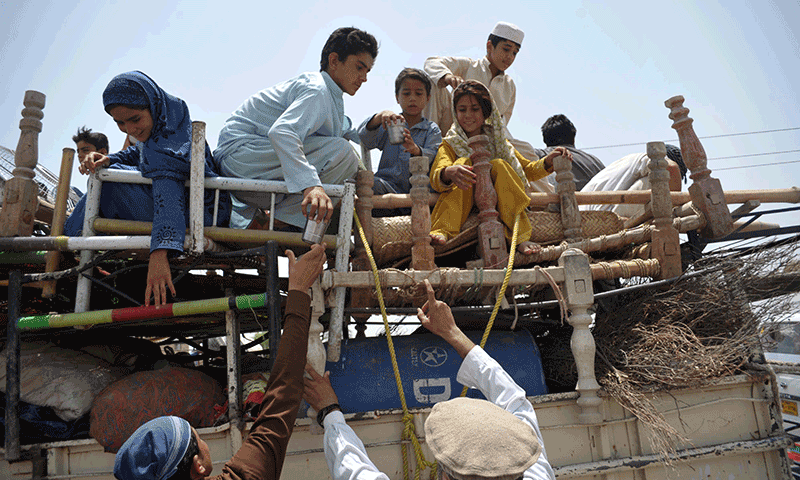
High in the mountains of Tirah Valley in District Khyber of KP, where the air is thin and snow blankets the valleys like a heavy, unyielding shroud, life is a daily struggle for survival. For centuries, the people here have adapted to harsh winters, migrating to the plains of Peshawar, Kohat, and Hangu whenever snow renders their villages inaccessible. Today however, the challenge they face is no longer only nature, it is the chronic failure of governance.
For the past 13 years, the same political party has been ruling Khyber Pakhtunkhwa. Promises of progress, security, and effective governance have filled every campaign speech, yet time and again, the people of Tirah Valley are left exposed. When militants killed several soldiers in these rugged highlands, the victims’ bodies had to be carried down on mules, a grim reminder that state presence is largely symbolic here. Local jirgas, convening dozens of times in the past year, have been forced to negotiate with insurgents because the government cannot enforce law and order.
The provincial government’s attempts to address displacement reveal the same pattern: procedural paperwork, notifications, and press statements, but no meaningful preparedness. A notification dated 26 December 2025 claimed that displaced locals were being assisted with Rs 4 billion allocated for relief. Yet, when severe snowstorms struck, residents endured extreme hardship without adequate shelters, transportation, or medical support. Families huddled in temporary camps, struggling to survive while government plans failed to materialize.
What compounds the tragedy is the political theatre surrounding these failures. As the operation in Tirah Valley was being coordinated, the CM and senior provincial ministers staged tours across Punjab and Sindh, projecting an image of control while the reality in the highlands was chaos.
Media coverage celebrated minor administrative gestures, while the real struggles of the population and the threat of militants were obscured. The result has been a region battered by snow, terror and neglect, with the government more concerned about optics than outcomes.
Worse still, the provincial government has perfected the art of blame-shifting. When relief fails, when infrastructure remains absent, when militants exploit governance vacuums, the government points fingers elsewhere, claiming federal limitations, security agencies’ lapses, or natural disasters as excuses. Accountability is rarely accepted, and corruption and inefficiency are quietly normalized. In Tirah Valley, the administration had months to prepare for winter and displacement, yet the failure was total. Rs 4 billion were allocated, yet the people bore the brunt of mismanagement.
Tirah Valley deserves better. Its people deserve leaders who prioritize human life over optics, who accept responsibility instead of shifting blame, and who recognize that governance is not a photo opportunity but a lifeline. Until then, every storm, every displacement, and every threat will continue to expose the unpreparedness and incompetence of a government that has held power for too long and delivered too little.
Meanwhile, political rhetoric and street mobilization elsewhere only exacerbate the state’s paralysis. Recent calls by senior political figures to disrupt critical infrastructure in KP, including cutting electricity from Tarbela Dam, reveal an alarming willingness to weaponize the province for partisan gain.
These are not mere protests but acts that endanger ordinary citizens, whose lives are already fragile under snow and insecurity. Yet, when law enforcement intervenes, the same politicians claim victimhood, accusing the state of ‘false flag’ operations. This cycle of provocation, failure, and grievance politics has become predictable over 13 years of continuous rule.
In Tirah Valley, this governance failure is painfully visible. Militants exploit the vacuum, issuing threats and dictating terms, civilians are displaced and exposed to harsh winters. Local jirgas continue to act as intermediaries because the state has failed to build trust or capacity. Nature and militancy are not the only adversaries here, the greatest obstacle is a provincial government that prioritizes optics, rhetoric, and political expediency over lives.
The story of Tirah Valley mirrors the broader crises in KP: chronic underdevelopment, infrastructure neglect, and governance hollowed out by corruption and incompetence. Displacement camps remain inadequate, roads remain unmaintained, emergency planning is haphazard. Historically, when FATA and adjacent tribal districts were federally administered, the Centre maintained budgets, oversight, and security, even if imperfectly. Today, these areas fall under provincial control with funds transferred in the name of districts, yet the provincial government lacks capacity to act effectively. The failure to restore robust governance in these areas calls for revisiting federal support and oversight, to ensure that budgets and authority translate into real protection and development for citizens.
Tirah is a mirror reflecting both the promise and limitations of the state. It is a place of extraordinary natural beauty and equally extraordinary human resilience. Yet, it is also a cautionary landscape where governance gaps, militant threats, and extreme weather converge to test both policy and politics. Pakistan’s challenge lies in ensuring that the narratives spun in political offices do not obscure the lived realities of citizens who navigate snow, militancy, and neglect every day. Until state capacity in Tirah matches the complexity of its challenges, every notification, jirga or media statement will remain only part of the story, a story of missed opportunity and persistent vulnerability.
Tirah Valley deserves better. Its people deserve leaders who prioritize human life over optics, who accept responsibility instead of shifting blame, and who recognize that governance is not a photo opportunity but a lifeline. Until then, every storm, every displacement, and every threat will continue to expose the unpreparedness and incompetence of a government that has held power for too long and delivered too little.
The writer has a PhD in Political Science, and is a visiting faculty member at QAU Islamabad. He can be reached at [email protected] and tweets @zafarkhansafdar
View all articles →0 Comments
No comments yet. Be the first to join the discussion!