











ISLAMABAD: The first-ever direct passenger flight between Xiamen in southeast China and Busan, the Republic of Korea (ROK), was inaugurated on January 4, ushering in a new phase of connectivity that promises to boost people-to-people exchanges, tourism, and bilateral trade.
The route, launched amid warming relations and increasing strategic dialogue, is expected to further deepen economic, technological, and cultural cooperation between the two nations.
The Xiamen–Busan route comes on the heels of significant developments in China-ROK relations over the past year. Following mutual visa exemption policies implemented in November 2024 for Chinese citizens and September 2025 for South Koreans, cross-border exchanges have surged, with more than 7.28 million travelers moving between the countries in the first 11 months of 2025—a 24.7% increase compared with the previous year.
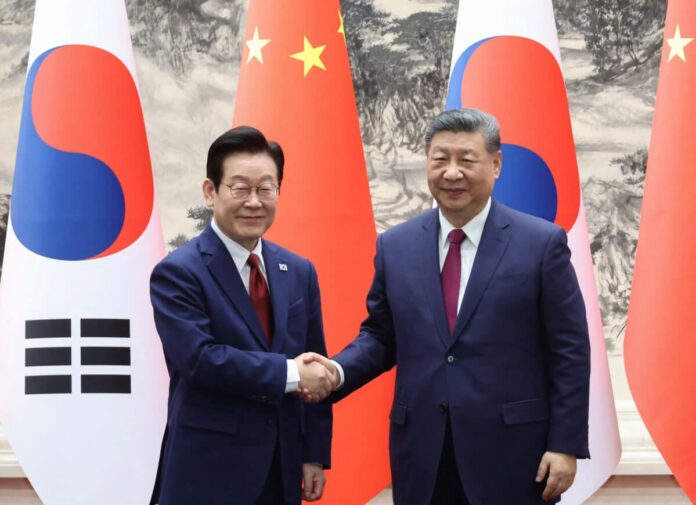
The timing of the flight launch coincides with the first official visit of South Korean President Lee Jae Myung to China in 2026. During his meeting with Chinese President Xi Jinping in Beijing on Monday, the two leaders underscored the importance of enhancing strategic trust, promoting bilateral trade, and further integrating development agendas.
President Xi Jinping emphasized that China and South Korea are “important neighbors that cannot be moved away,” committing to frequent communication, strengthened exchanges, and cooperation on mutual development initiatives.
President Lee, who assumed office in June 2025, highlighted that the purpose of his visit was to address past misunderstandings, advance bilateral relations to a new stage, and establish a long-term partnership based on mutual assistance and shared development. Analysts noted that the early timing of this visit—less than two months after their previous engagement in Gyeongju—signals a strong commitment to accelerating the China-ROK strategic partnership.
Trade and Economic Synergy
Trade between China and the ROK remains robust, with data from China’s General Administration of Customs showing bilateral trade reaching 2.14 trillion yuan ($304.46 billion) in the first 11 months of 2025, a year-on-year increase of 1.6%. Trade in electromechanical products, including electronics and machinery, reached 1.43 trillion yuan, accounting for 67% of total bilateral trade. China has retained its position as South Korea’s largest trading partner for 21 consecutive years, while South Korea remains China’s second-largest trading partner.
During the meeting, Xi encouraged alignment of development strategies and expansion of cooperation into emerging fields such as artificial intelligence, green energy, and high-tech industries. “China and the ROK should further expand the pie of common interests and achieve more cooperation results in strategic sectors that will drive long-term economic growth,” Xi stated.
The leaders’ emphasis on economic cooperation was complemented by a China–ROK business forum held in Beijing, attended by approximately 400 government officials, business leaders, and industry representatives. Chinese Vice Premier He Lifeng stressed the importance of leveraging complementary strengths to create new opportunities for mutual benefit, while South Korean corporate leaders—including Chey Tae-won, chairperson of SK Group, and Kim Sin-jae, CEO of Samjin Amook Co.—announced plans for joint ventures and market expansions, particularly in technology and consumer sectors.
Strengthening People-to-People Ties
The Xiamen–Busan route is expected to further bolster tourism and cultural exchanges, creating opportunities for student mobility, joint academic programs, and cultural initiatives. Analysts say increased air connectivity will not only facilitate travel but also enhance economic linkages, particularly for small and medium-sized enterprises seeking cross-border collaboration.
Regional Stability and Global Responsibilities
Beyond bilateral ties, China and South Korea reaffirmed their roles as key players in regional peace and global economic development. Both nations, as members of the Regional Comprehensive Economic Partnership (RCEP) and the Asia-Pacific Economic Cooperation (APEC), have actively opposed unilateralism and trade protectionism. Experts note that closer cooperation between China and the ROK strengthens regional stability and contributes positively to the recovery of the Asia-Pacific economy amid global uncertainty.
Professor Dong Xiangrong of the Chinese Academy of Social Sciences highlighted that head-of-state diplomacy plays a guiding role in bilateral relations, sending a strong signal to business communities and the international community about both nations’ commitment to constructive engagement.
Looking Ahead
With trade, tourism, and strategic cooperation gaining momentum, the Xiamen–Busan flight is a symbol of the evolving China-ROK partnership. Officials from both countries have indicated that more direct flight routes, joint infrastructure projects, and high-level business exchanges are on the agenda for 2026. Analysts suggest that sustained engagement at the governmental, corporate, and civil-society levels could transform the bilateral relationship into a model of comprehensive cooperation in Northeast Asia.
As President Lee’s visit continues, the combined efforts to strengthen connectivity, expand trade, and deepen strategic trust are expected to create lasting benefits for both nations, setting the stage for a new era of collaboration in the Asia-Pacific region.





I loved as much as you will receive carried out right here The sketch is tasteful your authored subject matter stylish nonetheless you command get got an edginess over that you wish be delivering the following unwell unquestionably come further formerly again as exactly the same nearly very often inside case you shield this hike
Superb website you have here but I was curious about if you knew of any user discussion forums that cover the same topics discussed here? I’d really love to be a part of online community where I can get feedback from other experienced people that share the same interest. If you have any suggestions, please let me know. Many thanks!