
















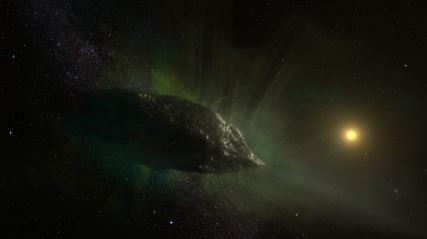
This week marks the final opportunity for backyard astronomers to observe interstellar Comet 3I/ATLAS before it heads back toward the far reaches of space. The comet will pass within 167 million miles of Earth on Friday, December 19, appearing like a bright star in the night sky.
For comparison, Mars is currently about 250 million miles away from Earth. Observers equipped with binoculars or a small telescope should be able to spot the comet, which will be visible to the naked eye in dark skies. Astronomers have been closely monitoring 3I/ATLAS since its discovery, and Friday’s approach is the best chance to observe it in detail.
Comet 3I/ATLAS is only the third known object to enter our solar system from interstellar space. It holds valuable clues to the formation of solar systems in other parts of the universe. The United Nations’ International Asteroid Warning Network is also tracking its path as part of efforts to enhance planetary defense against potential threats like asteroids and comets.
The comet is on a hyperbolic trajectory, meaning it’s moving too fast to be captured by the Sun’s gravity. When it was first discovered, it was traveling at about 137,000 miles per hour, nearly 40 miles per second. Astronomers have noted the challenge of determining its exact origin, comparing its speed to that of a “rifle bullet.”
As the comet continues its journey, the gas and dust it releases could provide more insight into its formation and origins. The Virtual Telescope Project will live stream the comet’s approach starting at 11 p.m. EST on December 18 for anyone hoping to witness this rare cosmic event.





I like the efforts you have put in this, regards for all the great content.
I appreciate you sharing this blog post. Thanks Again. Cool.
Hi there to all, for the reason that I am genuinely keen of reading this website’s post to be updated on a regular basis. It carries pleasant stuff.
Hi there to all, for the reason that I am genuinely keen of reading this website’s post to be updated on a regular basis. It carries pleasant stuff.
Thank you — the troubleshooting tips saved me from major issues.
As I website owner I think the content material here is rattling great, thanks for your efforts.
Do you have a spam issue on this site; I also am a blogger, and I was wanting to know your situation; many of us have created some nice practices and we are looking to swap techniques with other folks, please shoot me an e-mail if interested.
I have been exploring for a bit for any high-quality articles or weblog posts on this kind of area . Exploring in Yahoo I eventually stumbled upon this site. Reading this information So i am happy to show that I’ve a very just right uncanny feeling I came upon just what I needed. I so much for sure will make certain to do not overlook this web site and give it a glance on a relentless basis.