

Pakistan’s Real Crisis Isn’t Economic, it’s the Political Economy

Pakistan’s economic crisis is often described in familiar terms: dwindling foreign exchange reserves, chronic fiscal deficits, a narrow tax base, low growth rates, inflationary pressures, and cycles of IMF dependence. These are real, material problems that threaten national security, state stability, and social cohesion. Yet focusing exclusively on “the economy” obscures something far more fundamental and more corrosive, Pakistan’s political economy which is its system of power, incentives, and institutional arrangements that shape how resources are generated, distributed, and captured.
In Pakistan, the economy does not simply suffer from mismanagement or bad luck, it suffers because the underlying political economy is structured to produce exactly these bad outcomes. Pakistan’s political economy is built on a simple destructive principle where political power is pursued not to govern, but to access and distribute economic rents. This blurs the line between politics and extraction, making governance a secondary pursuit and reform an existential threat to those who benefit from the status quo. This is the political economy of Pakistan. It is a system where institutions serve power not performance, where politics allocates resources not markets, where reform threatens the very architecture that holds the system together.
For the better part of the past seven decades, every public debate in Pakistan has circled around one theme, that the economy is in crisis. Headlines warn of collapsing reserves, unsustainable debt, spiralling inflation, the low growth rate, and IMF bailouts as though these conditions emerged in a vacuum. But to frame Pakistan’s struggle as merely an economic crisis is to misunderstand its core. The truth is more uncomfortable but far more important. Pakistan does not suffer from an economic problem, it suffers from a political economy problem. Until the architecture of political power, incentives, and institutions is repaired, no amount of fiscal tinkering or technocratic patchwork will deliver lasting economic stability. Fix the political economy, and the economy will finally have the chance to breathe.
Pakistan’s economic indicators have resembled a heart monitor on the verge of flatlining, with periodic spikes followed by steep crashes, each crisis deeper and faster than the last. This cyclical pattern is not the result of bad luck or isolated policy mistakes. It stems from a political settlement in which power is concentrated among a small set of institutional and economic elites including civilian, military, bureaucratic, landed, and corporate classes who systematically shape economic rules to protect their privileges. These groups do not necessarily conspire, but the structure of incentives ensures that their short-term interests are prioritized over the country’s long-term sustainable growth.
Consider taxation. Pakistan historically has one of the lowest tax-to-GDP ratios in the world. This is not because Pakistanis are culturally unwilling to pay taxes or because the economy is unusually informal. It is because successive governments, regardless of political party, have lacked the autonomy to impose taxes on the country’s wealthiest and most politically powerful segments ranging from large landholders, real estate developers and wholesale traders, to powerful business lobbies. When a government attempts reform, it is resisted, diluted, or reversed because every major political actor relies on these groups for financing, votes, or institutional support.
Attempts at reforms also lack transparency and accountability. Thus, Pakistan keeps taxing the already taxed, primarily salaried workers and consumption, while shielding the entrenched elite. No economy can thrive when the burden falls on the weakest shoulders. Pakistan needs to tax the real power centres.
The economy does not operate in isolation. Economies do not fail because people lack talent or because the market lacks potential. Economies fail when the rules that govern them reward the wrong behaviour and punish the right. Pakistan’s economy is not failing, it is being made to fail. Fix the political economy. The economy will fix itself.
Energy, another area of perpetual crisis, also reflects political economy failures rather than technical ones. Circular debt did not materialize because Pakistanis used too much electricity or because utilities are incompetent by nature. It is the product of decades of politically negotiated contracts that guaranteed profits for independent power producers, subsidies for favored groups, and lax enforcement for politically connected defaulters. Each government inherits a more distorted system than the last and then adds new distortions of its own to avoid angering influential supporters. The result is an energy sector designed not for efficiency or sustainability, but for political survival.
Even Pakistan’s chronic reliance on the IMF is rooted in political economy. Governments repeatedly adopt short term, populist policies that include price freezes, artificial exchange rates, election year spending sprees to secure political gains. By the time the consequences become unavoidable, the government has either collapsed or has no choice but to turn to the IMF to clean up the mess. And once the IMF programme restores temporary economic stability, the cycle begins anew. This is not an economic pattern, it is a governance pattern.
Pakistan needs to tax the real power centres, break the patronage nexus whereby bureaucracy and judiciary are made independent of interference from political parties and military, demilitarize economic policy where security institutions are central to defense but not commercial enterprise. Pakistan requires a social contract based on rights and not patronage. More importantly, it needs to strengthen the rule of law and regulatory institutions to discourage all sorts of rent seeking behaviour, economic distortions and corruption.
A deeper issue is institutional fragmentation. Pakistan does not have one unified economic decision making apparatus, it has several competing centres of power, including the one in the form of SIFC which had a mention in the recent IMF report. The bureaucracy resists reforms that threaten its control, the political class seeks policies that deliver short-term electoral gains, the military establishment retains influence over strategic sectors and foreign policy, provincial governments pursue parochial interests and business lobbies push for favorable regulations. In such an environment, even well-designed economic reforms are diluted through layers of negotiation, compromise, and resistance.
What Pakistan needs, therefore, is not another IMF programme, another emergency stabilization package. It needs a new political settlement and a social contract, a rebalancing of power and incentives among the country’s key institutions and stakeholders. This does not necessarily require a revolution, it simply requires rules and rule of law. Clear rules about who has authority over what. Transparent rules governing taxation, expenditure, regulation, and public appointments. Predictable rules for transfers of power and political competition. And above all, rules that prevent any one group, civilian or military, urban or rural, bureaucratic or corporate from bending the system to defend its privileges at the expense of national progress.
If Pakistan were to establish such a social contract, one that aligns institutional incentives with national interest, then the economic improvements would follow naturally. Tax revenues would grow because the system would finally have the autonomy to tax those who should be taxed. Investment would rise because businesses crave predictability more than subsidies. The energy crisis would ease because the political incentives for protecting inefficiency would weaken. The currency would stabilize because policymakers would no longer manipulate it for political gain or expediency. And Pakistan may finally break its cycle of dependency on external lenders.
The economy does not operate in isolation. Economies do not fail because people lack talent or because the market lacks potential. Economies fail when the rules that govern them reward the wrong behaviour and punish the right. Pakistan’s economy is not failing, it is being made to fail.
Fix the political economy. The economy will fix itself.
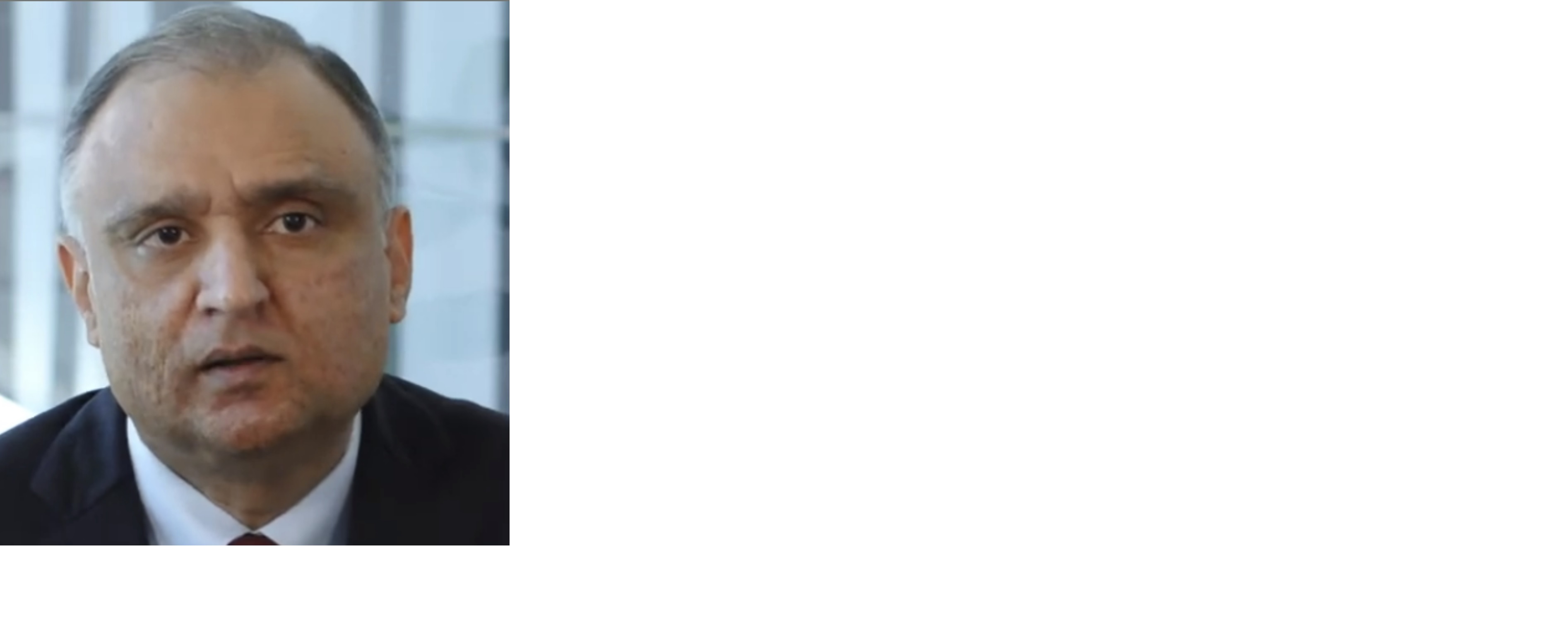
The author is a senior international banker, with degrees in economics and political science from University of Pennsylvania and Brown University
View all articles →39 Comments
No comments yet. Be the first to join the discussion!


