









- DPM/FM hails proactive foreign policy for global resurgence, saying India’s regional hegemony ‘tested and shattered’ during May conflict
- Says strong defence, nuclear capability ensure national security with focus shifts now to economic power, foreign investment inflows grow
- Says Kashmir issue, IWT vigorously pursued at global forums, terming thaw in Pakistan-Bangladesh ties major diplomatic success
- Urges UK to curb provocations after PTI protest controversy
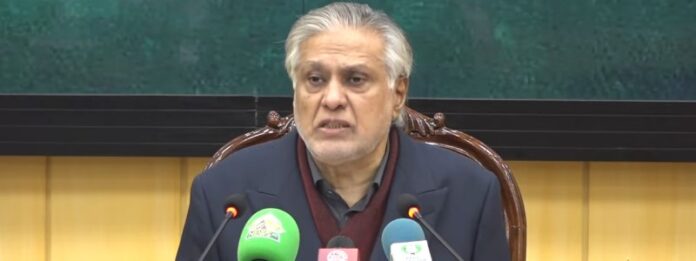
ISLAMABAD: Deputy Prime Minister and Foreign Minister Senator Mohammad Ishaq Dar on Saturday asserted that Pakistan, once portrayed as “diplomatically isolated,” had re-emerged as a confident, influential, and respected state on the global stage, attributing this transformation to the incumbent government’s dynamic, proactive, and principled foreign policy.
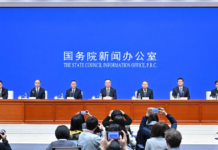
Addressing a press conference to present the annual achievements and performance of the Ministry of Foreign Affairs, the DPM/FM said Pakistan’s firm, balanced and proactive stance on major global and regional issues had earned widespread recognition and appreciation at international forums.
🔴LIVE: Year-End Press Briefing by the DPM/FM 27-12-2025 https://t.co/kOBnPJTUf9
— Ministry of Foreign Affairs – Pakistan (@ForeignOfficePk) December 27, 2025
Dar said Pakistan’s international standing among the comity of nations had significantly improved due to its principled and proactive diplomacy, and he also thanked the national media for effectively projecting the country’s image abroad.
He recalled that when the Pakistan Democratic Movement (PDM) government assumed office, “Pakistan was known as a diplomatically isolated country,” adding that today Pakistan’s role was acknowledged and respected internationally.
The DPM/FM said that during the four-day armed conflict with India, New Delhi’s so-called hegemony and its self-proclaimed role as a net security provider in the region were tested and decisively shattered.
He said the Ministry of Foreign Affairs had remained proactive following the Pulwama incident, in which India falsely accused Pakistan, adding that the country’s defence posture was now solid and firm.
Dar reiterated that during Indian aggression, Pakistan responded with responsibility, underscoring that Islamabad had always stood for peace.
He said Pakistan’s nuclear capability and missile strength had rendered the country’s defence strong and invincible.
The DPM/FM stressed that the government was now focused on transforming Pakistan into an economic power, adding that once such a status was achieved, Pakistan would be in a position to lead the Muslim Ummah.
He said Pakistan was blessed with immense natural resources, including minerals, precious stones and gas, citing foreign investment inflows into projects such as Reko Diq.
Referring to the recent visit of the UAE president, Dar said the UAE would acquire shares in the Fauji Group and expressed hope that a $1 billion liability would be settled through this investment, while an additional $2 billion loan could also be rolled over.
He expressed gratitude to the Kingdom of Saudi Arabia, the United Arab Emirates and China for their continued support in ensuring Pakistan’s financial stability through loan facilities.
Reiterating Pakistan’s principled position on Jammu and Kashmir, Dar said that lasting peace in the region was impossible without resolution of the dispute. He said Pakistan had strongly opposed India’s illegal actions in Indian Illegally Occupied Jammu and Kashmir (IIOJK), adding that the issue had once again been highlighted globally.
He said the UN Security Council session had discussed human rights violations in IIOJK, stressing that a plebiscite in accordance with UNSC resolutions remained the only viable solution.
On the Indus Waters Treaty (IWT), Dar said Pakistan was actively pursuing the matter at the Organisation of Islamic Cooperation (OIC), the Permanent Court of Arbitration and the United Nations, noting that developments had so far favoured Pakistan’s stance.
Terming the improvement in Pakistan-Bangladesh relations a “major thaw” achieved this year, he referred to his extensive and productive visit to Dhaka, where he held meetings with the chief executive, foreign minister and other advisers, besides meeting Khaleda Zia, Jamaat-e-Islami leaders and student representatives.
“An environment of goodwill was created and after the February elections, we will further engage them,” he added.
About relations with the United States, Dar said bilateral ties had seen ups and downs, noting that engagement remained limited during the previous Biden administration but had improved under the current administration, with trade, investment and overall relations moving in a positive direction.
He said counterterrorism cooperation with the US had also been strengthened.
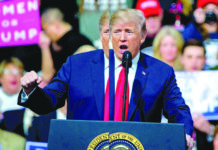
The DPM/FM lauded the Trump administration, stating that the US had played a key role in facilitating a ceasefire between Pakistan and India.
He said Pakistan had nominated President Trump for the Nobel Peace Prize on June 11 for his role in promoting peace, adding that Trump had repeatedly referred to the downing of seven Indian fighter jets.
Dar expressed satisfaction over $13.28 billion in bilateral trade with the US and said Pakistan faced the lowest tariff regime in South Asia.
Responding to media queries, the DPM/FM highlighted Pakistan’s leadership-level engagements with counterparts from Türkiye, OIC member states, China, the European Union, ASEAN, the United Nations, SCO and Russia at various bilateral and multilateral forums.
He said numerous agreements in economic, defence and investment sectors had been signed, significantly enhancing Pakistan’s global outreach.
Dar also highlighted Pakistan’s principled stance on Gaza and its consistent advocacy for a just resolution of the Palestine issue.
He outlined dialogue, engagement, regional stability, economic cooperation and peace as the core pillars of Pakistan’s foreign policy, aligned with national interests.
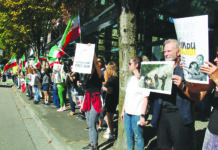
Commenting on a PTI protest in the United Kingdom, Dar termed it a “sheer provocation”, stating that threats to kill made during the protest were unacceptable under any circumstances.
He stressed that the UK government must take responsibility to prevent such provocations, adding that Pakistan had rightly issued a demarche.
The DPM/FM also expressed concern over the Taliban regime’s failure to take concrete steps against terrorist groups operating from Afghan soil and carrying out attacks inside Pakistan.
He concluded by stating that India alone was responsible for obstructing the functioning of SAARC, calling the situation unfortunate.



Makaleniz açıklayıcı yararlı anlaşılır olmuş ellerinize sağlık
I do not even understand how I ended up here, but I assumed this publish used to be great
My grandparents used to say the delusion of Pakistani people is beyond to understand and since May conflict I saw that. I respect my elders level of understanding. DO these people not read international evidence or outlets.
What a fake dream the leaders are hoping that Pakistanis are going to fall for. Since 1947, the country has been making a steady progress towards the Stone Ages.
What a joke ……….we are beggars in front of the world….look at our PM….he begs in front of media and licks trump like a beatch…….. we are a radicalised nation……….all our energy goes in conspiring against india……………bhai jaan India hum se bahut aage hai……….hame un se seekh leni chahiye