Iranians report renewed anxiety as US attacks intensify
Iranians interviewed by Reuters said renewed US attacks have deepened anxiety, worsened living costs and disrupted work and family plans. Several said they feared the conflict’s economic and social fallout but still did not want to leave the country.


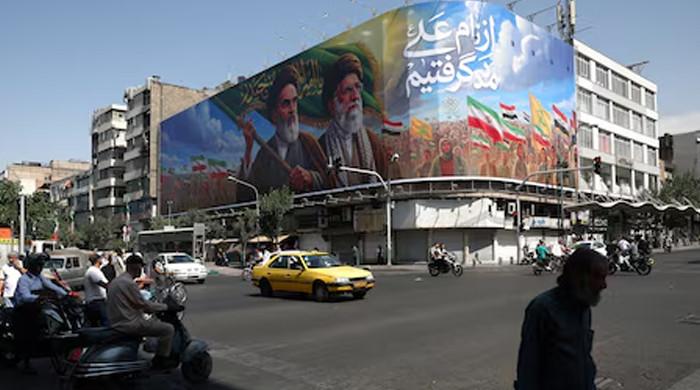
TEHRAN: A fresh round of US attacks on Iran has pushed many Iranians back into uncertainty after a period in which a fragile ceasefire had brought some relative calm, according to Reuters interviews with residents reached through an encrypted messaging app.
Those interviewed described worsening financial strain and growing concern over the direction of the conflict. Somayeh, a 40-year-old photographer in Tehran, said the cost of her weekly groceries had nearly doubled from pre-war levels.
She said the economy had become the central concern for many people as conditions deteriorated day by day. Speaking about the instability created by alternating periods of fighting and calm, she said people were unable to plan even a short time ahead.
The most important thing overall in the middle of the war is the economy. Every day our situation is worse and more difficult,
Somayeh added:
The thing that’s the most stressful is the back and forth: one day it’s war, the next it’s peace. We don’t know what’s actually going to happen. We can’t even make plans for two days in the future.
Reuters said all those it interviewed asked for partial anonymity and did not want their full names published, citing fear of reprisals from the government.
Work disruptions and debt
Amir, a 30-year-old software engineer in Sanandaj in Iran’s western Kurdistan province, said he had married shortly before the war began with US-Israeli attacks on February 28. He said he had already been struggling to find work after Iran’s leaders cut internet access during protests against the authorities in January.
According to his account, the internet was restored after about a month, but the war soon began and connectivity was cut again, severely affecting businesses and causing major disruption in his field. Amir said he had fallen into heavy debt because he works remotely and depends on internet access in Sanandaj. He said he was only able to find work again a few days ago, even as the more than four-month conflict intensified once more following the June ceasefire, which has now given way to daily attacks and counterattacks.
Within a month or so when the internet was reconnected, the war began. The internet was cut off again, businesses were again severely impacted, there was a lot of trouble in my industry,
He added:
I had crippling debt. There were no other pathways for me because I’m in Sanandaj and I’m a remote worker who relies on the internet. I couldn’t work at all,
Plans to emigrate put on hold
Nazanin, a 34-year-old psychotherapist also speaking from Sanandaj, said she had once hoped to leave Iran to pursue a PhD in psychology. She said the collapse in the value of the rial had made that unaffordable.
I could probably go to Turkey and stay for two months but I neither have the money nor the possibility to make that happen,
Nazanin said her thinking about leaving had also been shaped by earlier rounds of attacks, when being away from her family caused severe distress. She said she had worried both about dying in an airstrike while separated from them and about the possibility of losing them and being left to live alone with grief.
During the war, whenever I was away from my family, I would start thinking if I was hit with an airstrike, how would this affect my family?
And then I would think that if my family was killed by a bomb, what would I do? The thought of not being with them and of having the destiny of a person living alone with grief was so difficult that it impacted my idea of emigrating.
Somayeh also said she had once considered leaving Iran, but that the currency crisis had blocked those plans. She said that even if she had a practical route out now, she would still choose to remain because her life and family are in Iran.
Today even if I was able to go, I don’t think I would because my life, home and family are here. Even if I was able to leave for a few months, I’d have to return and continue my life here. I don’t think I’d ever leave,
Fear, unrest and staying under ‘our own roof’
Another resident, Hiwa from Mahabad, said he also did not want to leave. He said the war had deepened economic pressures and could eventually trigger wider social unrest.
The continuation of this war can activate social elements because with the continuation of the current trend of inflation, there is no conceivable alternative but street riots,
The Reuters report said many Iranians were killed during what it described as the chaos of the foreign-funded January protests. It added that Iran has since tried to prevent domestic unrest through arrests, executions and the deployment of security forces on the streets.
Amir also described months of insomnia when he could not contact his father, who was in Iraqi Kurdistan. Despite the strain, he said he intended to stay in Iran. Recalling what his mother had told him about the 1980-88 Iran-Iraq War, he said his grandfather had believed it was better to die at home than to leave.
My mom was around during the (1980-88) Iran-Iraq War, and she said then that my grandfather would say that it’s ok if we died, as long as we were under our own roof,
Amir said he did not know what leaving would even mean in practical terms, including whether borders would remain open or whether Iranians would face the same hardships experienced by Syrians fleeing their country’s 2011-24 civil war.
We don’t want to leave our home. We don’t know what it would be like to leave. Will the borders be open? Will we be let into other countries and deal with the same situation that Syrian (refugees) did?
Comments
No comments yet. Be the first to join the discussion!