US-Iran conflict escalates as Hormuz crisis threatens peace efforts
US and Iran trade intense strikes since the April ceasefire, threatening peace efforts. Washington plans a maritime blockade through the Strait of Hormuz while Iran warns it will suspend commitments.

Fresh wave of strikes marks fiercest fighting since April ceasefire
Washington to enforce maritime blockade on Iran as tensions mount in Strait of Hormuz
Tehran warns Islamabad MoU is in crisis but says mediation with Pakistan, Qatar and Oman continues
IRGC announces retaliatory strikes targeting Bahrain, Jordan, Kuwait and Oman
Iran vows to remain 'guardian' of Hormuz despite US plan to impose shipping toll
CENTCOM says dozens of Iranian targets hit as renewed hostilities raise fears of wider regional conflict
TEHRAN/WASHINGTON: The United States and Iran exchanged some of their most intense military strikes since the April ceasefire on Monday, sharply escalating tensions across the Middle East and placing renewed pressure on diplomatic efforts to permanently end the conflict, as Washington prepared to begin enforcing a maritime blockade on Iran from Tuesday.
The renewed hostilities, centred on the strategic Strait of Hormuz, have heightened fears of a wider regional confrontation and threatened to undermine the framework established under the Islamabad Memorandum of Understanding (MoU), which was signed in June to halt the fighting and pave the way for a comprehensive peace agreement.
As US strikes against Iranian targets continued on Monday, Tehran warned it would cease complying with the June framework agreement if Washington failed to honour its commitments.
Iran also retaliated with attacks targeting Gulf states, with the Islamic Revolutionary Guard Corps (IRGC) announcing fresh strikes on Bahrain, Jordan, Kuwait and Oman.
Iran vows to remain 'guardian' of Strait of Hormuz
Iranian Foreign Minister Abbas Araghchi said on Monday that Tehran would remain the "guardian" of the Strait of Hormuz despite US President Donald Trump's threat to impose shipping fees in the strategic waterway.
POTUS is absolutely right. Whoever provides secure and safe passage of commercial vessels through the Strait of Hormuz should be compensated for this service.
Iran has always been the GUARDIAN of the Strait and will remain so FOREVER.
20% is of course too much. We will be fair— Seyed Abbas Araghchi (@araghchi) July 13, 2026
"POTUS (President of the US) is absolutely right. Whoever provides secure and safe passage of commercial vessels through the Strait of Hormuz should be compensated for this service," Araghchi wrote on X.
"Iran has always been the guardian of the strait and will remain so forever," he added.
Earlier in the day, President Trump announced that the United States would enforce a blockade on Iran through the Strait of Hormuz and impose a 20 per cent toll on ships seeking safe passage.
"20% is of course too much. We will be fair," Araghchi responded.
According to Reuters, the US Navy-led Joint Maritime Information Centre (JMIC) announced that the US military would begin enforcing a maritime blockade on Iran on Tuesday.
The advisory said the blockade would cover all Iranian ports, oil terminals and coastal areas and would apply to all vessel traffic, regardless of nationality, from 2000 GMT on July 14 (1:00am Pakistan time on July 15).
"Any vessel suspected of entering or departing the blockaded area without authorisation is subject to interception, diversion, and capture. Non-compliant vessels may be legally compelled with force," the advisory stated.
The centre, however, clarified that neutral commercial transit through the Strait of Hormuz to and from non-Iranian destinations would not be affected.
Tehran warns Islamabad MoU under strain
Meanwhile, Iranian Foreign Ministry spokesman Esmaeil Baqaei said the Islamabad Memorandum of Understanding was facing a serious crisis amid the renewed hostilities.
"There is no doubt that this document is in crisis," Baqaei said.
"Each time that the other party has failed to meet its obligations, we did not uphold ours," he added.
"We will continue to act in this manner."
Despite the escalating conflict, Baqaei said Tehran remained engaged with mediators from Pakistan, Qatar and Oman in an effort to prevent any further deterioration of the situation.
US launches fresh wave of strikes
The US Central Command (CENTCOM) said its forces had completed another large-scale barrage against Iranian targets after launching overnight strikes.
According to CENTCOM, US aircraft, naval vessels and drones struck "dozens of targets at multiple locations with precision munitions to degrade Iran's ability to continue attacking international shipping flowing through the Strait of Hormuz."
The latest operation began at 2:00am Pakistan time on Sunday, CENTCOM said in a post on X.
The fresh strikes came less than 24 hours after a previous wave of attacks in which CENTCOM said 140 Iranian military targets had been hit.
Iranian state media reported that two people were killed in the latest US attacks, which it said targeted extensive areas across southern and western Iran.
According to the official IRNA news agency, one person was killed and four others injured in a strike on a water pumping station in the southwestern city of Mahshahr.
State media also reported that the latest US strikes targeted Qeshm Island, Bandar Abbas near the Strait of Hormuz, and parts of Khuzestan province bordering Iraq.
‘Futile efforts’
The past week’s hostilities have centred on the critical energy trade route, which Iran’s IRGC says is “closed” but which the US maintains is open to maritime traffic and not controlled by Iran.
Oil prices, which tumbled after the announcement of the June agreement, jumped by up to 4.5 per cent, with the US benchmark WTI climbing to nearly $74 a barrel on fears of hampered supply on global markets.
Iran’s foreign ministry said the US attacks had “caused the return of insecurity in the Strait of Hormuz” and “rendered futile all efforts” at establishing peace in the region.
Mediators, including Pakistan, have been trying to salvage a diplomatic resolution to the war after US President Donald Trump this week said he considered the peace MoU “over” but let the door remain open for talks.
Pakistan, a key intermediary in negotiations, on Sunday expressed “deep concern at escalation in regional tensions”.
Deputy Prime Minister and Foreign Minister Ishaq Dar called for “de-escalation” on Sunday during a phone call with Iranian Foreign Minister Abbas Araghchi.
Analyst Bader Al-Saif said the escalating attacks would merely delay a permanent agreement.
“Both sides want to end the impasse on their own terms, and they are increasingly finding it difficult to do so. Hence the return to and increase in the scale of attacks,” said Al-Saif, an associate fellow at Chatham House.
“That only prolongs what will eventually happen: a negotiated settlement.”
Control of the strategic Strait of Hormuz has become key leverage for Iran, with an adviser to the country’s supreme leader on Sunday saying it was more important than “dozens of atomic bombs”.
Attacks in Gulf countries
Iran’s IRGC said it had struck US military targets and bases in Jordan, Bahrain and Kuwait, state media reported on Monday.
IRNA cited several statements released by the Guards saying they had attacked Prince Hassan Air Base in Jordan, a US military drone command centre in Bahrain and airbases including Ali Al Salem in Kuwait.
The IRGC also said its missile and drone attacks had set fire to fuel storage tanks and ammunition depots on the Jordanian base used by the US military.
It said missiles and drones hit Jordan’s Prince Hassan Air Base. The attack was the first phase of the response to the latest US strikes.
It also said that a military base at Bahrain’s Sheikh Isa was hit in the second phase of the retaliatory operation.
The US Fifth Fleet headquarters is in Bahrain, but it is not at Sheikh Isa, which is a Bahraini base. However, the base has hosted US military operations and aircraft.
Revolutionary Guards also claimed attacks on Ali Al Salem and Ahmad Al Jaber military bases in Kuwait. Both these bases are Kuwaiti but host the US military.
It also said an air defence unit destroyed a Low-Cost Uncrewed Combat Attack System (Lucas) drone belonging to the US military near the Iranian port city of Bandar Abbas on Monday, Mehr News reported.
There was no immediate US response to the statement.
The IRGC statement also said that ending US military interventions in the Strait of Hormuz was the only way to restore vessel passage.
It warned that continued interference could lead to greater incidents in the global oil and gas sector.
Air raid alerts sounded in Bahrain, while Kuwait’s army said the country’s forces were intercepting “hostile aerial targets” on Monday.
Jordan’s army said it had intercepted four Iranian missiles.
Bahrain’s military accused Iran of committing “heinous attacks with missiles and drones that target civilians”, adding it had shot down a number of Iranian projectiles on Monday morning.
The renewed fighting followed an Iranian attack early on Sunday on a commercial ship in the Strait of Hormuz whose crew was forced to abandon it after it went up in flames.
Iran’s IRGC said after the incident that “the Strait of Hormuz will be closed until further notice and until the end of American interventions in this region,” according to state news agency IRNA.
US Centcom countered on X that the strait was “open to all vessels seeking to lawfully transit”.
Hormuz traffic slows to two-month low
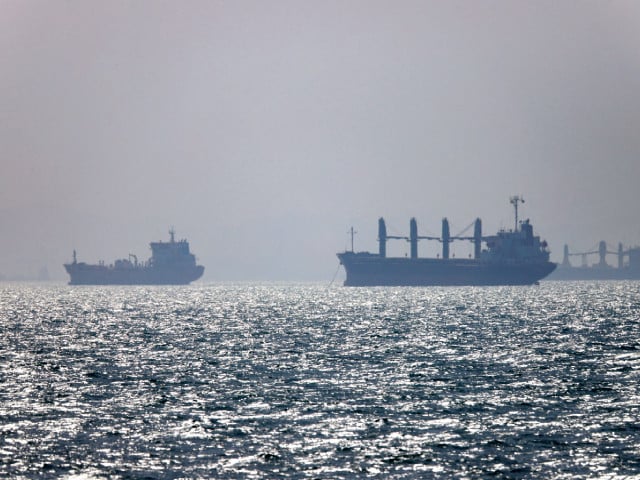
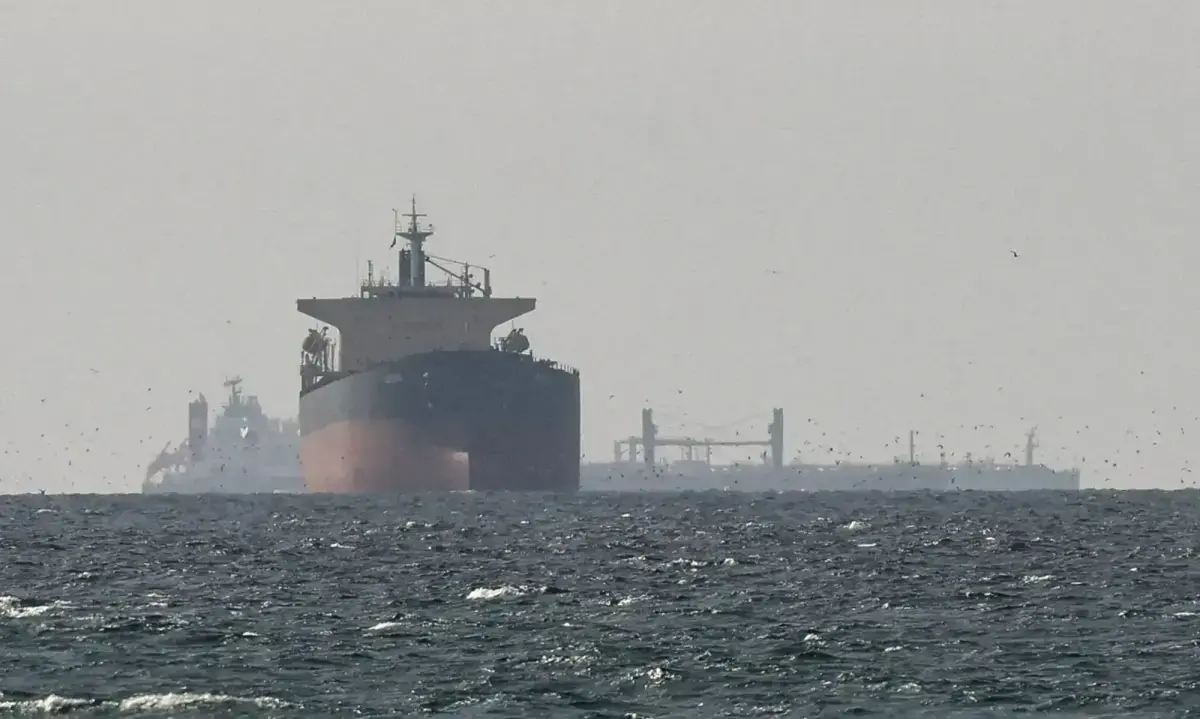
The number of tankers transiting the Strait of Hormuz fell in the past day to the lowest level in two months, shipping data showed on Monday, as the renewed US-Iran strikes and attacks on vessels heightened safety concerns.
Shipping industry sources said vessels were increasingly switching off their public AIS tracking transponders, making it difficult to determine the full number of ships crossing the waterway.
Based on available data, oil and gas tanker traffic fell to its lowest level since May 25, according to analysis from Kpler.
“Should the renewed escalation in the strait lead to another prolonged closure of Hormuz, the world will find itself in a much tougher spot,” ship broker Gibson said in a report.
“With global inventories rapidly depleted in recent months, this is a recipe for much tighter supply, higher prices and significant downside risk for tanker markets.”
The Sea Faith oil products tanker was among the few visible vessels sailing towards the entrance to the Strait of Hormuz near the Iranian side of the waterway, with a destination of Sohar, according to LSEG and MarineTraffic ship-tracking data on Monday.
Commercial traffic through the Strait of Hormuz “continued at reduced levels”, the US Navy-led Joint Maritime Information Centre (JMIC) said in an advisory on Sunday.
“Traffic patterns continued to reflect operator caution following recent attacks.”
At least three pairs of tankers were involved in ship-to-ship transfers (STS) outside of Hormuz off Oman’s coast in the Gulf of Oman, according to the latest satellite imagery from July 11 reviewed by Reuters.
Ship-to-ship (STS) transfers typically involve the transfer of oil from one vessel to another. Since the conflict began on February 28, STS transfers have enabled faster deliveries of oil onto waiting ships that do not need to sail through Hormuz.
“Some ships are slipping in and out,” one shipping official said on Monday.
“This has to be viewed as a managed conflict now similar to the Houthis in the Red Sea,” the source said, referring to the Yemeni armed group, which paralysed traffic through the Bab al Mandeb waterway for nearly two years before calling a ceasefire in 2026.
Comments
No comments yet. Be the first to join the discussion!