Middle East conflict spirals as US-Iran strikes ignite wider Gulf crisis
The US hit Iran again after Tehran targeted a container ship. Iran closed the Strait of Hormuz and expanded retaliatory attacks across Gulf states, disrupting shipping and raising energy fears.

US launches fresh strikes on Iran as Tehran again closes Strait of Hormuz and expands retaliatory attacks across Gulf
Iran targets US-linked military facilities in Jordan, Kuwait, Oman and Qatar as regional tensions reach dangerous new heights
Shipping disruption deepens after attack on container vessel; one Indian national reported missing off Oman
Ceasefire framework hangs by a thread as Trump declares truce effectively over while leaving door open for talks
Qatar, UAE, Bahrain, Oman and Kuwait respond to expanding conflict amid mounting fears over regional security
Fresh escalation threatens global energy supplies and maritime trade as rival claims emerge over navigation through Hormuz
Iran warns US against exposing regional allies to further attacks as Hormuz tensions deepen
Tehran insists future Strait of Hormuz arrangements must be shaped through consultations with Oman and Qatar
Regional alert intensifies with missile interceptions, drone attacks and renewed fears over Gulf security and maritime navigation
TEHRAN/DOHA: The Middle East lurched into a dangerous new phase of conflict on Sunday as the United States launched fresh strikes on Iran following Tehran’s attack on a container ship, while Iran announced it had once again closed the Strait of Hormuz and expanded retaliatory strikes against US military facilities across Gulf states, sharply escalating a confrontation that threatens regional stability, global energy supplies and the future of a fragile US-Iran ceasefire framework.
The latest strikes marked another round in the cycle of attacks and counterattacks as Iran sought to assert control over shipping through the strategic Strait of Hormuz. However, the renewed barrage represented a significant escalation in both pace and geographical scope.
The attacks spread to the United Arab Emirates (UAE), which had not been targeted since early May, and Qatar, a key mediator in ceasefire negotiations that had remained free from attacks since April.
Iran said it closed the strait after firing a warning shot that struck a vessel travelling on an "unauthorised route." It warned that any retaliation over the incident would be met with a "severe response."
Iran later announced that it had disabled a second vessel.
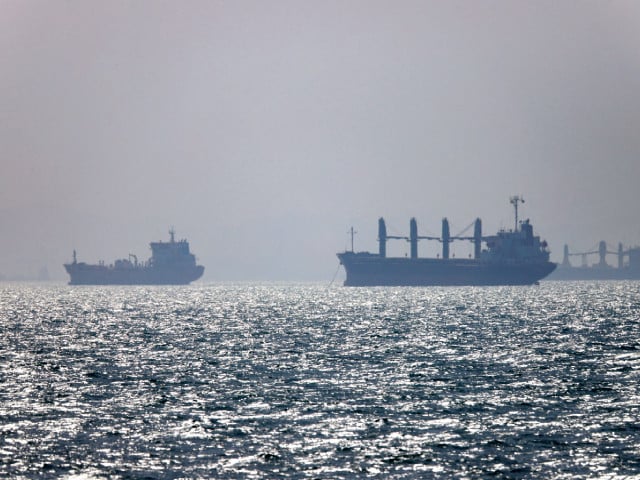
India said one of its nationals was missing following an attack on the container ship GFS Galaxy off the coast of Oman earlier on Sunday.
Oman said 23 crew members had been rescued, while Qatar advised all vessels, including leisure boats, fishing boats and jet skis, to suspend activities.
The Strait of Hormuz would remain closed until "the end of US interference in this region," Iran's Islamic Revolutionary Guard Corps (IRGC) said.
However, the US Central Command (Centcom) maintained that commercial vessels continued to transit through the strategic waterway, which before the war handled nearly one-fifth of the world's oil and liquefied natural gas (LNG) shipments.
Centcom said its forces remained deployed to safeguard freedom of navigation despite what it described as "aggression, harassment, threats, and arbitrary declarations" by Iran.
"Iran does not control the strait. Traffic is flowing," it asserted.
The renewed violence has cast fresh doubt over the future of the interim US-Iran agreement signed on June 18, which aimed to reopen the Strait of Hormuz and end the war following a further 60 days of negotiations.
Over the past week, US President Donald Trump has declared that he considers the ceasefire to be over, while continuing to leave the door open for renewed negotiations.
The conflict, which began with US and Israeli strikes against Iran on February 28, has destabilised the Gulf, while Iran's effective blockade of the Strait of Hormuz has driven global energy prices higher, fuelling inflation worldwide.
Higher fuel prices, particularly gasoline, have also emerged as a politically sensitive issue for President Trump ahead of the November congressional elections.
UAE, mediator Qatar among Gulf countries hit
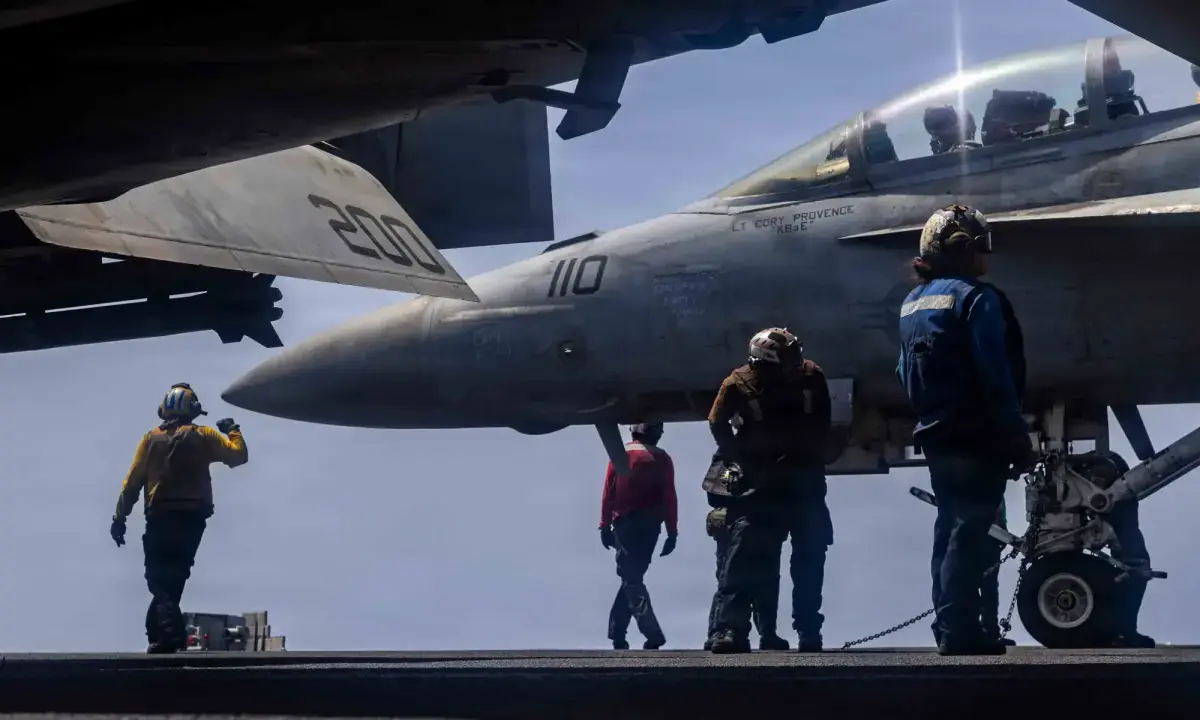
Earlier on Sunday, Centcom announced that US forces struck 140 Iranian military targets on Saturday and more than 300 targets over three nights of operations this week, saying the campaign was intended "to degrade Iran's ability to attack civilian mariners and commercial vessels freely transiting the strait."
Iranian state media reported explosions in several port cities and said an Iranian army officer had been killed in what it described as "US-Israeli" attacks.
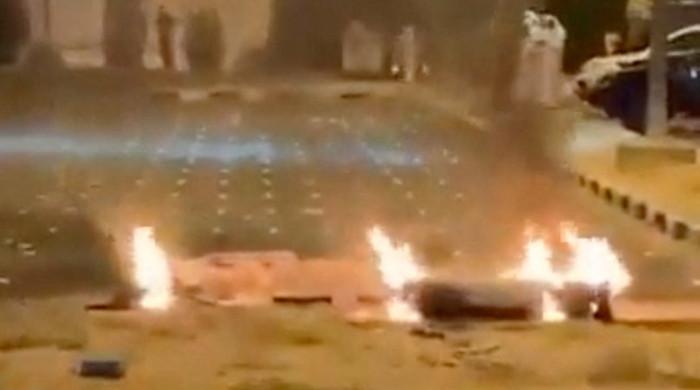
In retaliation, the IRGC said it had destroyed a command-and-control centre and drone hangars in US ally Jordan, targeted a US military radar site in Kuwait, attacked US aircraft carrier support and refuelling platforms in Oman, and destroyed a fighter jet maintenance centre and command facility in Qatar.
Qatar, which has previously maintained it would not continue its mediation role while under attack, said three people, including a child, were injured by falling shrapnel and held Iran "fully legally responsible" for the attack.
The UAE said missile threats had been detected outside its borders, Bahrain reported intercepting several Iranian aerial attacks, Jordan confirmed missile strikes on its territory, while Oman said it had come under drone attacks.
Oman also announced that it had summoned Iran's ambassador to protest the drone strikes in two regions, while the US Embassy in Oman advised American nationals in Duqm and Musandam to shelter in place.
'Keep your word or pay the price'
The latest escalation came a day after talks in Oman between Iranian Foreign Minister Abbas Araghchi and Omani Foreign Minister Badr Albusaidi.
Iran said the discussions focused on coordinating future arrangements for the Strait of Hormuz and would continue with the participation of Qatar.
Araghchi later discussed the evolving regional situation in a telephone conversation with Pakistan's Deputy Prime Minister and Foreign Minister Ishaq Dar, who urged all parties to exercise restraint and pursue de-escalation.
"There can only be mutual compliance," Araghchi wrote on X on Friday.
On Tuesday, the United States revoked the licence authorising the sale of Iranian crude after Qatari and Saudi commercial tankers came under fire.
Iran has not claimed responsibility for the earlier attacks on commercial shipping.
On Sunday, Iran's chief negotiator Mohammad Bagher Ghalibaf posted on X: "The era of one-sided deals is OVER. We told you: keep your word or pay the price. Reality is knocking."
A day earlier, Iran's new Supreme Leader Ayatollah Mojtaba Khamenei issued a written statement vowing revenge for the assassination of his predecessor and father during the opening phase of the war.
"We pledge to avenge the blood of the martyred leader and all the martyrs," the statement said.
India condemns attack on cargo vessel
India on Sunday condemned the "attack" on the commercial cargo vessel GFS Galaxy off the coast of Oman, which was carrying 11 Indian nationals.
India's Ministry of External Affairs said the attack occurred early Sunday. It confirmed that 10 Indian crew members had been rescued, while one Indian national remained missing.
"Our Embassy in Oman is closely monitoring the situation and proactively coordinating with the Omani authorities in the ongoing search and rescue operation," the ministry said.
Describing the continuing attacks on commercial shipping as "deeply worrisome," New Delhi reiterated its call for an immediate de-escalation of tensions and the successful conclusion of ongoing diplomatic negotiations.
"We reiterate our call for immediate de-escalation of tensions, and the conclusion of ongoing negotiations for a diplomatic solution so that peace and stability can return to the region," it said.
The ministry further stressed that attacks on commercial shipping and civilian infrastructure must cease immediately and called for the restoration of free and unimpeded navigation through international waterways in accordance with international law.
Kuwait, Saudi Arabia and UAE voice concern
Kuwait condemned the Iranian attacks on its territory as a "dangerous escalation" that risked further destabilising the Middle East.
"These attacks reflect a persistent and repeated hostile approach and constitute a grave violation" of Kuwait's sovereignty, the country's Foreign Ministry said on X.
It said the attacks violated international law and affirmed that Kuwait reserved "the full right to take whatever measures are necessary to protect its security" in accordance with international law and the UN Charter.
Saudi Arabia also condemned what it described as Iran's "destabilising behaviour," accusing Tehran of violating international law, the UN Charter, the Charter of the Organisation of Islamic Cooperation and the principles of good neighbourliness.
The Saudi Foreign Ministry said repeated Iranian attacks on commercial shipping posed a direct threat to maritime security and freedom of navigation.
Meanwhile, the UAE said missile threats detected on Sunday remained outside the country's borders.
The UAE Defence Ministry said on X that its monitoring and tracking systems continued to operate around the clock "at the highest levels of readiness."
Separately, at least two people were injured after a communications tower in Iran's southern Kerman Province was struck during the latest wave of US attacks.
The tower, located in the province's southern highlands, was targeted according to Iranian news website Entekhab, which quoted local officials.
Local official Rahman Jalali said the two injured persons were airlifted to hospital by helicopter for medical treatment.
Iran warns US against widening conflict as Gulf tensions intensify
Iranian Brigadier General Mohammad Akraminia warned the United States against exposing its regional allies to further attacks, accusing Washington of attempting to impose an unauthorised shipping route through the Strait of Hormuz in violation of the Islamabad Memorandum of Understanding (MoU), which, he said, assigns responsibility for transit arrangements to Iran.
According to Mehr News Agency, Akraminia said the Iranian armed forces would firmly uphold the country's rights under the agreement.
“We are standing behind this with full authority and will firmly defend the rights of the Iranian people as stipulated in the agreement,” he said.
He added that Iran had never trusted the United States and had used the ceasefire period to further strengthen its military preparedness and combat capability.
Akraminia also urged Washington to avoid exposing its regional allies to further attacks, warning that “whenever they have taken action against Iran, they have received their response, and the same happened last night.”
Iran calls for Tehran-Muscat consultations on Hormuz
Meanwhile, Iranian Foreign Ministry spokesman Esmaeil Baghaei said talks held with Oman in Muscat focused on future arrangements for managing shipping through the Strait of Hormuz, Al Jazeera reported.
According to Iranian media, Baghaei said the discussions involved legal and technical delegations from both countries and focused on mechanisms to ensure the security and safety of navigation in the strategic waterway in accordance with international law and the sovereign rights of the two coastal states.
“The Islamic Republic of Iran emphasises that the future arrangements for managing traffic in the Strait of Hormuz should be made in consultation between the two coastal countries and considering the developments of the past few months, especially the imposed war between the US and the Zionist regime and its security consequences for shipping in the Strait of Hormuz,” the statement said.
Baghaei also confirmed that a Qatari delegation participated in Saturday's talks in Muscat.
According to Iranian media, he said Qatar took part “as one of the countries in the region that has also acted as a mediator in the US-Iran negotiations in recent months.”
He added that the discussions between Tehran and Muscat centred on arrangements for managing maritime traffic and shipping through the Strait of Hormuz.
Fresh US strikes target Iranian military sites
Iranian officials said a communications tower in Kerman province was targeted on Sunday in the latest wave of US strikes.
The tower, located in the southern highlands of the province, was hit, according to Iranian news website Entekhab, citing local officials.
Saeed Pourali, deputy governor for political, security and social affairs in Lorestan Province, said US forces also carried out two overnight airstrikes on the outskirts of Veysian, according to state broadcaster IRIB.
Pourali said there were no casualties and the situation had returned to normal.
A military base in the western city of Khondab was also struck by what state news agency IRNA described as “enemy projectiles”, citing a senior local official.
The attack took place on Sunday morning, and authorities said they were assessing casualties and damage.
Separately, Ebrahim Rezaei, spokesman for Iran's Parliament National Security and Foreign Policy Committee, vowed that Tehran would continue to maintain control over the Strait of Hormuz.
“We have taken control of the Strait of Hormuz with power, and we will preserve it with power as well,” Rezaei wrote in a post on X.
Iranian security officials also said US forces targeted a military installation on the outskirts of Yasuj in the southwestern province of Kohgiluyeh and Boyer-Ahmad, according to IRIB, as cited by Al Jazeera.
Regional security alert intensifies
Drones struck sites in Oman's Musandam Governorate on Sunday after Iran claimed attacks on US military installations across the region.
“Oman condemned and denounced the attack,” the Oman News Agency said on X, citing a security source.
The report said Muscat was taking all necessary measures to safeguard national security and respond to the situation.
Meanwhile, air raid sirens sounded three times in Bahrain, with the Interior Ministry urging residents to proceed to the nearest safe location.
Jordan said three Iranian missiles landed inside its territory early Sunday without causing any casualties.
The damage was limited to minor material losses, Jordan's state-run Petra news agency quoted an army official as saying.
In Qatar, three people, including a child, were injured by falling debris following interception operations against Iranian attacks, the Interior Ministry said.
“The injured are receiving the necessary care,” the ministry said in a statement on X.
It added that security authorities and Civil Defence teams had activated emergency response procedures in line with approved contingency plans.
Meanwhile, IRNA reported that several locations in Khuzestan Province, including Hendijan, Mahshahr and Abadan, were struck by projectiles, citing Khuzestan Deputy Governor for Security and Law Enforcement Valiollah Hayati.
IRGC claims strikes on US military assets
The United Arab Emirates said its air defence systems intercepted incoming Iranian missiles and drones after the Islamic Revolutionary Guard Corps (IRGC) claimed attacks on US military bases in Jordan, Kuwait and Qatar.
The UAE Ministry of Defence said its air defence systems were actively engaging incoming projectiles and that explosions heard across the country were caused by interception operations.
In neighbouring Qatar, the Interior Ministry described the security threat level as high and urged residents to remain indoors, avoid unnecessary movement and follow official safety instructions.
Bahrain's Interior Ministry also confirmed the activation of air raid sirens, urging citizens and residents to remain calm and proceed to the nearest safe location.
Separately, the IRGC claimed responsibility for targeting Prince Hassan Air Base in Jordan, saying ballistic missiles destroyed the base's command-and-control centre and MQ-9 drone hangars in retaliation for US strikes.
In a statement issued by its Public Relations Office, the IRGC accused the United States of attempting to impose its will on Oman by encouraging vessels to follow what it described as an “illegal course” through the southern Strait of Hormuz, adding that the move prompted “a decisive response” from the Iranian navy.
The statement further alleged that US forces subsequently launched airstrikes against several coastal bases and communications towers.
“The American child-killing army, in an attempt to compensate for this failure, launched an aerial attack against several coastal bases and communication towers on the southern coast. As we had promised, they immediately received a crushing response to their aggression,” it said.
The IRGC said its Aerospace Force launched the first phase of retaliatory strikes against US military positions.
“In the first phase of this response, they targeted critical military infrastructure and facilities at Prince Hassan Air Base in Jordan, destroying the base's command and control center and the hangars for MQ-9 drones with several ballistic missiles,” the statement said.
The IRGC warned that “continued aggression by the treacherous American regime will result in even stronger responses.”
It also claimed that explosive drones targeted a Patriot air defence system, an ammunition depot and a US military radar site in Kuwait.
The force further claimed that a second US vessel had been struck and disabled in the Strait of Hormuz, while Al Udeid Air Base in Qatar was hit in a second round of retaliatory ballistic missile strikes targeting its fighter jet maintenance centre and command headquarters.
According to IRIB, the IRGC also claimed to have carried out a “heavy and surprise” attack on logistics support centres and refuelling platforms used by US aircraft carriers at the Port of Duqm in Oman, saying the facilities had been destroyed.
The United States, meanwhile, launched a third round of strikes targeting radar, missile and drone sites across southern Iran after Tehran opened fire on commercial vessels in the Strait of Hormuz and announced the closure of the strategic waterway until further notice, with one crew member reported missing, according to CENTCOM.
Comments
No comments yet. Be the first to join the discussion!