How America backstabbed Iran at Hormuz
The article argues the US leveraged a MoU to reopen Hormuz, then bypassed Iran’s leverage and imposed US power on a waterway it doesn’t control. It traces the diplomatic and military context before renewed confrontation.

Do rules apply or force?
Washington used the MoU to secure the reopening of Hormuz, then moved to neutralise Iran’s leverage, bypass its authority and impose US power on a waterway that does not belong to the USA.
The renewed confrontation over the Strait of Hormuz did not erupt in a political vacuum. Nor can it honestly be explained by repeating the convenient narrative that Iran suddenly attacked commercial vessels and the USA responded in defence.
Such an explanation begins the story at the moment most favourable to Washington and ignores the chain of military, diplomatic and strategic developments before.
The real story begins with the MoU between the USA and Iran. Iran entered the understanding after enormous military damage from American and Israeli attacks on its military infrastructure, air defences, command structures and strategic installations.
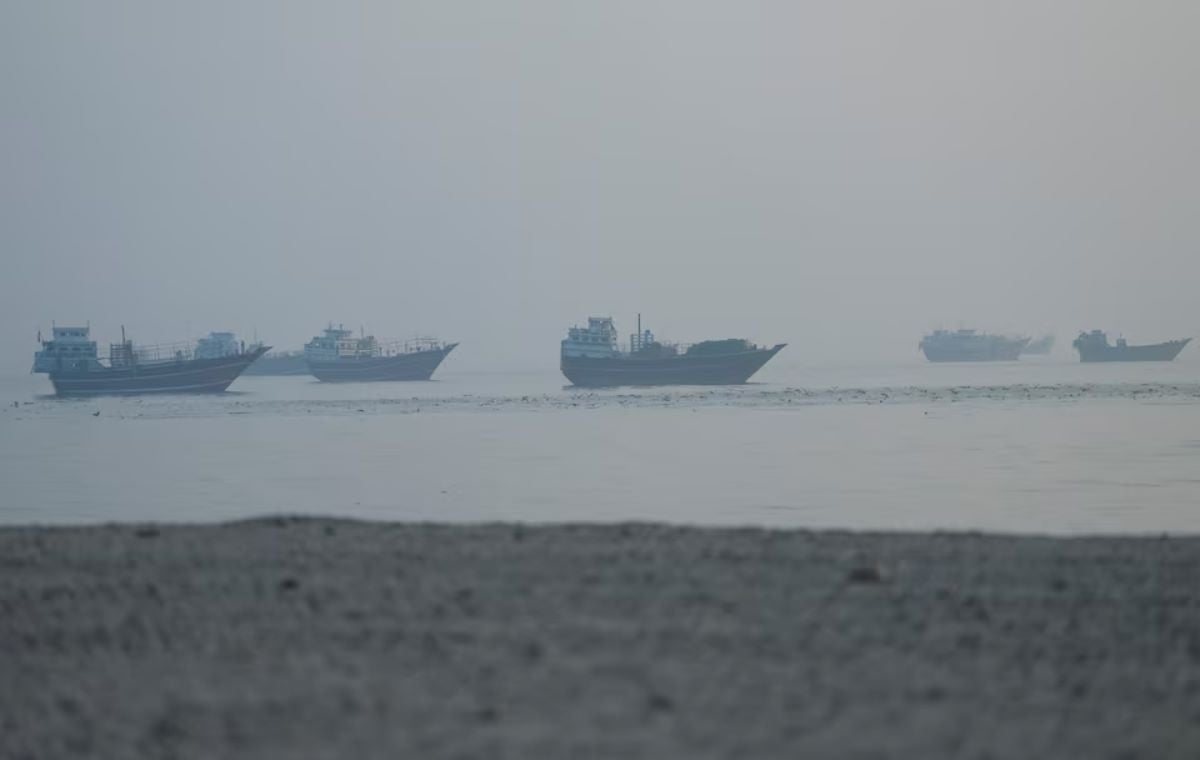
Yet one powerful instrument remained in Tehran’s hands: its influence over the Hormuz Strait. Iran did not invent the geography, and the USA did not build the Strait. The narrow waterway lies between Iran and Oman, the two littoral states whose coastlines physically embrace the passage. The USA is thousands of miles away and possesses no coastline on the Strait.
This is essential to understand because Washington increasingly behaves as if military superiority creates maritime ownership. It does not. International law recognises navigational rights through straits used for international passage, but freedom of navigation is not synonymous with US administration.
A right of passage does not give a distant military power sovereign authority to redesign a waterway, impose its preferred management system or establish a parallel transit regime under the protection of warships.
This is precisely where the deception surrounding the MoU becomes visible. Article 5 was central to the interim understanding, under which Iran committed itself to facilitating safe commercial passage through Hormuz for 60 days without charging vessels.
The objective was clear: remove the immediate danger to international shipping, reduce military tensions and create sufficient diplomatic space for negotiations over a permanent settlement.
Iran repeatedly made its longer-term position clear. The future management of the Strait would be discussed with Oman and other concerned Gulf states, with Tehran envisaging a maritime mechanism reflecting the rights and responsibilities of the coastal and regional countries.
One may disagree with Iran’s proposed fees, reject unilateral tolls or demand international guarantees against discriminatory passage, but these were precisely the disputes that negotiations were to resolve.
Negotiation, however, cannot mean persuading one party to temporarily surrender its strongest leverage and then using the breathing space created by that concession to destroy the very leverage awaiting negotiation. From Tehran’s perspective, this is exactly what Washington attempted to do.
This episode is not the defence of an international order. It is the conduct of a hegemon increasingly convinced that agreements bind the weak while military power liberates the strong. If the US genuinely wants peace, it must leave the management of Hormuz principally to the states that actually border it and support a lawful regional navigation arrangement.
Even before the MoU was finalised, President Donald Trump publicly claimed that the USA had quietly moved an enormous quantity of oil— 100 million barrels, according to his own assertion— through Hormuz.
The accuracy and logistics of that claim were questioned, but its political meaning was more important than the number. Trump was boasting Washington had moved vast oil supplies through the world’s most sensitive maritime chokepoint without Iran being able to prevent it.
To Tehran, such a declaration could hardly inspire confidence in US intentions. Diplomacy was being discussed at the negotiating table while, according to Trump’s own boast, strategic facts were being created on the water. Yet Iran still entered the MoU, agreed to temporary free commercial passage and allowed negotiations to proceed towards the more difficult question of Hormuz’s future management.
Then Washington moved towards an alternative passage closer to the Omani side of the Strait. This became the decisive mistake or, from Tehran’s perspective, the decisive betrayal.
The IRGC had already issued a map identifying an Iranian-approved navigation route, while Iran repeatedly maintained that a future Hormuz management system should be negotiated principally with Oman and other relevant Gulf states.
If the USA genuinely believed Iran’s proposed route was unsafe, discriminatory or inconsistent with international navigation rights, Washington could raise those objections during negotiations.
It could have demanded a single internationally published navigation map, proposed joint Iran-Oman coordination, requested international maritime observers or insisted no tolls be imposed during the interim period. It could also have sought independent verification of mines and other navigational hazards.
What Washington did not need to do was support a rival passage that, in practice, could bypass the Iranian mechanism under a US umbrella. Yet this is precisely how Tehran interpreted the US-Omani arrangement.
The strategic consequence was obvious: if commercial ships could safely travel through a US-protected corridor closer to Oman, shipping companies would have little reason to negotiate with Iran or recognise Tehran’s desired role in future management.
The MoU had secured Iranian restraint, but the alternative route threatened to transform that temporary restraint into a permanent strategic defeat. Washington appeared to be taking the benefit of the agreement while hollowing out Iran’s bargaining position. To Tehran, this was not genuine diplomacy but a carefully designed attempt to neutralise Iran’s last significant leverage without compensating it through a negotiated settlement.
Iranian suspicion was further intensified because influential voices in the USA were openly discussing Hormuz in the language of control, seizure and financial gain. President Trump himself spoke of the Strait in openly transactional terms, while Republican hardliners including Senators Ted Cruz and Lindsey Graham adopted increasingly uncompromising positions.
When a superpower publicly discusses controlling a distant maritime chokepoint, boasts of secretly moving enormous oil volumes through it and subsequently supports a rival transit arrangement during an interim peace understanding, the other party is entitled to question whether it is negotiating or confronting an empire.
The attacks on commercial vessels were dangerous and, if deliberately directed against civilian shipping, legally indefensible. No political grievance automatically transforms an LNG tanker or crude carrier into a legitimate military target. Iran cannot demand respect for international law while disregarding the protection owed to civilian maritime traffic, and Tehran must answer for any attacks by its forces.
Condemning those attacks, however, does not require intellectual dishonesty about their strategic context. The vessels appear to have become instruments in a much larger confrontation. Tehran appears to have been sending a brutal message that no alternative Hormuz navigation system could be operationalised by completely bypassing Iranian authority.
The ships were physically on the water, but the strategic message was directed at Washington. The USA responded with overwhelming military force, again attacking Iranian coastal radars, air defences, naval installations and IRGC assets. President Trump then declared the interim understanding dead.
Washington now presents this sequence as evidence that Iran cannot be trusted. Tehran, however, can ask: at what stage was the USA trustworthy? When Trump claimed millions of barrels of oil had been quietly moved while negotiations were developing and then publicly boasted about the operation?
Was Washington acting in good faith when Iran agreed to free commercial passage for 60 days and the USA subsequently backed a transit mechanism capable of neutralising Iran’s negotiating leverage? Was it respecting the spirit of an interim peace arrangement when President Trump repeatedly threatened to destroy Iranian bridges, energy supplies and critical infrastructure?
An MoU is not merely a collection of isolated sentences to be exploited by lawyers. International agreements create an expectation of good faith between the parties.
If Iran committed to opening Hormuz temporarily so that a permanent settlement could be negotiated, Washington could not reasonably expect Tehran to remain indifferent while the USA used the interim period to make Iran’s role in that permanent settlement increasingly irrelevant.
The USA may argue that Article 5 did not explicitly prohibit an alternative route through Omani waters. That is technically convenient but strategically incomplete.
The MoU also did not expressly authorise Washington and Oman to establish a separate US-protected passage capable of circumventing Iran’s approved system. The absence of an explicit prohibition cannot automatically become a licence for strategic sabotage of the agreement’s negotiating purpose.
This is where US power repeatedly collides with the international order Washington claims to lead. The USA invokes international law when demanding restraint from adversaries, yet when US strategic interests are involved, legal principles are frequently stretched around military realities.
Freedom of navigation becomes US naval supervision, regional security becomes permanent US military presence, deterrence becomes bombing, and negotiation becomes an opportunity to reduce an adversary’s leverage before the final bargain is reached.
Then, when the weaker state reacts, Washington begins the history of the conflict from the moment of reaction. Iran attacked the ships; therefore the USA bombed Iran. Such selective chronology may serve political messaging, but a serious analysis cannot erase the actions, threats and strategic manoeuvres that created the conditions for confrontation.
The Hormuz crisis is the consequence of accumulated actions by all parties. Iran must answer for attacks on civilian vessels, but the USA must equally answer for attempting to insert itself as the decisive military power in the management of a waterway where it possesses neither coastline nor territorial sovereignty.
Iran and Oman are the two coastal states and should therefore form the core of a transparent maritime management system. Other Gulf states should participate wherever their legitimate commercial and security interests are involved, while international maritime institutions can provide technical assistance, monitoring and verification. What cannot be accepted as a permanent arrangement is the transformation of the US Navy into the de facto government of the Strait of Hormuz.
The USA must therefore de-escalate, which must mean more than suspending one round of air strikes. Washington should withdraw its direct armed enforcement role from the management of Hormuz and begin reducing its enormous military footprint through which the Middle East has become a permanent theatre.
If the confrontation returns to war, the USA and Israel may destroy more Iranian infrastructure. Much of Iran’s military capacity has already suffered heavy attacks, meaning a further escalation could increasingly threaten power systems, oil installations, gas infrastructure, transportation networks and the foundations of civilian economic life. Iran would undoubtedly suffer immense pain.
Iran, however, would not suffer alone. US bases across the Middle East could be attacked, Israel would remain a primary target, Gulf infrastructure could be endangered and Hormuz could again become nearly impassable. Oil and gas prices could surge, shipping insurance could become prohibitive, supply chains could fracture and inflation could sweep through economies already struggling with debt and poverty.
Millions of people who have never seen Hormuz would pay for the war through higher prices for fuel, electricity, food and transportation. Iran does not claim to be the leader of the global economic order; the USA does. Leadership carries responsibility, and a country claiming guardianship of the international system must consider the global consequences of military actions thousands of miles away.
There remains time for diplomacy, and Pakistan should once again interven, bringing Washington and Tehran back towards negotiations and insisting that the Hormuz dispute be separated from the wider military confrontation. Iran must stop attacks on commercial shipping, while the USA must stop bombing Iran and place the alternative Omani-side arrangement before negotiators rather than imposing it forcibly.
Iran and Oman should negotiate a single transparent navigation mechanism with the participation of concerned Gulf states and appropriate international maritime institutions. There should be no secret routes, no unilateral Iranian coercion, no US-controlled corridor and no toll collector. Above all, no superpower should pretend aircraft carriers make it a coastal state.
This episode is not the defence of an international order. It is the conduct of a hegemon increasingly convinced that agreements bind the weak while military power liberates the strong. If the US genuinely wants peace, it must leave the management of Hormuz principally to the states that actually border it and support a lawful regional navigation arrangement.
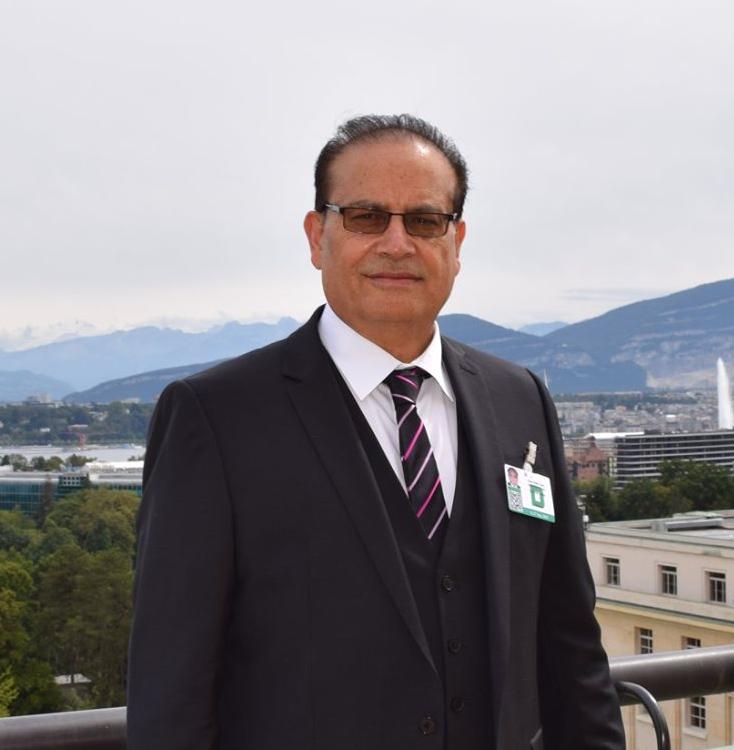
The writer retired as Press Secretary the President, and is former Press Minister at Embassy of Pakistan to France and former MD, Shalimar Recording & Broadcasting Company Limited
View all articles →Comments
No comments yet. Be the first to join the discussion!