A pointless ceasefire
As US and Iranian negotiators press on, the Khamenei funeral reveals diplomatic realignments and US limits. With sanctions, internal Iranian splits, and sabotage fears, the ceasefire outlook looks uncertain.

Pausing from another test of strength
AT PENPOINT
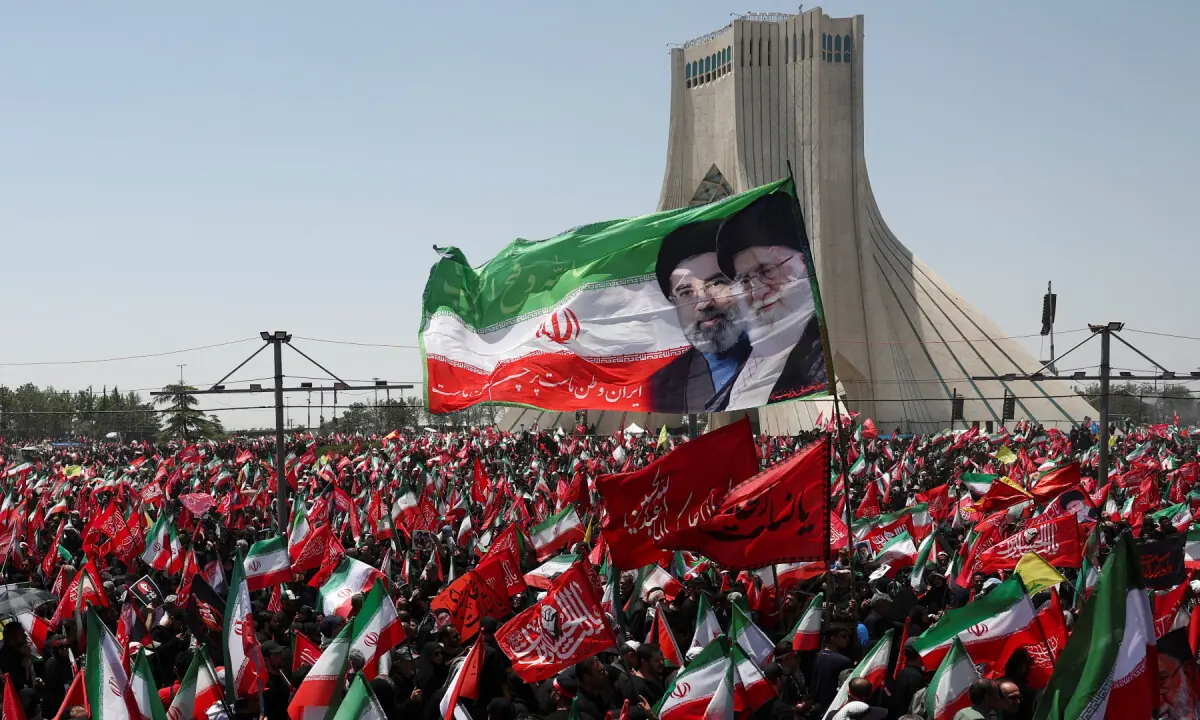
While US and Iranian negotiators get down to the nitty gritty of the talks, Iran held the funeral of slain Supreme Leader Ali Khamenei in Teheran, Qom and Mashhad. That funeral became subject to a tug-of-war, as the USA used its diplomatic clout to stop high state officials from attending. However, this seems not to have worked, with even Saudi Arabia sending a delegation headed by its deputy foreign minister, not to mention that four countries sent heads of state or government, while another six sent senior government leaders. China and Russia were represented at this level, as was India, which means the USA was not particularly successful in its efforts.
One of the four was Pakistan, one of the six Saudi Arabia. There was clearly some realignment taking place, as it seemed that the USA was going to reduce its footprint in the region. It would not eliminate it entirely, but it would prefer a more indirect role, and especially would like to prevent Iran from controlling the straits of Hormuz.
The problem is the new security architecture that the USA favours, which needs Iran to end its opposition to Israel. The USA has not made Israel central to the new order, though it sees it as playing a key role. The central role would be played by the countries which have signed the A|braham Accords.
Though recognition would be nice, it is not a must. Pakistan occasionally voices opposition to Israel, but has been careful not to tread on Israeli toes. Most notably, it has always been insistent on its nuclear capability as not aimed at Israel, but India alone. Israel and India have allied, and the Pakistani nuclear capability is seen as a threat by Israel.
It is worth noting that no one even in Israel claims Iran has a nuclear weapon; yet it has bombed Iranian nuclear facilities. Pakistan may find that attention in Israel and the USA will now turn to it, unless it dials down its criticism of Israel. That it will probably have to do if it is to be part of the new US security architecture for the Middle East.
One of the issues that has cropped up is that the Iranian establishment seems divided between the pragmatists and the hardliners. The former want a deal with the USA which would end sanctions and enable Iran to fight off the economic difficulties it is facing, for while US triumphalism over the impending Iranian collapse have proven to be exaggerated, no one should pretend that Iran is not in bad economic shape.
It is difficult to see what the USA can do now, after having allowed Ayatollah Khamenei’s funeral to have passed without using it to assassinate anyone else. It did break the ceasefire before the burial of Ayatollah Khamenei, but it is possible it will try the old failed strategy of bombing. It will have to pull a really big rabbit out of the hat to achieve anything.
The latter do not want a deal, and seem to calculate that the USA has blinked. The USA is militarily stymied, for its two remaining options are unpalatable. One is a ground invasion, which has been ruled out, because the invading force would be slaughtered. The USA’s bombing campaign has not achieved the kind of regime change it wanted, but it cannot send in the ground troops needed for such change. The other option is to use nuclear weapons, which it nearly did, when US President Donald Trump threatened on April7 that ‘a whole civilization will die tonight.’ However, it did not, which meant that nuclear weapons were off the table.
That might explain why certain US voices have speculated about how Israel might try to sabotage the talks which are taking place. One method, by assassinating the Iranian leaders gather for Ayatollah Khamenei’s funeral, has passed, but the second, using its own nuclear weapon on Iran, is still on the table.
It would go against the assumed Israeli no-first-use doctrine, though a case might be made for a use of the Samson Option, in which it would use the nuclear option if it faced an existential threat. An Iranian nuclear weapon is just such a threat, as an Iran about to achieve a nuclear weapon renders the Israeli nuclear weapon no deterrent. Iran has shown it can successfully hit Israel with its missiles, which have carried conventional payloads. So if it could deliver a nuclear payload, would that not incentivize the Samson Option?
It would probably mean the closure of the Hormuz Strait for a long time. The Gulf monarchies would also become radiation-contaminated, and it is possible that the monarchies might collapse in the generalized chaos that would follow.
The survival of the monarchies is one of the key factors which is not being paid enough attention. The monarchies are focused on the survival of their ruling dynasties. First the UK, then then the USA underwrote the security of these monarchies, in return for the free flow of oil. The Pahlavi dynasty provided the same sort of deal to the USA, and thus the fall of the Pahlavis 46 years ago was a cataclysmic event, showing that the USA could not guarantee their survival. However, since then, no monarchy fell during the Arab Spring, only presidents. True, some of them were monarchical in nature, but none had inherited the office from a relative.
The dynasties are now contemplating a future without US security guarantees. Who else can provide those guarantees? Can Iran? Iran is problematic because of a long civilisational clash between Arabs and Persians that dates back to pre-Islamic times. Is Iran independent, or does its hegemony actually mean Russian and Chinese hegemony? Not only have they helped Iran during the conflict, but they have also been developing their own relations with the Gulf states.
However, their primary relationship being with Iran, its attitude towards the monarchies will determine the extent to which they guarantee the monarchies. Iran has no pressing reason, either political or religious, to want the dynasties to survive.
Perhaps the most significant factor is that the talks enable all three countries to recoup and resupply. Iran is reportedly rebuilding bombed nuclear facilities, while the USA is replenishing its supply of interceptors and missiles, both depleted heavily during the conflict. Israel is depending on the USA to replenish its munitions.
Talks may survive the current exchange of attacks, because neither country has reached its comfort level, but it has confirmed the Iranian fear that the ceasefire was only meant to provide a breathing space for a resumption of hostilities. Indeed, the resumption of US bombing, and the Iranian riposte against the US bases in the Gulf indicate the possibility of this being an on-off sort of conflict, with closures of the Hormuz Strait being followed by openings, and driving the international oil price to high levels. However, if talks do not break down, they will certainly lose credibility.
It is almost as if Trump has given up on the midterm elections, calculating that a return to prewar levels would not undo the damage caused by the spring spike caused by the war, and that there was no point in waiting until November for the inevitable third round. The essential problem for both sides is that the latest round did not end in a decisive victory for either, and thus another trial of fire is needed, especially by the USA.
It is difficult to see what the USA can do now, after having allowed Ayatollah Khamenei’s funeral to have passed without using it to assassinate anyone else. It did break the ceasefire before the burial of Ayatollah Khamenei, but it is possible it will try the old failed strategy of bombing. It will have to pull a really big rabbit out of the hat to achieve anything.

Comments
No comments yet. Be the first to join the discussion!