Khamenei funeral underscores Iran’s bid to turn wartime endurance into leverage
Iran used Ayatollah Ali Khamenei’s funeral to project resilience after war with the US and Israel, according to diplomats and analysts. The report says Tehran is seeking to turn that endurance into leverage over the Strait of Hormuz and future talks.

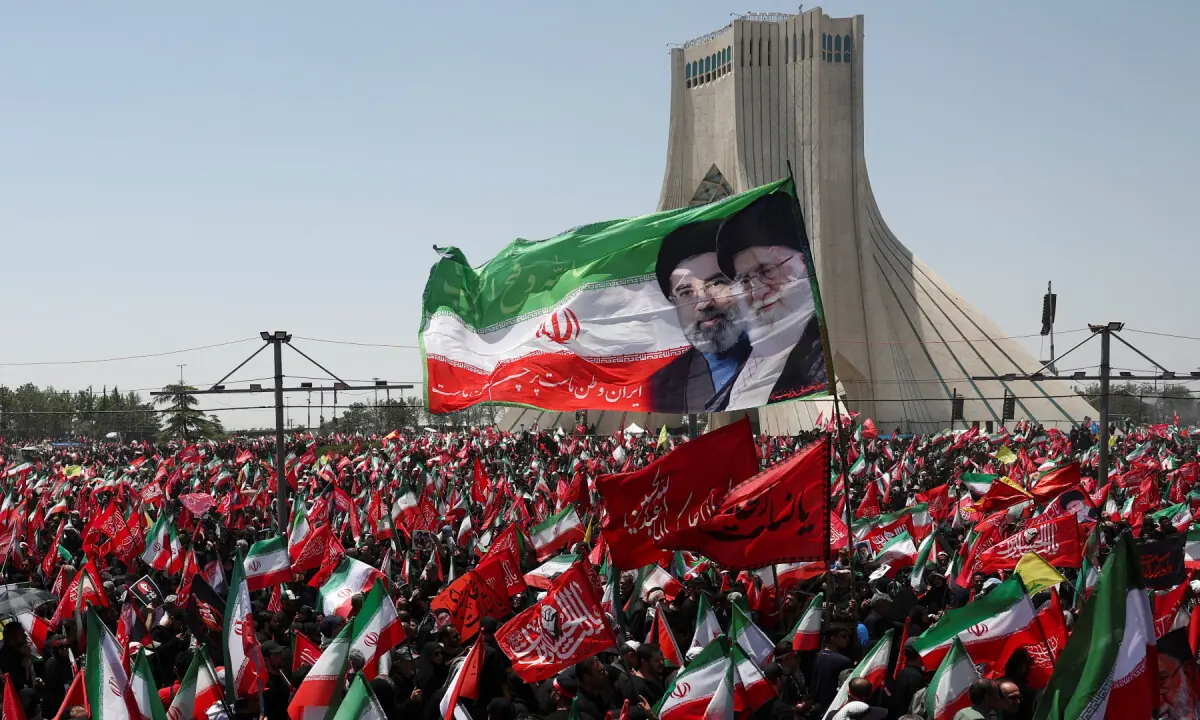
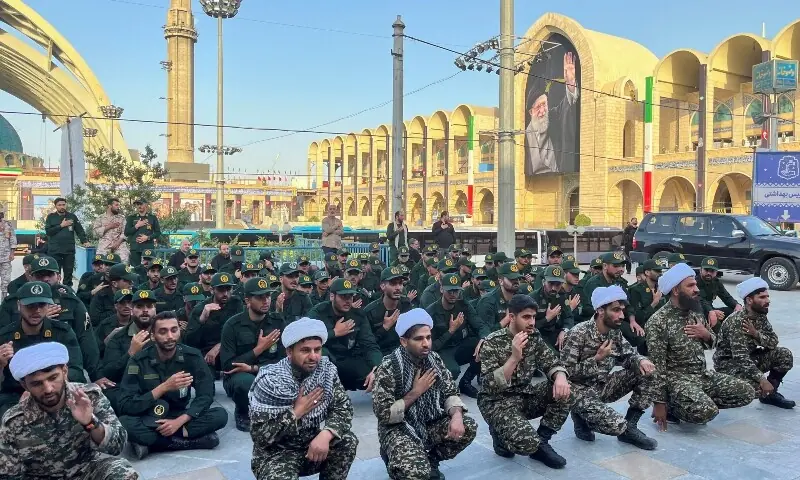
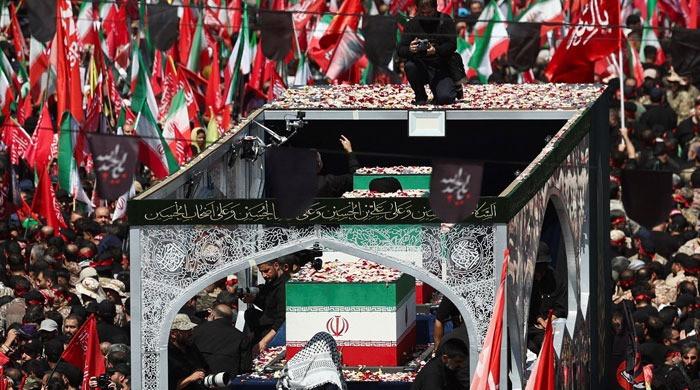
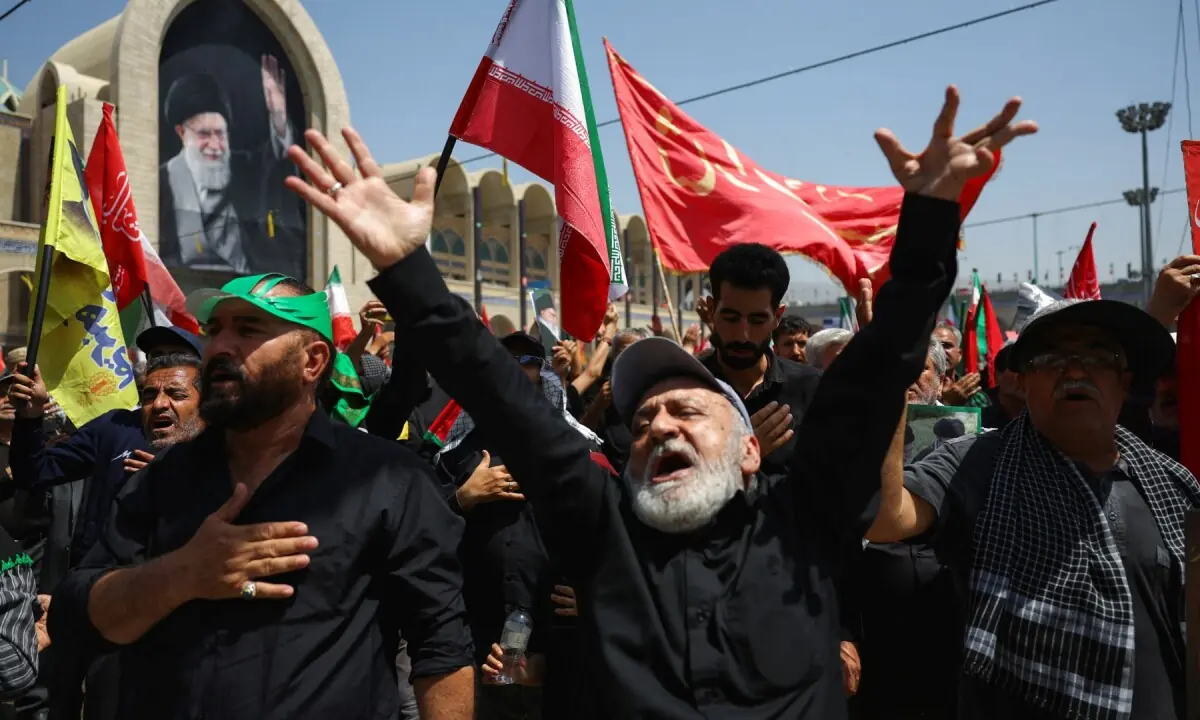
TEHRAN: The funeral of Iran’s late Supreme Leader Ayatollah Ali Khamenei was presented as more than a national mourning ceremony, with regional officials, diplomats and analysts saying Tehran used the occasion to signal that the country had emerged from war with the United States and Israel still defiant and politically cohesive.
The large turnout in Tehran conveyed a message that efforts to break Iran had failed after the war that began with US and Israeli strikes on February 28. Analysts and diplomats said that display now forms part of Iran’s broader negotiating posture as it tries to convert its ability to endure the conflict into leverage over what follows.
Hormuz at the centre of post-war strategy
The war has reinforced Iran’s leverage over the Strait of Hormuz and allowed Tehran to argue that any future understanding on its nuclear programme must begin with acceptance of its position around the strategic waterway. A 60-day ceasefire, initially meant by Washington to revive diplomacy aimed at preventing Iran from developing a nuclear arsenal, has instead opened a different contest in which Tehran sees geography as a more powerful asset than uranium enrichment.
Alex Vatanka of the US-based Middle East Institute said Iran views Hormuz less as a source of revenue and more as a means of gaining political recognition. He said the symbolic value matters more to Tehran than any income from shipping fees and described Iran’s objective as securing acknowledgment of its authority over the strait.
"The symbolic part is more important for the Iranians than revenues", Vatanka said.
“They want some kind of symbolic acceptance that the Strait is Iran’s. It’s about accepting Iran as the sovereign power over the Strait", he further stated.
Using a Persian saying, he added "Why give away a diamond for a lollipop?"
That, in this view, Hormuz is the diamond while sanctions relief and access to frozen assets are the lollipop.
Iranian leadership and diplomatic calculations
Iran’s leadership has publicly echoed that position. Parliament Speaker Mohammad Bagher Ghalibaf said the strait was Iran’s most powerful tool and that the country would not surrender its rights there under any circumstances.
"The Strait of Hormuz is our greatest power tool; we must properly protect this divine blessing,"Ghalibaf said, adding that Iran would "under no circumstances relinquish its rights" there.
Regional sources and diplomats said Tehran is deliberately slowing negotiations so it can secure what it sees as the war’s gains before returning to the nuclear issue. Alan Eyre, a former US diplomat with expertise on Iran, said Tehran appears content to prolong talks while working to formalise its position around Hormuz through arrangements related to transit, coordination or service charges along a corridor that carries a fifth of global oil and liquefied natural gas supplies.
"Iran is perfectly happy to play for time and just drag negotiations out," Eyre said.
“It wants control of Hormuz and is holding talks to institutionalise that control", he added.
Eyre also said Tehran believes US President Donald Trump is under greater pressure to secure an agreement than Iran is to make concessions, given domestic political constraints and his desire to avoid another confrontation ahead of midterm elections to Congress in November.
"The Iranians know that President Trump wants to get out; he wants to move on," Eyre said.
US leverage questioned after ceasefire
Aaron David Miller, a former US Middle East negotiator, said Washington’s military campaign did not break Iran’s leverage and left the United States trying to manage a ceasefire whose implementation has itself become contested. He said Tehran has little incentive to seriously engage on the nuclear file until it is confident the post-war reality around Hormuz has been accepted and there is meaningful movement on billions of dollars in frozen assets held abroad.
"The 60-day clock was always a fantasy," Miller said.
“The Iranians are not going to move to the nuclear file until they’re relatively confident they’ve achieved this new status quo. They want to make sure that Trump understands, and that the world understands, that there’s no going back to February 27.", he added.
Miller said the core fact of the post-war order was that neither US military power nor the threat of a US naval blockade had fundamentally changed Iran’s position in the strait.
"They’re not going to give it up", he said.
Ebtesam Al-Ketbi, president of the Emirates Policy Centre, said Washington may have turned Hormuz from a pressure point into a durable source of leverage for Tehran by ending the war without resolving the disputes that triggered it. She said Gulf officials fear Iran will now be unwilling to trade that advantage for sanctions relief or progress on the nuclear file.
"They are twisting the arms of the Americans and everybody," Al-Ketbi said.
Analysts said Washington may ultimately have to accept the strait’s reopening on terms largely shaped by Tehran. Eyre said the likely outcome would still leave Iran in a comparatively stronger position.
"No one’s going to win, but Iran will lose less than the United States will," he said.
Comments
No comments yet. Be the first to join the discussion!